

Trump presses allies in vain to join the war against Iran
For three days, Trump has been urging his European and Asian allies to contribute warships to a military operation aimed at keeping the Strait of Hormuz open. However, no one wants to risk facing Iranian missiles, mines, drones and torpedoes in order to help Israel and the United States escalate a conflict in which Netanyahu and Trump risk losing what little credibility they have left.


In a move that many interpret as an unequivocal sign of Washington’s weakness due to the disastrous course of the war against Iran, Donald Trump has spent the last three days pressuring European and Asian allies to contribute warships to a military operation aimed at keeping the Strait of Hormuz open. Iran is blocking the world’s most important waterway for oil and liquefied gas traffic, allowing only ships from nations not hostile to Tehran and which have signed transit agreements with the Pasdaran to pass through.
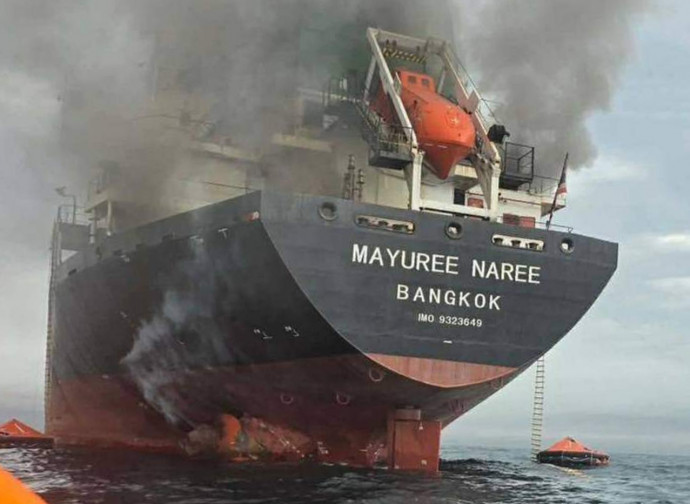
So far, at least six ships have been struck and set alight by Iranian forces, with a thousand more blocked within the Persian Gulf. In the last two weeks of war, the United States has attacked 'more than 7,000 targets in Iran with Israel's help', Trump announced yesterday, adding that 'we are doing what should have been done many years ago. Iran has literally been wiped out: their army has vanished, their radars have been destroyed, and their leadership has been eliminated”.
However, these words are not borne out by the facts: while the damage suffered by the Islamic Republic is certainly severe, the government is holding firm, and the Pasdaran continue to attack Israel and American bases in Arab nations in the region. Most importantly, they are able to control the Strait of Hormuz and threaten shipping traffic. Trump himself admitted yesterday that 'Iran uses the Strait of Hormuz as a weapon'. On 13 March, Trump appealed to allies for naval intervention in the Strait of Hormuz, arguing that other countries, alongside the United States, 'must step up' to ensure its security. "Many countries, particularly those affected by Iran's attempt to close the Strait of Hormuz, will send warships in cooperation with the United States to keep the Strait open and secure."
The president expressed hope that China, France, Japan, South Korea, the United Kingdom and others would send ships to the area, ensuring that the Strait of Hormuz no longer posed a threat from a 'completely decapitated' nation. ‘The United States of America has defeated and completely annihilated Iran militarily, economically, and in every other respect. However, the countries of the world that source their oil via the Strait of Hormuz must ensure the security of this passage. And we will help them,' Trump wrote on the social media platform Truth.
This appeal has so far fallen on deaf ears, though the Iranian authorities have responded. On 15 March, Iranian general Ali Abdollahi stated that the country’s armed forces were ready to exert pressure on the United States and Israel by controlling traffic through the strategic Strait of Hormuz and using every means of geopolitical pressure.
Abdollahi, commander of Iran’s Khatam al-Anbiya Central Command, stated that the armed forces are determined to use the waterway to bring the ‘aggressors’ to their knees. He added that Iran has already dealt ‘heavy blows’ to its enemies.
He emphasised that Iran did not start the war, but will bring it to an end. He insisted that the United States and Israel ultimately ‘have no choice but to surrender’ in the face of Iran’s military might.
On the same day, Iranian Foreign Minister Abbas Araghchi stated that 'this war will end when we are certain it will not be repeated and that reparations will be paid'. We experienced this last year: Israel attacked, then the United States regrouped and attacked us again”.
Nevertheless, it is the US Navy itself that has so far avoided escorting merchant ships and oil tankers transiting the Strait of Hormuz. Trump has urged the captains of these vessels to ‘grow some balls’ and try to cross the strait despite Tehran’s threats. According to the Wall Street Journal, citing US and Gulf Arab military sources, the US Navy has rejected a series of requests to escort oil tankers or other civilian vessels through the Strait of Hormuz.
US defence officials have stated that naval escorts are made dangerous by Iran’s capability to attack ships in the narrow sea passage thanks to its use of aerial and naval drones, anti-ship missiles, mines, armed speedboats and pocket submarines.
Therefore, it is curious that Trump is asking allies to undertake risky naval missions in dangerous, narrow waters that not even the US Navy intends to enter due to the risk of its warships sinking. Even more seriously, he is making this demand through threats. Trump has warned that the alliance will face 'a very bad future' if they do not help the United States ensure the strait's security.
Yesterday, Trump promised to reveal a list of countries that will assist the US in the Strait of Hormuz, asking, ‘Why should we protect countries that do not protect us? I have always thought that was a weakness of NATO — we protect them, yet in a time of need, they will not protect us. This is a time of need. When we need them, they should spring into action and make everything they have available,' Trump said. The response was not long in coming, with many European foreign ministries pointing out that there are no NATO member states in the Persian Gulf.
The EU has not supported Trump’s call to arms. ‘There is currently no appetite in changing the mandate of Operation Aspides,’ said High Representative for Foreign Affairs and Security Policy Kaja Kallas, denying that the EU naval operation in the Red Sea, which is intended to protect ships from possible attacks by Houthi militias, could be extended to the Strait of Hormuz.
'Italy is not at war with anyone. I do not want to think of Italy as being at war with anyone. Sending military ships into a conflict scenario would mean entering into it,' said the Minister of Infrastructure and Transport and Deputy Prime Minister, Matteo Salvini. The British government has outlined its political and military strategy to address the crisis surrounding the war in Iran, with the stated aim of defending national interests without dragging the country into a large-scale conflict. France has rejected Trump’s request to send military aid to help reopen the Strait of Hormuz. According to a source cited by the Financial Times, familiar with the situation, Paris will only deploy ships after hostilities between the United States, Iran and neighbouring countries have ceased. From Europe to the Indo-Pacific, almost all nations have ruled out sending military forces to the Strait of Hormuz.
Berlin has reiterated that war with Iran ‘has nothing to do with NATO’. Government spokesperson Stefan Kornelius pointed out that NATO is a territorial defence organisation and lacks the mandate to intervene outside the territory of its member states. Defence Minister Boris Pistorius has ruled out German military involvement, instead proposing diplomatic initiatives to ensure the safe passage through the strait. Greece has also ruled out any involvement in operations in the Strait of Hormuz. Spanish Foreign Minister José Manuel Albares warned that 'nothing should be done to add further tension or escalation' in the region.
Polish Foreign Minister Radosław Sikorski confirmed that President Karol Nawrocki had rejected the participation of the Polish armed forces. Despite their historic alliance with Washington and heavy energy dependence on Gulf oil, Japan and Australia have ruled out sending military assets to the Strait. Swedish Prime Minister Ulf Kristersson stated that Sweden sees no role for itself in ensuring the security of the Strait of Hormuz. “We must remain calm. There is a lot of talk about it now, but it is not relevant for Sweden to participate.”
In contrast, the Netherlands is considering participating in the defence of shipping in the Strait of Hormuz, but has not yet made a decision on the matter, according to Foreign Minister Tom Berendsen.
Finally, although already at war with Iran, Israel does not rule out sending military ships to help patrol the Strait of Hormuz. However, the responsibility should not fall solely on Israel or the United States, as Israel’s ambassador to the United Nations, Danny Danon, said yesterday.
Therefore, the impression is that no one wants to challenge Iranian missiles, mines, drones and torpedoes in the Strait of Hormuz. Above all, no one wants to help Israel and the United States escalate a conflict in which Netanyahu and Trump risk losing what little credibility they have left.
