

Discoverer of Hantavirus speaks out: ‘Vaccine useless, irrational fear’
Extremely low viral load and unproven human-to-human transmission, yet extremely high pathogenicity. Above all, given the natural immunity derived from alpacas, a vaccine is completely useless. The Daily Compass interviews Juan Bertoglio, the immunologist who discovered the Andes strain of the Hantavirus 40 years ago. He explains that any attempt to instil panic is 'pure madness'.


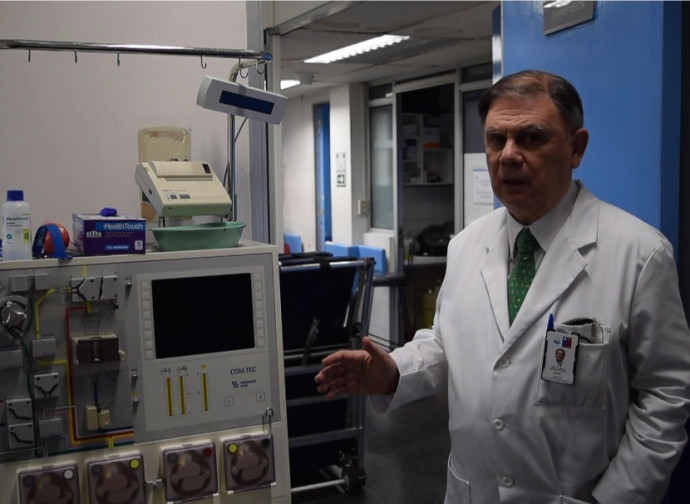
‘It’s like being hit on the head by a vase of flowers falling from a balcony: the risk of dying is high, but the chances of it happening are very, very low.’ Dr Juan Bertoglio, an immunologist at the Universidad Austral in Valdivia, Chile, is well placed to speak about the Hantavirus. In particular, he can speak about the Andes strain, which is literally putting half the world on high alert in a familiar spiral of feared alarms, behind which there is a strong suspicion of commercial interests in view of an upcoming vaccine.
It was Bertoglio himself who discovered the Andean subspecies over 40 years ago, and it is now making headlines following the quarantine of the Hondus cruise ship and the eight confirmed cases of Hantavirus.
'We were dealing with the family of a forest ranger,' explains Bertoglio in this exclusive interview with the Daily Compass. His wife died, but we managed to cure the husband. From that day on, we have never stopped studying hantaviruses, developing two specific lines of research: a natural vaccine and a diagnostic protocol recognised by the Chilean and Argentine authorities. That is why I say there is absolutely no need to worry.'
Why is that, Professor?
Our molecular biology department, which I directed for 40 years and is now headed by Professor Alejandro Rojas, is first and foremost able to identify those who are and are not immune. The woman who often went into the woods with her husband 40 years ago, for example, was not immune. We manage 70 cases a year between Chile and Argentina. There is absolutely no need to worry.
And yet, here in Europe, a phobia is taking hold.
All the conditions have come together for this virus to attack humans, but I repeat, the odds are very low.
Could you explain that further?
This virus is a clear example of how viral biology and ecosystem balance work. However, it is not highly contagious, whilst its pathogenicity, or virulence, is extremely high.
Data suggests that 40% of those infected die.
On the ship, exactly 40% of those infected died. However, given that it is not highly infectious, many variables or circumstances must coincide for infection to occur.
And what about on the Hondus cruise ship?
In this case, these conditions unfortunately and coincidentally came together. Out of eight infected people, three died – that's almost 40%.
What sort of virus is it?
Firstly, it is not one of the Hantaviruses found in the northern hemisphere. Here in Chile and Argentina, it is endemic, with no more than 80 cases a year.
How did it arise?
In recent years, several areas of the country have been deforested to make way for the planting of conifers from the northern hemisphere for cellulose production, which has led to an increase in cases. This has created an environment that is not favourable for mice, which have moved to the countryside to survive. In order to survive, they have had to congregate, resulting in a high viral load amongst them because blood-sucking insects act as vectors. The virus is then deposited via the faeces or saliva of mice living in enclosed, dark places, such as stables or woodsheds. In fact, simply fitting stables with artificial ultraviolet light is enough to kill the virus.
Does the virus mix with the dust?
Yes, and people became infected by going to the countryside and being in the same environments. However, epidemiological studies have shown that there is no human-to-human transmission.
So are you saying that there is no risk of one person infecting another?
Exactly. Human-to-human transmission of this variant has not yet been proven with epidemiological certainty; it remains merely a hypothesis based on coincidences of timing and proximity between cases within a group of people at a social event. A few years ago in Argentina, there was an outbreak involving 25 people at a party in a small rural village, where everyone became infected through the environment. However, it is unclear whether the virus was already present at the venue, or if they all became infected together directly from the environment.
This could have happened on the Hondus cruise ship. Confined spaces and prolonged contact...
The same doubt now exists in the case of this cruise ship. Therefore, as a precaution, it is considered potentially transmissible between people in very close contact or through direct physical contact. But this is a matter yet to be resolved. In our 40 years in Chile, we have never had a confirmed case of human-to-human transmission. There have only been four or five suspected cases, but none have been confirmed.
So why has this sudden fear of the virus arisen?
This relates to communication and mass psychology, not the virology we study. I repeat: there are no global risks to the population.
Has your team also studied antibodies?
Yes. We obtained them from alpacas, which are camelids native to the Andes. These antibodies are formidable, as they possess characteristics that enable them to attack the virus from multiple angles and envelop it entirely. To give you an example, it's like being attacked by many small dogs rather than a single large dog.
But why do people die?
It is because they have neither the antibodies nor the prior immunity to react, and they may also have pre-existing conditions such as high blood pressure or diabetes. Let's not forget that the virus causes severe cardiopulmonary failure.
In Italy, there is already talk of lockdowns and mandatory face masks again.
It's madness. In such cases, you need to breathe fresh air and stay in the sun, as this kills the virus instantly. Currently, there is no new host for the virus to adapt to, as its peripheral structure and infectivity protein do not allow for it. And indeed, it hasn’t happened.
How much can treatment be improved with your medical protocol?
With our protocol, the mortality rate is around 16%, with one case per million inhabitants.
However, people are already talking about a vaccine. Why do you think that is?
It's madness. It's absurd to develop a vaccine for this, and even more so to do so using mRNA technology, as has been announced, because you risk upsetting the immune balance of an entire population for the sake of individual cases, which can be treated with natural immunosuppressive therapies on a case-by-case basis. Bear in mind that we have all the necessary diagnostic tools today, and there are early-stage therapies that reduce mortality.
Could this virus be the subject of gain-of-function studies, i.e. making it more aggressive to develop a therapy?
Anything is possible, and after the experience of the pandemic, I wouldn't be surprised by this. However, I repeat: with virtually no infectivity, a gain-of-function study would need to increase contagiousness rather than pathogenicity, which is already high. Furthermore, we already have the means to identify those who have developed natural immunity.
Why weren't you involved on the cruise ship case?
Had they asked for our help, we would have sent all the necessary tests to the ship for the entire crew and passengers for just 5 euros. In fact, I would have given them to them for free.
Do you think anyone has a vested interest?
I have no evidence, but it's common sense, and you're well aware of that too. Of course, it is strange that Moderna, of all companies, announced an mRNA vaccine in 2024. But, as I said before, a vaccine isn't needed for this virus.
