
Ultra-Orthodox break with Netanyahu over military service
The government's inability to continue guaranteeing exemption from military service for young Haredim has led to the ultra-Orthodox leaving the coalition. The upcoming elections are now expected to be a showdown against the prime minister, who is already facing criticism over the war and scandals


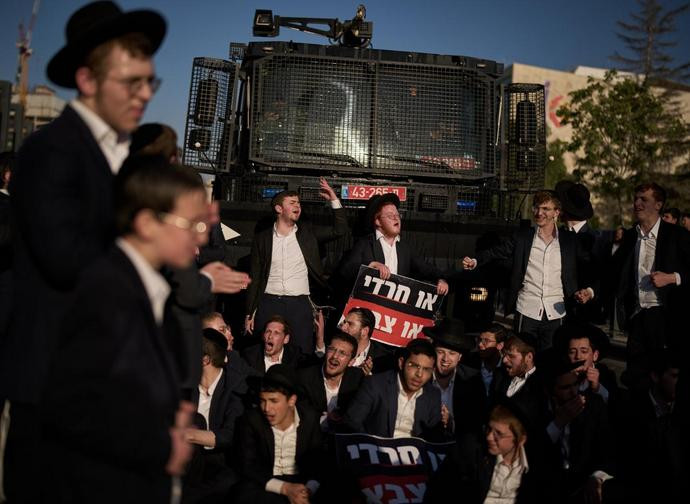
Benjamin Netanyahu’s government is showing its first cracks. The consequences of the war, domestic protests, and mounting tensions with the ultra-Orthodox community are weakening the Israeli Prime Minister’s power and ushering in a phase of growing political instability. The leader, who has dominated the Jewish state for twenty years, now appears to be surrounded: challenged in the streets by thousands of Israelis; overwhelmed by the collapse in public confidence following 7 October 2023; isolated on the international stage; and now also hit by the defection of his religious allies, who have ensured the survival of his governments for years. The coalition is a powder keg ready to explode, and the snap election scheduled for the coming months could transform Israel into a radicalised, divided country propelled towards an unprecedented political crisis.
But this is not merely a government crisis. It is a showdown. The clash causing the majority to implode concerns one of the most explosive issues facing Israeli society as a whole: who must go to war, and who can evade military service whilst the country has been in a state of near-permanent mobilisation since 7 October.
The political earthquake was triggered by the definitive split between Netanyahu and the Haredi parties — the ultra-Orthodox Jews who have been a cornerstone of Likud-led coalitions for years. Their exit from the alliance comes as no surprise. Rather, it is the culmination of a crisis that has been brewing for some time, turning into an open clash between military imperatives, political interests, and irreconcilable religious identities over the last two years.
The crisis was triggered in July 2024 when the Israeli Supreme Court ruled that it was no longer legally permissible to exempt yeshiva students – ultra-Orthodox rabbinical school pupils – en masse from compulsory military service. This struck at the heart of one of the Haredi community’s historic privileges, opening a rift within the majority.
From that moment on, Netanyahu tried every possible means to find a compromise capable of saving the governing coalition. The Prime Minister knew full well that maintaining the military exemption was a red line for the religious parties. However, there was growing impatience within the government and even within Likud towards a system that was perceived by much of the public as deeply unfair.
The issue was straightforward: while tens of thousands of reservists were called up to the front for months on end and Israeli families faced bereavement, financial hardship and a climate of permanent war, thousands of ultra-Orthodox youths continued to evade conscription, protected by a system of exemptions that had been established over the years thanks to the political influence of the religious parties.
Ultimately, a compromise proved impossible. Realising that a new law guaranteeing exemptions for the Haredim would not be passed by the end of the parliamentary term, Likud informed the leaders of Shas and United Torah Judaism that the government could no longer keep its promises. The response was immediate. Degel HaTorah — one of the pillars of United Torah Judaism, alongside Agudat Yisrael — announced that the political pact with Netanyahu had ended. This statement was tantamount to a political condemnation of the Israeli Prime Minister.
In reality, however, the rift had begun months earlier, with the ultra-Orthodox parties gradually vacating the ministries they controlled since the summer of 2025. They formally left the government whilst continuing to support the coalition in Parliament. This was a pressure tactic: remaining close enough to power to retain influence, yet distant enough to make it clear that their patience was wearing thin.
For months, the Haredim had threatened to bring about the government’s downfall if the issue of military exemption was not resolved. Today, that threat has turned into a real political crisis that risks overwhelming the entire Israeli system. In a country where compulsory military service is one of the pillars of national identity, the exemption granted to students at rabbinical schools is becoming increasingly difficult for the rest of the population to accept.
For the Haredim, however, the issue is non-negotiable. Students from this community devote their lives to studying the Torah, which they consider to be not only a religious duty, but also a spiritual mission that is fundamental to the survival of the Jewish people. From their perspective, compulsory military service would mean interrupting this mission and, above all, exposing thousands of ultra-Orthodox youths to contact with a secular, modern society that is perceived as an existential threat and which is likely to lead to the dissolution of Haredi identity. Religious leaders warn that conscripting ultra-Orthodox youths into the army could accelerate their departure from the community and break the cultural isolation that has been maintained for decades. Meanwhile, the majority of Israelis view this opposition with growing anger.
Many citizens accuse the ultra-Orthodox of benefiting from public funds and state protection without contributing to the collective defence effort, and political hostility towards religious parties is growing. The issue of conscription is also intertwined with another major divide in the country: the one between secular and religious Israel. The protests that erupted in 2023 against the judicial reforms proposed by the Netanyahu government demonstrated just how deep the mistrust was among a large section of the population towards the coalition backed by the religious right. Today, that same anger has been compounded by war weariness and the fear that the ultra-Orthodox's growing political influence is irreversibly changing the face of the Israeli state.
Meanwhile, the opposition is seeking to capitalise on the crisis. Naftali Bennett and Yair Lapid are attempting to form a new anti-Netanyahu alliance, hoping to replicate their success in ousting the Likud leader from power in 2021. However, the opposing camp remains fragile and divided by deep ideological differences. Bennett continues to embody a pragmatic, hardline nationalist right that is less dependent on religious parties. Lapid, on the other hand, represents liberal, urban, secular Israel, which fears the country's shift towards identity politics. The only unifying factor of their potential alliance would be stopping Netanyahu.
Nevertheless, the prime minister continues to rely on the most radical wing of the nationalist right. Figures such as Itamar Ben-Gvir and Bezalel Smotrich enjoy the support of voters who have been radicalised by the war and their fear of the enemy. Yet it is precisely their growing influence that is driving away the moderate centre and exacerbating Israel’s international isolation.
For Netanyahu, this could be his final political battle. For Israel, however, it could be much more: the moment when the country is forced to decide what it wants to become after years of war, division, and constant crisis.
