
Bishop imposes gender ideology in Catholic schools: families outraged, Vatican remains silent
It’s happening in Hamburg: ultra-progressive Bishop Hesse, a champion of German synodality, is forcing gender-based sex education courses on Catholic schools, despite parents' objections. They have appealed to the Pope and the Congregation for Bishops. But they have been waiting six months for a response that has not arrived. The courses are due to begin on 20 August.


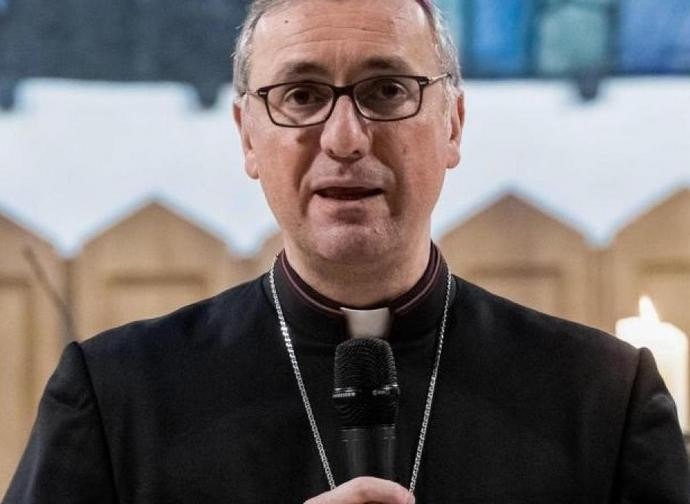
Parents are standing up to a bishop amidst the Vatican’s silence. This story from Germany is cause for outrage, yet at the same time it gives cause for optimism regarding the capacity of a significant section of the laity to respond. We are in Hamburg, an archdiocese which has already been the subject of controversy following Monsignor Stefan Hesse's resignation in 2021 due to 'personal procedural errors' committed in relation to an abuse case during his time as Vicar General in Cologne. Pope Francis immediately rejected the resignation.
Consequently, the ultra-progressive Hesse has remained at the helm of the Archdiocese of Hamburg, continuing to cause damage. He gave final approval to the new framework for sex education in Catholic schools, inspired by so-called 'diversity pedagogy'. This new initiative, under the motto 'Männlich, weiblich, divers' ('Male, female, diverse'), has been hailed by anti-clerical media but has sparked protests from hundreds of families who send their children to those very schools. They argue that this 'conceptual framework' deliberately sexualises children and young people, devalues, distorts or rejects the Catholic view of sexuality, marriage and the family, and actively propagates ideological content relating to sexuality and sexual identity.
Hesse is a staunch advocate of synodality in Germany, but parents only learnt of the existence of this far-reaching document after the fact — and not even from the schools themselves. No dialogue, no consultation. The door remained closed even afterwards, when families organised themselves into a 'Network for Child Protection and Prevention'. Despite repeated requests for meetings, the group representing hundreds of parents was only received once, in December 2025, by the archbishop. These alarmed parents have an outspoken voice in Varinia Arauco Vera, a Peruvian mother whom Hesse – the long-standing chair of the Commission for Migrants and Refugees within the German Bishops’ Conference – ignored, rejecting every appeal to initiate a dialogue.
The Archdiocese of Hamburg has decided to press ahead regardless, entrenched behind a document produced as part of the controversial German Synodal Path.
While the ideologically driven stance of a German diocese and Hesse's intolerance towards such widespread parental protest come as no surprise, the Holy See's now widely noted silence is worrying. There is indeed no doubt that Rome is aware of the situation. Last February, the Family Network wrote a letter of appeal directly to the Pope, which was delivered to the Apostolic Nuncio in Germany. The signatory parents clearly listed the controversial points in the letter: the promotion of forms of early sexualisation, including through interactive teaching methods from the first year of primary school onwards; collaboration with organisations and activists in the field of sex education; and a lack of clarity regarding the right to opt their children out of LGBT-themed teaching modules offered in Catholic schools.
The families explained to Leone that they had sought dialogue with Hesse, but were refused the opportunity to amend the document’s key points. For this reason, they openly asked the Pope to ‘halt this initiative’ and help them ‘protect the faith and purity of our children’. In one passage, the Network wrote to Prevost that, in the face of programmes adopted by the Archdiocese of Hamburg in the name of the Synodal Path, migrants no longer feel that the Catholic Church in this country is their home. This statement alone would be enough to declare Hesse’s work a failure, even in his capacity as the bishop responsible for migration issues within the German Bishops’ Conference.
However, almost six months later, the letter has still not been answered, and no action has been taken by Rome to halt the Hamburg programme. The parents are disappointed but not defeated and continue to fight. Two months ago, they therefore lodged a canonical complaint against Hesse with the Dicastery for Bishops, which is now headed by Monsignor Filippo Iannone. Time is running out though; on 20 August, the document will officially come into force and be implemented in fifteen Catholic schools.
Is there any hope that Rome will take action against those who want to prioritise ‘sexual diversity’ and acceptance of all gender identities in children’s education, presenting contraception as the only method of birth control and treating the Christian family model the same as the ‘diversity of lifestyles’?
