
Israel expels priest symbolising Palestinian Christians
Israel has expelled Fr Louis Salman, the Latin Catholic parish priest of Beit Sahour and a leading voice for young Palestinian Christians, after he criticised Israeli occupation.

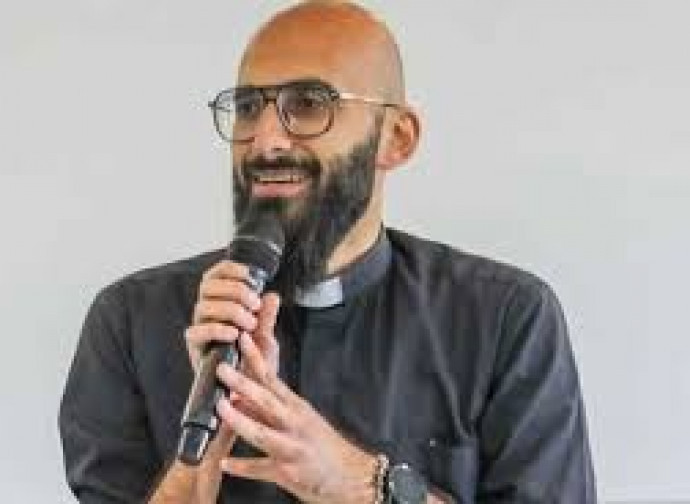
There is no need for high-profile arrests or expulsion orders to be recorded on camera. In the Holy Land, a denied visa is enough to erase a presence, shatter a community and force someone to leave. Father Louis Salman, a Catholic priest of the Latin Patriarchate and parish priest of Beit Sahour, a town on the outskirts of Bethlehem under the full control of the Palestinian National Authority, has been forced to leave Palestine after Israel refused to renew his residence permit.
No official explanation. No formal public charges. Only the coldness of an administrative decision which, in a land dominated by walls, barbed wire, checkpoints and temporary permits, takes on the weight of a grave political act. He celebrated his final Mass in the parish before a packed and tearful congregation. Young people sat on the steps and families huddled in the pews; elderly people had come from Bethlehem and Ramallah to bid him farewell. As he gave his final blessing, many realised that they were witnessing not just the departure of a parish priest, but the forced disappearance of yet another Palestinian Christian from his homeland. A few days later, the priest crossed the Allenby Bridge, the famous border crossing with Jordan where he was born in 1989. He left behind a wounded community and an increasingly prevalent question among Christians in the Holy Land: who will be next to have to leave?
News of his expulsion spread like wildfire throughout Bethlehem, East Jerusalem, Ramallah and the West Bank, spreading among Palestinian Christians an all too familiar feeling of being unwelcome in their own land. For many of the faithful, the priest's case is not an isolated incident but the latest in a growing pattern of pressure and repression against the Christian presence in the Holy Land. In recent years, there has been an increase in attacks and intimidation against priests, monks, and nuns, particularly in Jerusalem. This includes spitting during processions in the Old City, vandalism in Christian cemeteries and offensive graffiti on monastery walls, as well as ultra-nationalist groups insulting pilgrims. Such incidents were considered marginal until a few years ago, but today the Churches describe them as part of a deliberate programme being implemented on an increasingly widespread scale.
One recent incident that shocked public opinion was the beating of a French nun on Mount Zion. She was attacked from behind with no warning by a young ultra-Orthodox Jewish man twice her size. She was violently shoved to the ground, insulted and kicked, in front of impassive passers-by. Images of the attack spread rapidly throughout local Christian communities, fuelling fear and outrage.
This was not merely an act of violence against a defenceless woman; for many Palestinian Christians, it symbolises a line being crossed — that even historically respected religious figures are becoming targets of hatred and intimidation.
A few months earlier, Israeli extremists had desecrated the Protestant cemetery on Mount Zion by toppling crosses and damaging historic graves. In another incident, a statue of Christ in the Church of the Flagellation in Jerusalem was destroyed by a man armed with a hammer who entered the sacred site shouting religious slogans. Even the Cenacle has not been spared, repeatedly becoming the scene of provocations against Christian groups at prayer.
While the Israeli authorities publicly condemn these incidents, the Churches accuse the state of not doing enough to halt the growing radicalisation. The patriarchs and heads of the Churches of Jerusalem have openly spoken of 'systematic attacks' against the Christian presence, and of extremist groups intent on altering the historical balance of the Holy City. In this context, the story of Father Salman takes on an even deeper significance. The Jordanian priest was no marginal or controversial figure. He was one of the faces of the Arab-Palestinian Church, which continues to seek to build bridges in a divided land.
Born in Jordan in 1989, he studied computer graphics and animation at Princess Sumaya University for Technology before entering the seminary of the Latin Patriarchate in Beit Jala. After completing his studies in philosophy and theology, he was ordained a priest and dedicated his ministry primarily to young Palestinians. Over the years, he became a point of reference for entire families in Beit Sahour and the Bethlehem area. Many still remember his presence with the Palestinian people during one of the most traumatic events in recent years: the killing of the Palestinian-American journalist Shireen Abu Akleh.
Father Salman participated in vigils and funeral services in Jenin, sharing the grief of a community devastated by a death that has become symbolic of the conflict. He had frequently denounced the senseless war in Gaza and the indiscriminate and unpunished actions of settlers in the West Bank. Since then, his significance had transcended his pastoral role. For many young Christians, he represented proof that it was possible to remain in Palestine without renouncing dignity, identity or voice.
This is precisely what frightens local Christian communities today: the feeling that anyone who publicly defends the Palestinian cause, even through words of peace and non-violence, may become a target. The failure to renew Father Salman’s residence permit comes at a time when churches are denouncing the growing bureaucratic difficulties faced by Arab priests and religious figures. Temporary permits, blocked renewals and increasingly invasive security checks are becoming the norm. This silent pressure rarely makes the news, yet it is gradually changing the demographics of the Holy Land.
In Bethlehem, the number of Christians continues to decline. In Jerusalem, many long-established families have been forced to emigrate. In Gaza, war has almost wiped out an ancient presence. While the world imagines the Holy Land as the universal heart of Christianity, local Christian communities feel increasingly isolated, impoverished and vulnerable.
In Beit Sahour, therefore, the departure of Father Louis Salman is not merely seen as the departure of a priest, but as a consequence of the gradual erosion caused by not only war and violence, but also bureaucracy, intimidation and daily fear.
As he left the town, many young people accompanied him in silence. Some were crying. Others filmed him with their mobile phones, as if to hold him back. In the Holy Land today, even the silent departure of a parish priest can become a political narrative about a presence that fears it is about to disappear.
