
Cardinal Müller: Co-Redemptrix is a truth contained in Revelation
At the international conference De Maria numquam satis, held in Rome on 7–8 October 2026, Cardinal Müller fully vindicated the Marian title of 'Co-Redemptrix' and the truth expressed by that title. Following Cardinal Burke’s address, he affirmed that this truth is objectively contained in the revelation that God has made to humankind.

Migrant rapes in English Channel acknowledged by UK minister
The Home Secretary, Shabana Mahmood, has admitted that many women who reach northern France and board rubber dinghies bound illegally for the UK are raped during the voyage. Meanwhile, the British government empties its prisons.
Amoris Laetitia – Vatican marks tenth anniversary of moral U-turn
Today marks the start of the bishops’ meeting, ten years on from Pope Francis’ controversial apostolic exhortation which dismissed Veritatis Splendor and imposed the criteria of the new synodality. This shift compels us to question the document and its outcomes, beginning with the refusal to proclaim the entirety of the Gospel on the family.
International conference reignites debate on Corredemption
A two-day conference on the theme 'De Maria numquam satis' begins today at the Augustinianum in Rome, with an opening address by Cardinal Burke. Exactly one year on from the promulgation of the Note Mater Populi Fidelis, the event will highlight the uniqueness of the mystery of Mary: a creature who was raised to such heights that not even eternity will suffice to fully comprehend her.
- The Mission of the Co-Redemptrix and the Co-Redeemers, by Card. Raymond L. Burke
The Mission of the Co-Redemptrix and the Co-Redeemers
We are pleased to publish the address entitled 'Our Lady of Guadalupe and the Kingdom of Christ the King: The Mission of the Co-Redemptrix and the Co-Redeemers', which was delivered by Cardinal Raymond L. Burke at the opening of the 'The Mystery of Mary in Dogma and the Magisterium' conference (Rome, Augustinianum Patristic Institute, 7–8 October 2026). This address was made available to us courtesy of the organisers.
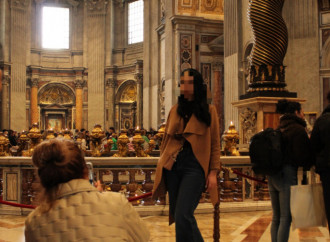
Gambetti leaves behind ‘eco-friendly’ St Peter’s that has lost its sacredness
Now is the moment to restore a sense of the sacred to St Peter’s which under Gambetti’s management, bowed to climate neutrality and high energy efficiency. The chaotic and disrespectful transformation from the Pope’s church into a museum favoured desecrations by tourists and distractions for the faithful.
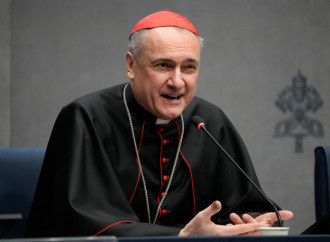
Gambetti removed from St. Peter's Basilica; speculation begins over his successor
From archpriest of St Peter’s Basilica to head of the Archdiocese of Chieti: the Franciscan cardinal's appointment is certainly not a promotion. The question remains as to who will take his place at the basilica after a five-year term that caused much debate.
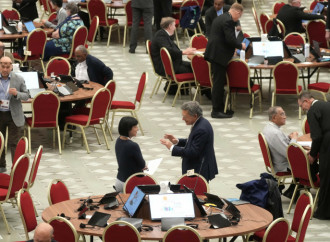
A Canonical Revolution: The New Synodality Calls for a New Code
Laypeople presiding over liturgical celebrations and an emphasis on participatory bodies are among the proposals in the Final Report of the Canon Law Commission released by the General Secretariat of the Synod. The goal is to rewrite canon law to consolidate the “achievements” already attained in practice.
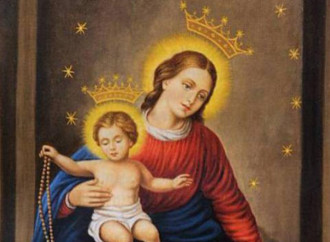
October, the Month of the Queen of the Rosary
Why is October dedicated to Our Lady of the Rosary? It all began with the Battle of Lepanto, which gave rise to the feast day now celebrated throughout the Church on the 7th of the month. But it was Leo XIII who consecrated the entire month of October to her, urging the faithful to fight evil with the rosary in hand.

Orange march threatens fragile peace in Northern Ireland
Scenes from the past are resurfacing, just as they did during the Troubles—the conflict in Northern Ireland between the Protestant majority and the Catholic minority. The Orangemen (Protestants, unionists) want to march once again down the symbolic Garvaghy Road in Portadown, sparking protests from Catholics.

Whether by Fraud or Mistake: AI and Betrayed Trust
The finance executive who was deceived by a fake WhatsApp message generated by AI. And the case of Gemini, which gained access to the internet due to a programming error. Two mirror-image cases that share the common result of undermining the system of human trust.

Lourdes, the Pope Speaks Out Against Abortion and Euthanasia
After Paris, Leo XIV was also greeted by a huge crowd in Lourdes: 150,000 faithful were present, including many who were ill. The Pope denounced the “false compassion” behind euthanasia and assisted suicide, as well as the destruction of embryos.