

"No more streamed Masses nor bowing to governments."
There’s urgency to return to the normalcy of Christian life. The Eucharist needs to be celebrated inside churches. Televised and streamed Masses are a far cry from a personal encounter with God. Liturgies should be respected in their entirety despite health directives, including the distribution of Communion. We must promote Eucharistic adoration and emphasize the primacy of eternal life over that of earthly life. These are the fundamental points of a letter addressed to the presidents of bishops’ conferences around the world and written by Cardinal Robert Sarah, Prefect of the Congregation for Divine Worship and with the approval of Pope Francis. But will it be enough to jump start the Catholic community after months of abuse and attention only to the anti-Covid safety regulations?

The “Love Jihad”: 4000 forced “brides” of violent Islam
They are young girls who are Christian or Hindu. They are approached by peers, who kidnap and rape them, and then after threatening to publish the rape video on social media force them to convert. All of them are victims of the “love jihad,” the “holy war of love” that is upsetting Kirala. The Indian Catholic Church denounces ISIS’s method of recruiting, but even among Catholics there are progressive groups that deny or minimize.
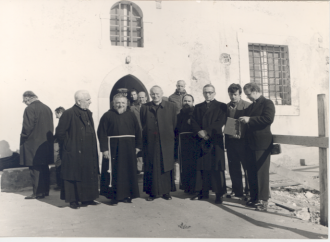
“I’ll tell you about some intimate details” about Karol Wojtyla and Padre Pio
Nine years ago on September 3, cardinal Andrzej Maria Deskur passed away. He was a close friend of Karol Wojtyla, ever since his days in seminary where the Polish saint manifested the gift of "infused prayer." Few people know that Deskur played an important role in the relationship between the future pope and Padre Pio. Nor is it very known at all that Deskur was commissioned by John Paul II to meet Sr. Lucia of Fatima to find out whether the 1984 Marian consecration had taken place as requested by Our Lady. The Daily Compass interviewed the director of Padre Pio TV, Stefano Campanella, who has gathered and studied Deskur's confidendential conversations with John Paul II.
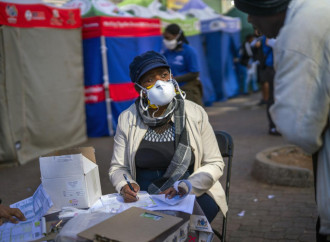
African Bishops Denounce the Corruption of Their Governments
The bishops of Kenya, South Africa and Nigeria are denouncing the corruption of their governments. The occasion was given by the mismanagement of international aid to face the Covid-19 pandemic. In Kenya the bishops and leaders of other denominations are denouncing the theft of medical and financial aid, while in South Africa they denounce the misuse of funds. In Nigeria an omnipresent corruption is threatening local health. Is this the West’s fault?


A group of Catholic intellectuals against PAL on abortion
A group of Catholic intellectuals complain that the Pontifical Academy for Life uses ambiguous language in its criticism of the new Italian guidelines on day hospital abortion and altogether omits condemnation of abortion.
- INTEGRAL TEXT OF THE DOCUMENT

LEFTOVER BREAD CAKE
One of the many recipes born in the monasteries is for leftover bread cake, an example of a clever way of making the most of all the food available and avoiding waste.

You want to learn about tasty and healthy eating? Get thee to a monastery
The secret of a healthy and tasty cuisine that avoids the cardinal sin of gluttony was already found in the Rule of St Benedict and also features in the work of St Hildegard of Bingen. Hundreds of recipes created in European monasteries have now become commonplace: vegetables, charcuterie, cheese, but also sweets and beers and liqueurs. The monastic culinary tradition is still very much alive and hundreds of monasteries in Europe and the USA sell their products online.
- THE RECIPE: LEFTOVER BREAD CAKE

For the Italian Church and the Vatican, Abortion Is a Bit Less Bad
The recent articles in Avvenire, the news service of the Italian bishops, and the interview given to Crux by Archbishop Vincenzo Paglia, president of the Pontifical Academy for Life, are signs of a disturbing change in the Church in its attitude towards pro-abortion laws.

Inflation, a hidden tax and no help to any crisis
Those who live on fixed incomes - wages, salaries, pensions – during times of high inflation, see their purchasing power erode over time. And yet the central banks, starting with the United States Federal Reserve, are definitely aiming at inflationary models, believing that they can help the state and companies overcome crisis by devaluing their debts. Unfortunately this is a tragic illusion and we will pay dearly for it.
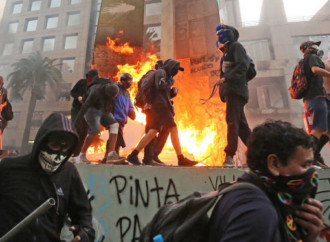
Chile: The Revolts, the Government, and the Communist Infiltration
Andrés Montero,an expert in international relations at the Fletcher School of Law and Diplomacy and a member of the advisory committee of the School of Administrative and Economic Sciences at the University of Chile, explains to The Daily Compass the reasons for protests that were all but criminal and similar in their methods to what is happening in the United States.

Just like China, WHO controls information
The WHO has launched a campaign against Covid-19 “misinformation”, using artificial intelligence and modern data collection techniques to track down on-line hoaxes and fabrications. This strategy, ironically, has already caused enormous damage in the fight against the pandemic, precisely because it limits comparisons and debate over theories in the face of a new disease. It smacks of censorship methods employed by the Chinese totalitarian regime.