
West’s mistake: turning a blind eye to the rise of a virtual caliphate
The debate following the Modena massacre reveals just how fragile Western culture is. We view terrorism solely as a military phenomenon and do not know how to respond to the process of radicalisation and recruitment orchestrated by ISIS, which uses all the tools most popular with young people, from social media to video games.


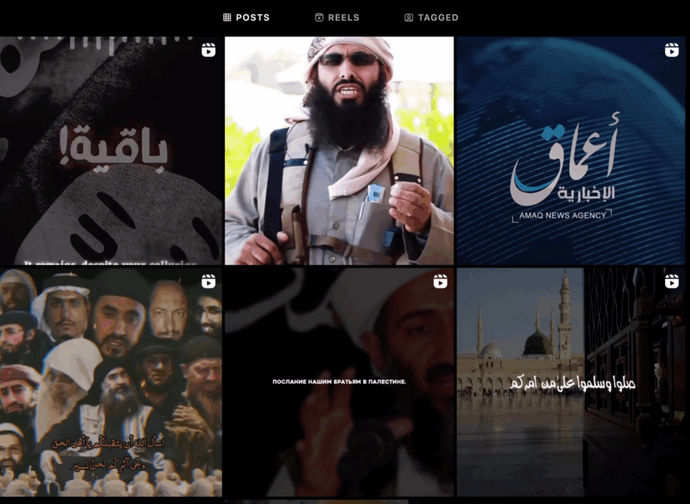
The West has made a fatal mistake in continuing to view Islamist terrorism as strictly a military phenomenon, when in fact jihadism has evolved into a cultural, digital and identity-based threat. Today, the so-called Islamic State does not need to conquer territories; it is enough for it to occupy our children’s screens. This dramatic warning is contained in a recent study by the International Centre for Counter-Terrorism (ICCT), which describes the emergence of a virtual caliphate tailor-made for Gen Z.
The study shows how extremism has adapted perfectly to the language of younger generations, infiltrating video games, TikTok, memes, trap music, goth aesthetics, encrypted chats and the irony of social media. We are no longer confronted with crude desert video propaganda. Today, radicalism presents itself in the form of seemingly harmless content, camouflaged within the digital world frequented by European teenagers.
According to the report, groups linked to ISIS use platforms such as Roblox, Minecraft, Discord and TikTok to gradually indoctrinate users. Young people are drawn in through the dynamics of belonging, defiance and rebellion. Subversive propaganda no longer focuses solely on religion; it also plays on themes of masculinity, social exclusion, redemption, hatred of the West, and the search for meaning.
For years, I have been warning that fundamentalism cannot be tackled with naïve multiculturalism and cultural relativism. We have allowed entire generations to grow up in an existential void while radical preachers, pseudo-religious influencers and digital networks capable of manipulating the most vulnerable have gained ground in the suburbs. Today, we are paying the price for that political blindness.
The case in Modena is a wake-up call that cannot be ignored. Salim El Koudri, an Italian citizen of Moroccan origin, drove a car into several pedestrians in the city centre, seriously injuring many people. Investigations suggest that mental distress and marginalisation were factors, but messages of hatred against Christians and deep-seated resentment regarding identity are also emerging.
It is important to be clear that not all Muslims are extremists and not all instances of social distress lead to subversive behaviour. However, it would be irresponsible to deny that a dangerous convergence is emerging today between online fanaticism, exaggerated victimhood, and Islamist culture spreading across digital networks. This is precisely the scenario described by the ICCT, whereby young Westerners absorb jihadist symbols as if they were aesthetic elements or markers of belonging.
However, the European left continues to deny the problem. Those who denounce fundamentalism are accused, while extremist content spreads unchecked on platforms frequented by minors. It is a suicidal attitude. For years, the preference has been to speak only of inclusion, without ever demanding real integration, respect for democratic principles, or defence of European identity.
ISIS has understood what many European governments have yet to grasp: that the decisive battle is fought in the collective imagination. Contemporary jihadism does not merely recruit fighters; it also builds emotional communities and models of belonging, as well as symbolic codes capable of seducing disoriented teenagers.
When young Europeans grow up without strong roots, immersed in a community that denies itself and delegates education to algorithms, they become vulnerable to radical narratives. Fundamentalism offers a simple, all-encompassing and aggressive response, pitting an absolute identity against a society that it deems to be decadent.
The 'virtual caliphate' does not arise in a vacuum. It thrives in the fragile, guilt-ridden, defenceless Europe that we have created in recent years. It will continue to expand until politics rediscovers the courage to defend itself without ideological hang-ups.
Dismissing those responsible for such atrocities as simply “madmen” prevents the public from understanding the processes of radicalisation. Terrorism is not a sudden fit of madness, but a rational and deliberate process for those who carry it out.
