
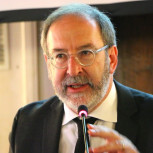
Modena car attacker: a mix of anger, hatred and failed integration
There are few certainties and many unanswered questions surrounding the personal story of Salim El koudri, the man behind the attempted massacre in Modena. What is certain is his anger at his personal situation, and the fact that, despite having held Italian citizenship since the age of 14, he considers himself as a foreigner. There are also doubts about his alleged mental health issues.

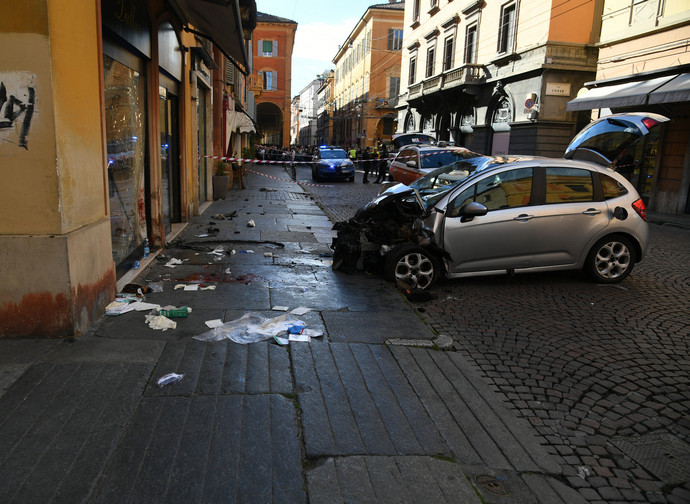
Perhaps more will be revealed this morning about the motives that drove Salim El Koudri to ram his car into passers-by in a street in the centre of Modena on Saturday 16 May, following the preliminary hearing to be held at Modena prison, where El Koudri is being held. So far, only his lawyer has spoken. He stated that the 31-year-old, a second-generation Italian of Moroccan origin, is in a state of confusion and not fully aware of what he has done. The lawyer went on to say that he will request a psychiatric assessment and noted that Salim was treated at a psychiatric centre from 2022 to 2024. Moreover, according to his lawyer, his family members (his parents and a sister) were unaware of Salim El Koudri’s mental health issues. Furthermore, an analysis of the material contained in the ‘digital devices’ of the attempted massacre perpetrator will need to be carried out.
Whilst there are many unanswered questions, those who have no doubts are the politicians, who – as is their custom – exploit every tragedy to promote their own agenda: the left accuses the government of failing to guarantee security and of not doing enough to address mental health issues (said by the very people who do everything in their power to dismantle every security apparatus), whilst the League is focusing once again on irregular immigration and the rules for obtaining citizenship, issues that are certainly important but have no direct connection with the tragedy in Modena.The problem is that this political uproar prevents serious reflection on what is happening in Italy.
Let's start with the facts that have emerged in the last few hours. Firstly, regarding the attack, there is no doubt that it was carried out in a jihadist manner. Although no evidence has yet emerged linking Salim El Koudri to a jihadist network or suggesting that he was self-radicalised, it cannot be a coincidence that he resorted to this method.
Secondly, following statements by the Minister of the Interior, Piantedosi, who revealed their existence, emails written by Salim El Koudri to the University of Modena and Reggio Emilia (Unimore) came to light. He obtained a bachelor’s degree in Economics there, and in the emails he demands a job ‘not as a warehouse worker’, a ‘job consistent’ with his qualifications. The emails were sent on 27 April 2021, five years ago. The most significant aspect, however, is where he rails against those he believes are the cause of his problems: 'Shitty Christian bastards, I’ll burn you and your Jesus Christ on the cross'.
This attitude does not suggest a religious claim or specific targets immediately, and in fact he was never reported for anti-Christian or violent acts over the following five years. However, those messages indicate anger and mounting hatred, which is exactly what drives someone to drive a car into defenceless people walking in the street. Furthermore, despite being born in Italy and having been an Italian citizen since the age of 14, he speaks and feels like a foreigner. He is alien to the culture and society in which he was born and raised and which he identifies with Christianity.
This is the most disturbing aspect because it is proof of a failure to integrate. It is not an isolated case but a much more widespread phenomenon not due to racism on the part of Italians, but to the background of immigrants. Initial reports suggest that Salim El Koudri did not attend mosques or Islamic cultural centres. Even if that were not the case, however, there is a cultural difference and a mindset among people from Islamic countries that makes genuine integration very difficult, even for those with no religious objectives in mind.
Cardinal Giacomo Biffi, Archbishop of Bologna, stated this exact point 26 years ago when he warned, in reference to the Islamic context, that 'for peaceful and fruitful coexistence, if not integration, the starting conditions for new arrivals are not equally favourable'. However, little has changed since then, as those who fiercely opposed Cardinal Biffi back then are the same people who continue to encourage illegal immigration today, arguing that the solution lies in addressing mental health issues.
Politicians must face up to this reality, because the temptation to turn to terrorism can be irresistible for the unintegrated and socially alienated. Even without leading to terrorist activity, we must be concerned about a section of the population that represents a reservoir of hatred and resentment ready to explode at the first opportunity. France, Belgium and the United Kingdom should serve as a warning in this regard.
Firstly, there is undoubtedly the question of the content that Salim El Koudri posted on social media, which led to the closure of his accounts. Other matters relate to his private life, such as how he supported himself without a job, living alone — it appears he had virtually no contact with his family — and owning a car, which was used in the attempted massacre.
But above all, it is legitimate to ask questions about his alleged mental illness. According to his lawyer, Salim stopped taking medication in 2024 because he said “he felt well”. This raises the question: if someone has serious mental health issues, is it possible to go two years without showing any obvious signs of instability? Not mere eccentricity or the solitary lifestyle noted by the owners of the establishments he used to frequent, but actual symptoms requiring medical intervention.
This circumstance casts doubt on whether Salim El Koudri is truly 'mad', especially since most perpetrators of car attacks in Europe are also hastily labelled as such. This should, if nothing else, raise some suspicion. Let us hope that the investigators in Italy get to the bottom of this without fearing the truth.
