

USA against Iran, a war with no prospects that damages Europe
Once again, it seems that the US and Israel are intent on destabilising areas that are, in energy and geopolitical terms, in Europe's 'backyard'. The only certainty is that the conflict will hit Europe and its economic interests hard. Starting with oil supplies.


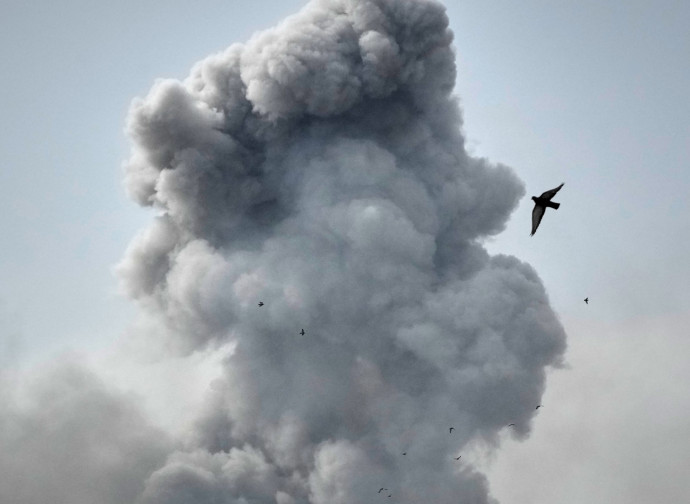
While politicians in Italy and Europe are divided between supporting and criticising the Israeli–US military campaign against Iran, the only certainty at the moment is that the conflict will once again hit Europe and its strategic and economic interests hard.
This is not only because there are no plans to manage the political crisis once the bombing stops, but also because US intelligence and the Pentagon have confirmed that there was no evidence of an Iranian attack on Israel or US bases in the Middle East.
As in 2003, when the Bush administration justified the invasion of Iraq on the basis of Saddam Hussein's non-existent weapons of mass destruction, Donald Trump now claims, contrary to all international reports, that Iran was about to attack the United States and develop nuclear weapons. Curiously, Trump himself had declared in June 2025, after B-2 bomber raids on Iranian nuclear sites, that Tehran's nuclear programme had been cancelled.
Benjamin Netanyahu has claimed for over 20 years that Iran is on the verge of acquiring nuclear weapons, yet he has never opened Israel's nuclear arsenal to international inspection. Although Tel Aviv has never admitted to possessing such an arsenal, it is believed to have around 150 warheads with long-range ballistic missiles.
Europe is once again the victim of the military initiatives of the United States and Israel — nations that we stubbornly insist on considering allies — despite the fact that no European had been warned by the United States of the imminent attack on Iran.
European military personnel in Iraq and Kuwait risk being caught up in Iran's missile response against US bases, as they were in the 12-day war of June 2025. They are deployed there to help the Baghdad government fight the Islamic State, not to serve as targets following US attacks on Iran.
The British decision to allow the US to use its bases in Cyprus for raids on Iran, while not participating in them, has brought the war to Europe's doorstep.
The Iranian missiles and drones launched against the two British bases in Cyprus — which is legally British territory — effectively expose an EU member state (of which Nicosia is currently holding the six-month presidency) to a conflict that could inflame the entire Middle East and Eastern Mediterranean.
Once again, it seems that the US and Israel are intent on destabilising areas that are, in energy and geopolitical terms, in Europe's 'backyard' and which we have a vested interest in keeping stable.
Having given up the abundant energy resources offered by Russia at affordable prices, Europe is now bearing the brunt of the consequences of the war in the Middle East, the closure of the Strait of Hormuz, and the renewed attacks by Houthi militias on merchant ships passing through the Red Sea to and from the Mediterranean.
This is a kind of 'perfect storm' that certainly suits Washington, as it will see an increase in oil and gas exports at high prices. This ensures that the United States can continue to extract oil using fracking, which is no longer profitable if prices fall below $62 per barrel.
On Sunday, Trump said that the effect of an attack on Iran on oil prices could be less severe than analysts think, hypothesising a sharp increase 'if things go badly'. We'll see what happens.'
Brent crude closed on Friday at just under £73 per barrel, but reached £82 yesterday — an increase of more than 20% since the beginning of the year, partly in anticipation of an attack on Tehran. Although OPEC has agreed to increase production by 206,000 barrels per day from April onwards, analysts say that this additional oil will have little impact on the market if supply continues to be disrupted due to the escalating conflict.
Activity in the Strait of Hormuz, through which more than a fifth of the world's oil, 20 per cent of petroleum products, and 20 per cent of gas transit, has come to a standstill as a result of the war. Dozens of oil tankers are stranded around the entrance to the strait, and insurance companies have warned that premiums for any ship wishing to transit the strait will rise sharply.
Gas prices also soared after the announcement of the suspension of LNG production in Qatar. Yesterday, the TTF in Amsterdam rose to €49 per megawatt hour before falling to €44.5 at the close of the market. According to Assium, the Italian association of utility managers, millions of Italians are likely to see an increase in their gas and electricity bills in the near future as a result of the conflict's possible impact on energy expenditure.
If both electricity and gas tariffs were to increase by 10%, the additional annual cost per household would be around €207 (€135 for gas and €72 for electricity). If gas tariffs were to increase by 20% and electricity tariffs by 15%, the additional annual cost per household would be €378 (€270 for gas and €108 for electricity). If gas tariffs were to increase by 30% and electricity tariffs by 25%, the additional annual cost per household would be €585 (€405 for gas and €180 for electricity).
‘We expect energy prices to remain highly volatile until tensions subside,’ said Aurelio Regina, Confindustria's delegate for energy, during a hearing before the Chamber of Deputies' Productive Activities Committee. According to Gianclaudio Torlizzi, founder of T-Commodity and advisor to the Italian Minister of Defence, 'If the halt in gas and oil flows through Hormuz continues, oil and natural gas could reach $90 and €50 per barrel and per MWh, respectively'. The analyst added that 'the Israeli-US campaign should be viewed in the context of Cold War 2.0 between Washington and Beijing'. The objective is to strangle China's energy supply channels and re-establish dominance over rare earths. Currently, Moscow could become the only supplier of discounted crude oil to Beijing”.
China, India and other Asian nations are likely to increase their imports of Russian energy, even at the risk of challenging Washington's tariffs and sanctions. Europe has closed off this path to itself, partly due to the blindness of its leaders, but also because it has followed the diktats of its US 'allies'.
With friends like these, who needs enemies?
