

Ukraine and Iran: lessons in the futility of war
Recent events have highlighted that, despite their clear military superiority, global powers such as Russia and the United States have been unable to achieve their war objectives. It is no coincidence...


In recent days, attention has been drawn to the fact that the Victory Day parade in Moscow on 9 May, which celebrates victory over Nazism, took place on a much more subdued scale than in previous years. It lasted just 45 minutes, with no tanks or missiles present, and the military capabilities were only shown on video. Russian President Putin's speech was also much briefer than usual. Fears of possible Ukrainian attacks have been cited, but rumours have also circulated of possible coup attempts in Moscow. It is always difficult to determine what is true and how much is propaganda in the circulating information, but the fact remains that compared to previous years' triumphalist tone, this year's parade objectively presented an image of vulnerability and a regime on the defensive.
The fact is, after more than four years of war in Ukraine, the territorial objectives have still not been achieved, and it is impossible to predict whether they ever will be. This is an unforeseen situation for Moscow, which regarded the campaign in Ukraine as a matter of weeks. It is also paradoxical when one considers the disparity in military strength between Russia and Ukraine.
Turning to the Middle East, we find a similar situation, indeed a twofold situation. The United States attacked Iran at Israel’s instigation, thinking it would be over in three to four weeks at most, as announced by US President Donald Trump. The Ayatollahs’ regime has suffered blows in recent months, including massive popular protests in January which were bloodily suppressed, as well as internal divisions. This created the illusion that the regime was nearing its end and that a mere nudge would be enough to eliminate it, along with the feared nuclear threat.
However, as we can see, things have turned out very differently: ten weeks have already passed, and the situation has become very tangled, as demonstrated by the latest developments. Last night, in his usual post on Truth, Trump described Iran’s response to the American proposal for a lasting agreement as ‘totally unacceptable’. The situation is therefore back in limbo. However, the United States now finds itself in a difficult position because, despite its military might, it has been unable to subjugate Iran. For this reason, Tehran is rejecting the terms of any potential agreement outright. Nevertheless, resuming bombing will not be easy for Washington, as ammunition supplies are running low and military victory on the ground is far from certain. Furthermore, Trump must consider the mid-term elections in November, which prevent him from prolonging a war that has already caused a dramatic drop in his approval ratings.
Meanwhile, Israeli Prime Minister Benjamin Netanyahu finds himself in a similar situation. Following the tragic massacre of Israeli citizens on 7 October 2023, he launched a full-scale war to eliminate Hamas in Gaza, Hezbollah in Lebanon, and the Iranian regime.
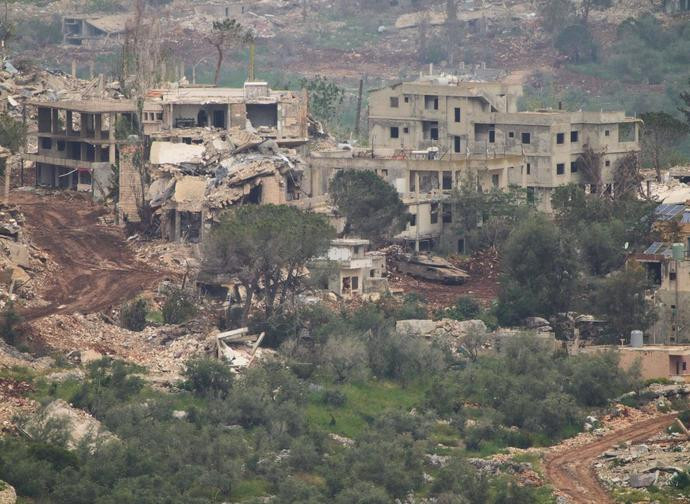
As with Iran, the same can be said of the other two fronts: Gaza has been razed to the ground, yet Hamas is still there. The Israeli army has invaded southern Lebanon and bombed Beirut and other Lebanese cities, yet Hezbollah is still active.
Why has it not been possible to achieve the objectives in all these cases (regardless of whether one agrees with these objectives)? This is certainly due to errors of underestimating the enemy’s forces or overestimating one’s own, but it is also because, as is evident in the cases of Ukraine and Iran, other powers with an interest in stopping the ‘aggressors’ come into play in support of the intended victims.
The result is that, provided no one considers using nuclear weapons, the war will inevitably have to end with a negotiated settlement, which necessarily entails scaling back objectives and leaving the situation worse than before the war.
In Ukraine, for example, a potential agreement could allow Russia to annex the Ukrainian territories it has already conquered. However, these territories will require extensive rehabilitation and reconstruction, and Moscow will have to consider the economic and human losses incurred. The most realistic estimates suggest that at least 200,000 Russian soldiers have been killed in the conflict (with some estimates reaching 325,000), and when the wounded are included, the total losses amount to over a million people. This is a veritable social time bomb, and the political and military repercussions of a failed operation must also be considered.
In Iran, the United States is currently negotiating an agreement that could worsen the situation before 28 February. The regime will remain in power, the nuclear programme will likely continue, and Tehran may be granted rights over the Strait of Hormuz. In return, the sanctions against the Ayatollahs' regime could be lifted, either fully or partially. All this, of course, without considering the heavy consequences for energy costs and food security that the whole world will end up paying for.
To this must also be added the suffering and hatred that every war entails, which is passed down through generations.
What does all this tell us? That, before we start discussing the 'just war', we should first reflect on the futility of war in achieving political and economic objectives. This is not a matter of pacifism, but of realism. While pacifism encourages violence and the law of the jungle with its utopianism, realism suggests that we should seek to resolve disputes by reconciling differing interests and shun the idea that peace can be achieved by eliminating part of humanity, however small or large that part may be.
