
THE POPE’S APPEAL TO ÉCÔNE: FOR THE SAKE OF SOULS, TURN BACK
‘I beg you and implore you with all my heart: turn back!’: Leo XIV writes to Father Pagliarani and the members of the FSSPX, urging them, for the sake of their own faithful, to turn back from a schismatic act that ‘would deprive them of the lawful – and in some cases even valid – reception of the Sacraments which they love and seek for their own sanctification.’


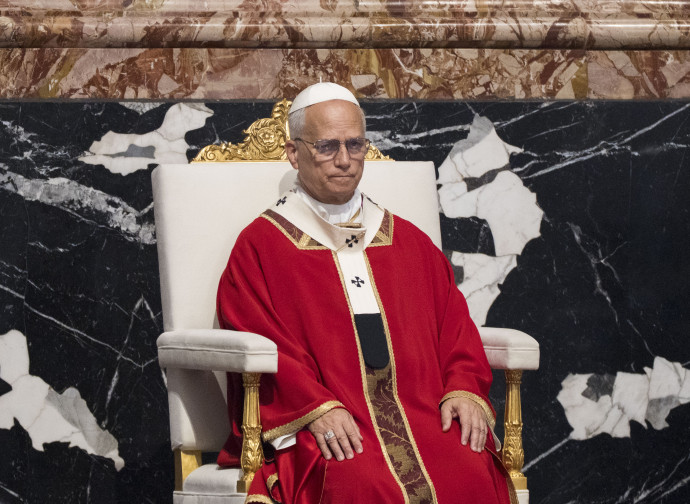
‘I beg you and implore you with all my heart: turn back!’ This is the heartfelt, last-ditch appeal that Pope Leo made a short while ago in a letter addressed to Father Davide Pagliarani, Superior General of the Priestly Fraternity of St Pius X, in an attempt to persuade the FSSPX to desist from proceeding with the episcopal consecration against the Pope’s will, scheduled for tomorrow, 1 July. The Holy Father appeals to the ‘authority received from Christ’, as successor to the Apostle Peter, head of the visible Church and visible principle of its unity.
The Pope speaks ‘with a fatherly heart’, ‘sorrowful yet still full of hope’, acknowledging the positive qualities of the FSSPX – ‘their attachment to liturgical life, their commitment to priestly formation, their apostolic zeal and their desire for fidelity to Tradition’ – yet remains fully aware of the ‘extreme gravity’ of the sin of schism which the FSSPX will commit if it proceeds with its plan.
The letter appears to outline what is likely to be published by the Congregation for the Doctrine of the Faith, once it has learnt of the illegitimate consecration of the four candidates: ‘the schismatic act which you would commit would deprive them [the faithful] of the lawful and, in some cases, even valid reception of the Sacraments which they love and seek for their own sanctification’. The Holy See therefore appears to be maintaining the line set out in the Ecclesia Dei adflicta, confirming the inherently schismatic nature of ordinations carried out against the will of the Roman Pontiff; but the ‘novelty’, compared with 1988, seems to lie in the revocation of Pope Francis’s concessions, which had restored validity to the sacraments of penance and marriage.
The Pope asks that no illegitimate ordinations take place precisely for ‘the spiritual good of the faithful’, that salus animarum in the name of which the FSSPX justifies its actions. Two opposing lines of reasoning thus emerge: on the one hand, Leo XIV, in keeping with the entire Tradition of the Church, reminds us that the good of souls lies in receiving the sacraments of the Church within the Church; outside it, certain sacraments are invalid, and others are illicit and therefore bear no fruit for the soul receiving them; indeed, if that soul is conscious of what it is doing, it is preparing to commit a sacrilege. On the other hand, the FSSPX maintains that effective submission to the Successor of Peter, in all matters falling within his authority (and the appointment of bishops is his prerogative), is not necessary for the salvation of souls in a ‘state of necessity’.
The Pope sends a further signal of openness: ‘The Church is open to a path of dialogue and understanding that the Holy Spirit can make possible and fruitful.’ It is unlikely that Father Pagliarani will change his mind, as he is determined to proceed with the consecrations, with or without the Pope’s mandatum. We shall see whether the FSSPX decides, in any case, to respond to the Pope’s appeal.
