

Debate in Washington: what if US runs out of its missile stockpiles
How many missiles does the US have left? “As many as we want,” says Trump. 'In reality, stocks are running low,' say the experts. This explains the president’s wavering stance.

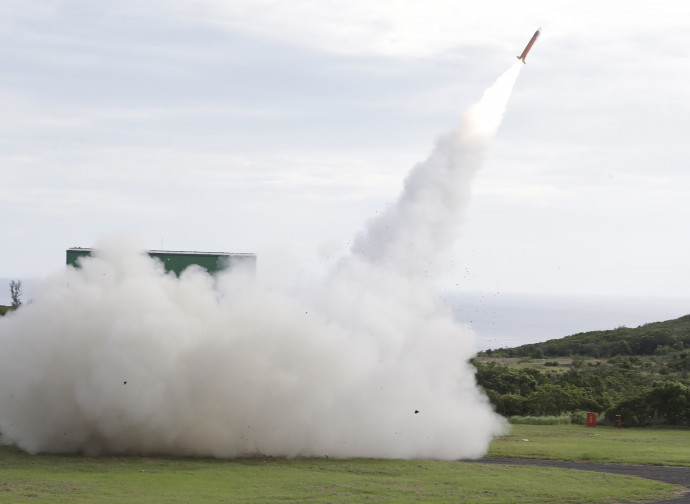
But is the US really running out of missiles? One of the unintended consequences of the war in Iran, which has lasted far longer than Trump's announced 'blitzkrieg' in March, is the significant weakening of the US arsenal. This is creating difficulties within the Trump administration and in maintaining the delicate balance with US allies. What is driving Trump to deny Ukraine's urgently requested aid in the field of air and missile defence once again? And why has Trump been insisting ever more strongly that European allies rearm for the past year? Why is the war in Iran proceeding in a stop-start manner, with surges in fighting and immediate returns to negotiations, even without securing the reopening of the Strait of Hormuz? These difficult decisions by the Trump administration may be driven by a significant stock-taking issue: they are running out of missiles. The American defence industry is reportedly unable to produce sufficient stocks. These are, of course, merely hypotheses, albeit well-documented ones.
Why does the US federal government not want to reveal how many missiles it has left? Because it does not want Iran, Russia, China or North Korea to realise that the United States might be running short of weapons with which to protect its most vulnerable allies, including those already at war, such as Ukraine and Israel, and those that could be at war shortly, such as Taiwan and South Korea. These figures are therefore ones that the government never wishes to disclose, not even in peacetime. Ammunition stocks are jealously guarded.
When asked about stock figures, the White House issued a statement from Trump in which he claimed that the United States possesses 'far more ammunition than anyone else in the world' and 'far more than we need'.
However, according to four anonymous Reuters sources familiar with the facts, the situation is not as rosy as Trump portrays it. One source stated that the reduction in ATacMS (Army Tactical Missile System) tactical ballistic missile stocks and those of their immediate successors, the PrSMs (Precision Strike Missiles), reflected a Trump administration decision to avoid riskier methods of attacking Iranian targets (i.e. sending in aircraft and risking pilots' lives).
Two other sources told Reuters that military leaders have been warning the president for weeks that stocks of defensive weapons, including Patriot interceptor missiles, which are effective against ballistic missiles, are running low. Last week, several media outlets reported that Trump had decided against launching another large-scale offensive against Iran, partly due to warnings from his military advisers about US stockpiles. Another interpretation is that he did not take action due to pressure from the Gulf States. However, these two versions are consistent with each other because the Gulf States are the ones most exposed to Iranian retaliation and therefore most in need of protection from Patriots and the more powerful American THAAD anti-missile systems.
According to a CNN source, US stocks of medium-range Tomahawk cruise missiles (the spearhead of all US air campaigns since the 1990s) are also significantly depleted, as almost half of these weapons were used during the war. In April, CNN reported that the US military had used almost 30 per cent of its Tomahawk missiles during the first month of the war alone.
Last week, the prestigious think tank CSIS (Center for Strategic and International Studies) published a report estimating that, between February and July, around 65 per cent of Patriot interceptor missiles had been deployed, and that the number of THAAD interceptors in US arsenals had fallen by at least 38 per cent since the start of the war.
However, these are estimates based on open-source information. Actual figures regarding stockpiles were circulated within the federal government last week, and discussions on how long the United States can continue to strike Iran were reportedly very tense.
In an attempt to reassure the public while simultaneously shifting the blame onto his predecessor, Joe Biden, and Ukraine, Trump stated last month: 'We have a great deal of ammunition of various types. Biden gave a lot of it to Ukraine, but we're rebuilding our stocks and we have plenty — a great deal — of medium-range ammunition.' The president reiterated this yesterday during a press conference at the White House: 'We want the missiles for ourselves, you know. When Biden gave them so much... he gave away $300 billion's worth of ammunition. You know, when I left, the stockpiles were full, and he gave most of it away. Now we’re rebuilding them, and we’re using very powerful, very good ammunition, but we wouldn’t be using it; we could have used something else...'
However, those in the know continue to point the finger at the use and misuse of American missiles, particularly for defence against Iranian drones and missiles, which are much cheaper. 'I was shocked by the number of Patriots we’ve fired,' retired US Navy Rear Admiral Mark Montgomery told the Wall Street Journal. The United States may have ‘used up 2,300’ of them. For comparison, the admiral said that they had supplied 600 to Ukraine, many of which were older models supplied via other partners, and concluded that ‘Ukraine is not the problem’.
The problem for the US lies in the reckless use of high-value weapons. And in production. This explains the massive investments announced in recent weeks.
On 30 July, the Pentagon allocated over 120 billion dollars to enable contractors to ramp up production of Patriot missiles and new submarines, the delivery of which has been delayed for a long time, in order to protect areas of crisis that would otherwise be left unguarded.
