
The Mission of the Co-Redemptrix and the Co-Redeemers
We are pleased to publish the address entitled 'Our Lady of Guadalupe and the Kingdom of Christ the King: The Mission of the Co-Redemptrix and the Co-Redeemers', which was delivered by Cardinal Raymond L. Burke at the opening of the 'The Mystery of Mary in Dogma and the Magisterium' conference (Rome, Augustinianum Patristic Institute, 7–8 October 2026). This address was made available to us courtesy of the organisers.

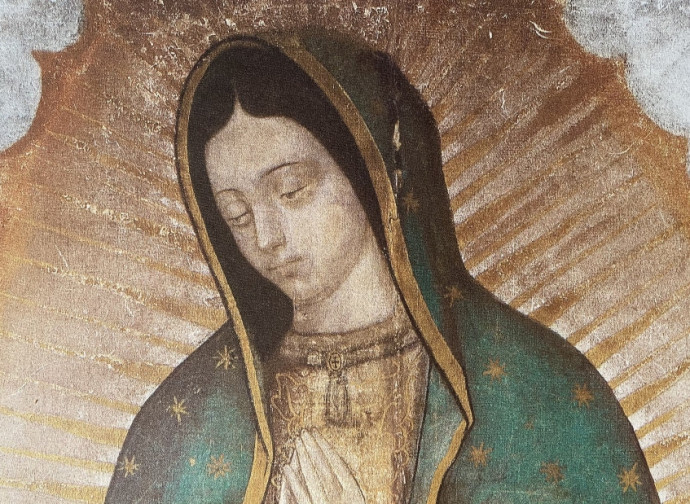
“Our Lady of Guadalupe and the Reign of Christ the King:
The Mission of Co-Redemptrix and of Co-Redeemers”
Introduction
It is a source of deepest joy for me to offer the Opening Address of this important international conference on the Blessed Virgin Mary in Dogma and Worship; Theological and Historical Contributions. With you, I am deeply grateful to those who have organized the Conference and those who have made it possible. To begin the conference, I offer a reflection on the theme: Our Lady of Guadalupe and the Reign of Christ the King: The Mission of Co-Redemptrix and of Co-Redeemers.
At the very beginning of her first apparition to Saint Juan Diego, Our Lady of Guadalupe identified herself with these words: “Know, know for sure my dearest and youngest son, that I am truly the ever perfect Holy Virgin Mary, who has the honor to be the Mother of the one true God for whom we all live, the Creator of people, the Lord of all around us and of what is close to us, the Lord of Heaven, the Lord of Earth.[1] Her apparitions to Saint Juan Diego from December 9th to 12th of 1531, can be described as the manifestation of Christ, her Divine Son, as the King of Heaven and of Earth Who restores the right order and peace with which and for which God has created the world and, above all, man, male and female.
In her miraculously made and preserved image, Our Lady of Guadalupe is the “woman clothed with the sun, with the moon under her feet and on her head a crown of twelve stars,”[2] whom Saint John Apostle and Evangelist saw in his vision of Our Lord’s definitive victory over sin and death. Our Lady of Guadalupe is pregnant with the “male child”[3] Who indeed is King of Heaven and Earth, Who conquers Satan and his cohorts, so that, notwithstanding their fierce and vicious rebellion, will never prevail over the Church, over the souls of those who are alive in Christ.[4] The vocation and the mission of every Christian is therefore, in the words of Saint Paul in the Letter to the Ephesians, “to unite all things in [Christ], things in heaven and things on earth.”[5] Our Lord Jesus Christ, God the Son Incarnate, is alone the Redeemer, but God the Father, in sending His only-begotten Son in human flesh to redeem the world has desired the cooperation of man in the redemptive work, beginning with the Blessed Virgin Mary.
The Blessed Virgin Mary, Mother of God, participated in an altogether unique way in the Mystery of Faith, the Mystery of the Redemptive Incarnation, and is rightly called Co-Redemptrix. So, too, to the degree that we unite our hearts, one with her Immaculate Heart, to the Most Sacred Heart of Jesus, we participate in the saving mission of Christ. We can rightly be called co-redeemers. In the words of Saint John Apostle and Evangelist, we are called to be in Christ “fellow workers in the truth.”[6] Our Lord Himself makes clear the intimacy of our relationship with Him, when He declares: “If any man would come after me, let him deny himself and take up his cross daily and follow me.”[7] In addressing this International Conference on the Blessed Virgin Mary in Dogma and Worship, I want to present the unique share in the mission of Christ the King, the mission of the Redemptive Incarnation, which belongs to the Virgin Mother of God as Co-Redemptrix and our share in the same mission as co-redeemers.
The apparitions of the Virgin Mother of God at Tepeyac Hill in present-day Mexico City help us, in a particular way, to understand her mission and our corresponding mission. In fact, Our Lady’s children of Mexico, guadalupanos and guadalupanas, have always understood their mission in the world as service of Christ the King under the maternal care of His Mother whom He gave to us as our Mother as He was dying on the cross for our eternal salvation.[8] Blessed Miguel Pro wrote two short prayers on the wall of the prison in which he was held before he was martyred on November 23, 1927, by a firing squad during the bloody persecution of the Church in Mexico: “¡Viva Cristo Rey! ¡Viva la Virgen de Guadalupe!” (Long live Christ the King! Long live the Virgen of Guadalupe!).[9] So, too, Saint José Sanchez del Río, as he was cruelly tortured and killed, also by firing squad on February 10, 1928, repeatedly exclaimed: “¡Viva Cristo Rey! ¡Viva Santa Maria de Guadalupe!” (Long live Christ the King! Long live Holy Mary of Guadalupe!).[10] Even as the Virgin Mother of God took the wine stewards at the Wedding Feast of Cana to her Divine Son for the remedy of their great woe, instructing them: “Do whatever he tells you,”[11], so she accompanied these heroes of the faith to give their lives in doing God’s will. So, too, she draws our hearts to her Immaculate Heart leading us to give our hearts totally to the Sacred Heart of Jesus, even to the shedding of our blood with Him for the glory of God and the salvation of souls.
The Doctrine of the Co-Redemption
The Virgin Mary’s cooperation in Christ’s work of the Redemption has two aspects which, over time, theologians have illustrated by distinguishing objective Redemption from subjective Redemption. Monsignor Arthur B. Calkins who has written extensively and profoundly on the title, Co-Redemptrix, explains the distinction:
Traditionally, theologians have distinguished between Mary’s unique collaboration in the redemption as it was taking place in actu primo from the application of the graces of the redemption to individual persons which takes place in actu secundo. Redemption in actu primo or “objective redemption” or the ascending phase of redemption may be defined as the acquisition of universal salvation by means of the sacrifice willed by God to reconcile the world to himself. Redemption in actu secundo or “subjective redemption” or the descending phase of redemption or the mediation of grace may be defined as the application of the fruits of the redemption to particular individuals by means of the mediation willed by God. It has been consistently held that Our Lady participates in both of these phases of the work of redemption while all other Christians can participate in the application of the graces of redemption to specific persons and situations. Hence we can all be coredeemers in actu secundo.[12]
Holiness of life, in fact, is participation in the saving work of Christ Who alone is our salvation.
Saint Paul declares the truth of our participation in the redemptive work of Christ in the Letter to the Colossians. Writing about his own sufferings, he understands that they are to be united to the Passion and Death of Christ:
Now I rejoice in my sufferings for your sake, and in my flesh I complete what is lacking in Christ’s afflictions for the sake of his body, that is, the church, of which I became a minister according to the divine office which was given to me for you, to make the word of God fully known, the mystery hidden for ages and generations but now made manifest to his saints.[13]
It is not that anything is lacking in the sufferings of Christ for our eternal salvation but that His life in us, the life of grace, must come to maturity in us, especially through the union of our sufferings with His Passion and Death.
For the past several decades there has been an ongoing discussion in the Church about Our Lady’s active collaboration in the work of the Redemption. The question is: In what sense is the Blessed Virgin Mary the New Eve, the helpmate of Jesus, the New Adam (cf. Rm 5, 12-21; 1 Cor 15, 22. 45). For over five hundred years the term Co-Redemptrix has been used to express the concept that Mary, while not being equal to Jesus, but a creature totally dependent upon Him, secondary and subordinate to Him, nonetheless united herself with Him and joined in offering Him to the Father for our salvation on Calvary. The fittingness of the title sustained a contentious discussion in the drafting of chapter eight of Lumen Gentium, which contains the Second Vatican Council’s fundamental teaching on Our Lady.[14] Ultimately the Council clearly taught Mary’s active collaboration in the work of the Redemption in numbers 56-58 and 60-62 of the Dogmatic Constitution on the Church, Lumen Gentium, but did not use the word Co-Redemptrix out of fear that it would be misunderstood by non-Catholics.
Our Lady’s mediation of grace flows from her role as Co-Redemptrix. The word, Mediatrix, was used once in number 62 of Lumen Gentium with the appropriate insistence that “it neither takes away anything from nor adds anything to the dignity and efficacy of Christ the one Mediator.”[15] She is Mediatrix with her Divine Son, the Mediator, as had been taught in very clear language by nineteenth- and twentieth-century Popes as well as by the post-conciliar Popes.
Part of the difficulty is the meaning which the word, Co-Redemptrix, may have when translated into certain modern languages. The English word, Co-Redemptrix, can signify a joint actor, but it also may mean someone who cooperates in a work which is principally and essentially of another. Monsignor Arthur Burton Calkins addresses the possible confusion about the sense of Co-Redemptrix, indicating clearly that “[i]n the Latin language from which the term, Coredemptrix comes, however, the meaning is always that Mary’s cooperation or collaboration in the redemption is secondary, subordinate, dependent on that of Christ – and yet for all that – something that God ‘freely wished to accept … as constituting an unneeded, but yet wonderfully pleasing part of that one great price’ paid by His Son for the world’s redemption.”[16]
In his General Audience Address of October 25, 1995, Pope Saint John Paul II described how historically the Church expressed ever more clearly the truth about the participation of the Blessed Virgin Mary, Mother of God, in Christ’s work of the Redemption:
1. Saying that “the Virgin Mary … is acknowledged and honoured as being truly the Mother of God and of the Redeemer” (Lumen Gentium, n. 53), the Council draws attention to the link between Mary’s motherhood and Redemption.
After becoming aware of the maternal role of Mary, who was venerated in the teaching and worship of the first centuries as the virginal Mother of Jesus Christ and therefore as the Mother of God, in the Middle Ages the Church’s piety and theological reflection brought to light her cooperation in the Saviour’s work.
This delay is explained by the fact that the efforts of the Church Fathers and of the early Ecumenical Councils, focused as they were on Christ’s identity, necessarily left other aspects of dogma aside. Only gradually could the revealed truth be unfolded in all its richness. Down the centuries, Mariology would always take its direction from Christology. The divine motherhood of Mary was itself proclaimed at the Council of Ephesus primarily to affirm the oneness of Christ’s person. Similarly, there was a deeper understanding of Mary’s presence in salvation history.
2. At the end of the second century, St. Irenaeus, a disciple of Polycarp, already pointed out Mary’s contribution to the work of salvation. He understood the value of Mary’s consent at the time of the Annunciation, recognizing in the Virgin of Nazareth’s obedience to and faith in the angel’s message the prefect antithesis of Eve’s disobedience and disbelief, with a beneficial effect on humanity’s destiny. In fact, just as Eve caused death, so Mary, with her “yes,” became “a cause of salvation” for herself and for all mankind (cf. Adv. Haer. III, 22, 4; SC211, 441). But this affirmation was not developed in a consistent and systematic way by the other Fathers of the Church.
Instead, this doctrine was systematically worked out for the first time at the end of the 10th century in the Life of Mary by a Byzantine monk, John the Geometer. Here Mary is united to Christ in the whole work of Redemption, sharing, according to God’s plan, in the Cross and suffering for our salvation. She remained united to the Son “in every deed, attitude and wish” (cf. Life of Mary, Bol. 196, f. 123 v.).
3. In the West St. Bernard, who died in 1153, turns to Mary and comments on the presentation of Jesus in the temple: “Offer your Son, sacrosanct Virgin, and present the fruit of your womb to the Lord. For our reconciliation with all, offer the heavenly victim pleasing to God” (Serm. 3 in Purif., 2: PL 183, 370).
A disciple and friend of St. Bernard, Arnold of Chartres, shed light particularly on Mary’s offering in the sacrifice of Calvary. He distinguished in the Cross “two altars: one in Mary’s heart, the other in Christ’s body. Christ sacrificed his flesh, Mary her soul.” Mary sacrificed herself spiritually in deep communion with Christ, and implored the world’s salvation: “What the mother asks, the Son approves and the Father grants” (cf. De septem verbis Domini in cruce, 3: PL 189, 1694).
From this age on other authors explain the doctrine of Mary’s special cooperation in the redemptive sacrifice.[17]
As Pope Saint John Paul II illustrates, the use of the term, Co-Redemptrix, adds nothing new to the Church’s teaching but rather develops uniformly the expression of what the Church has always taught.
Recent years have seen a strong movement in favor of recognizing Mary’s role as Co-Redemptrix, Mediatrix and Advocate with a solemn papal definition. A commission was convened very briefly at the Mariological-Marian Congresses held in Częstochowa, Poland in August of 1996 to offer the Holy See advice on this matter. One of its counsels was that further study was needed.[18] Such study continues to be undertaken by a number of competent theologians.
Our Lady’s role as Co-Redemptrix and Mediatrix of all graces pertains to her nature as our spiritual mother to whom we consecrate ourselves so as to belong ever more completely to Jesus. Two of the greatest modern teachers of Marian consecration, Saint Louis-Marie Grignion de Montfort (1673-1716) and Saint Maximilian Maria Kolbe (1894-1941), base their teaching on consecration to Mary explicitly on Mary’s mediation of the graces of the Redemption to us. Living in union with Mary is a great key to growing in our knowledge and love of Jesus. She never draws us to herself for her own sake, but always in order to lead us ever more closely to Jesus. Thus, Saint Louis-Marie Grignion de Montfort prayed: Totus tuus ego sum et omnia mea tua sunt. Accipio te in mea omnia. Præbe mihi cor tuum, Maria [“I belong entirely to you, and all that I have is yours; I take you for my all. O Mary, give me your heart”].[19] His prayer was the inspiration of the motto of Pope Saint John Paul II’s papal coat-of-arms.
Mary Co-Redemptrix in the Holy Scriptures
The truth of the Blessed Virgin Mary’s unique share in the work of Redemption is foretold in the first promise of salvation made by the Lord at the time of the sin of our First Parents. Speaking to the serpent who had successfully tempted Eve, Our Lord declared: “I will put enmity between you and the woman, and between your seed and her seed; he shall bruise your head, and you shall bruise his heel.”[20] The Protoevangelium, the First Gospel, as it is fittingly called, makes clear that the work of salvation is to involve a woman whose offspring will crush the head of the serpent, of Satan and his cohorts. In other words, a woman will cooperate with the work of salvation in a singular, indeed unique, way.
Our Lord renewed the promise of salvation through the words of the Prophet Isaiah to King Achaz: “Therefore the Lord himself shall give you a sign. Behold a virgin shall conceive, and bear a son, and his name shall be called Emmanuel.”[21] Commenting on the texts of the Protoevangelium and of the Prophet Isaiah, the Second Vatican Council declared:
The sacred writings of the Old and the New Testaments, as well as venerable tradition, show the role of the Mother of the Saviour in the plan of salvation in an ever clearer light and call our attention to it. The books of the Old Testament describe the history of salvation, by which the coming of Christ into the world was slowly prepared. The earliest documents, as they are read in the Church and are understood in the light of a further and full revelation, bring the figure of a woman, Mother of the Redeemer, into a gradually clearer light. Considered in this light, she is already prophetically foreshadowed in the promise of victory over the serpent which was given to our first parents after their fall into sin (cf. Gen. 3:15). Likewise she is the virgin who shall conceive and bear a son, whose name shall be called Emmanuel (cf. Is. 7:14; Mic. 5:2-3; Mt. 1:22-23). She stands out among the poor and humble of the Lord, who confidently hope for and receive salvation from him. After a long period of waiting the times are fulfilled in her, the exalted Daughter of Sion and the new plan of salvation is established, when the Son of God has taken human nature from her, that he might in the mysteries of his flesh free man from sin.[22]
The freeing of man from sin is accomplished by God the Son Incarnate of the Virgin Mary by the overshadowing of the Holy Spirit. The Virgin Mary cooperates in an altogether singular, indeed unique, manner in the work of the Redemption, according to the plan of God. We find the full expression of the identity of the Virgin Mary in the work of the Redemptive Incarnation. Father Ignace de la Potterie illustrates the mediation of the Virgin Mother of God in the work of the Redemption by studying the Prologue of the Gospel according to Saint John and the account of the Annunciation in the Gospel according to Saint Luke.[23]
The Heart of Mary was, according to God’s eternal plan, conceived without the stain of original sin so that her womb could be the fitting tabernacle in which God the Son would come to dwell and from which He would be born into the family of Mary and Joseph, her true spouse and the virginal father of Jesus. Her Immaculate Heart remains forever disposed to bring men, with maternal love, to the Heart of her Divine Son with the instruction she first gave at the Wedding Feast of Cana: “Do whatever he tells you.”[24]
In his Letter to the Galatians, Saint Paul expresses the truth of Mary’s unique cooperation in the Mystery of the Redemptive Incarnation in its relationship to our own call to be “co-workers [with Christ] in the truth”[25]:
But when the time had fully come, God sent forth his Son, born of woman, born under the law, to redeem those who were under the law, so that we might receive adoption as sons. And because you are sons, God has sent the Spirit of his Son into our hearts, crying, “Abba! Father!” So through God you are no longer a slave but a son, and if a son then an heir.[26]
It is through the mediation of the Virgin Mary, her co-redemptive mission in the Redemptive Incarnation of her Son that we are heirs to eternal life, that we are called to the high dignity of following Christ on the way of the Cross.[27]
Our Lady of Guadalupe, Co-Redemptrix
The apparitions and message of the Blessed Virgin Mary at Tepeyac Hill in present-day Mexico City from December 9th to 12th in 1531 are a powerful expression of her singular, indeed unique, participation in the Redemptive Incarnation, in actu primo, that is in the work by which God the Son Incarnate has accomplished our salvation by His Passion, Death, Resurrection, and Ascension, and in actu secundo, that is in the realization of His saving work in the souls of many, of every time and place, who come to life in Him through Baptism and live in Him in the Church, His Mystical Body. One can say, in fact, that all the apparitions of the Virgin Mother of God are a manifestation of her unique relationship with God the Son, her Divine Son, by which she became Co-Redemptrix and an expression of her mission of Co-Redemptrix in every time and place until the end of the age. Every Marian apparition is the work of Christ, assisted, as He was from the moment of His virginal conception, by His Mother.
Mary declares her identity as Co-Redemptrix in actu primo from the first moment of her apparitions to Saint Juan Diego. On December 9, 1531, Saint Juan Diego was on his way to Tlatelolco to receive catechetical instruction from the Franciscan Friars, when at Tepeyac Hill he experienced something otherworldly, in fact, heavenly, from the sounds of the birds to the appearance of Our Lady in a glorious manner among the stones and plants transformed to appear as precious jewels. The account of the apparition in the Nican Mopohua, which Juan Diego’s good and learned friend Antonio Valeriano composed on the basis of the direct account of Juan Diego, indicates that Juan Diego recognized Our Lady as the Mother of God. Our Lady addresses Juan Diego in a most affectionate,D maternal way, asking him where he was going, and he responds: “My Lady, my Queen, my Little Girl, I am going as far as your little house in Mexico Tlatelolco, to follow the things of God that are to us given, that are taught to us by our priests, those who are the images of the Lord, Our Lord.”[28]
Our Lady then declared: “Know, know for sure my dearest and youngest son, that I am truly the ever perfect Holy Virgin Mary, who has the honor to be the Mother of the one true God for whom we all live, the Creator of people, the Lord of all around us and of what is close to us, the Lord of Heaven, the Lord of Earth.”[29] These words express in a wonderful way the mystery of Our Lady’s Perpetual Virginity and Divine Maternity by which she shares, in an altogether singular, indeed unique, way, in the redemptive work of her Divine Son. Our Lady identifies herself as both ever virgin and as the Mother of God the Son. She declares her participation in the work of the Redemption in actu primo. In other words, she makes clear that our relationship with God the Father Who has redeemed us by the Incarnation of God the Son places us in a filial relationship with her, the Mother of God the Son Incarnate. We are adopted sons and daughters of God in His only-begotten Son, Our Lord Jesus Christ, and therefore share with Him His Mother, even as He declared to Saint John Apostle and Evangelist as He was dying on the cross.[30]
Saint John Apostle and Evangelist represented the Apostles and the entire flock whom Christ had confided to the pastoral charity of the Apostles, to His pastoral charity. Our relationship with Our Lady has its origin in the very act of our Redemption by Christ’s death on the Cross.
Our Lady, after identifying herself as Co-Redemptrix in actu primo to Saint Juan Diego then expresses her mission as Co-Redemptrix in actu secundo. She makes clear the reason of her apparition:
I want very much that they build my sacred little house here, in which I will show Him, I will exalt Him upon making Him manifest, I will give Him to all people in all my personal love, Him that is my compassionate gaze, Him that is my help, Him that is my salvation.
Because truly I am honored to be your compassionate mother, yours and that of all the people that live together in this land, and also of all the other various lineages of men; those who love me, those who cry to me, those who seek me, those who trust in me. Because there [at my sacred house] truly will I hear their cry, their sadness, in order to remedy, to cure all their various troubles, their miseries, their pains.
And to bring about what my compassionate and merciful gaze would achieve, go to the palace of the Bishop of Mexico, and tell him how I have sent you, so that you may reveal to him how I very much want him to build me a house here, to erect my temple on the plain; tell him everything, all you have seen and marveled at, and what you have heard. And because of it I will enrich you, I will glorify you; and because of it you will deserve very much how I will reward your fatigue, your service in going to petition the matter for which I am sending you. Now, my dearest son, you have heard my breath, my word; go, do what you are responsible for doing.[31]
The words of Our Lady manifest her unique and irreplaceable service in the work of our salvation, according to God’s plan.
In actu secundo, the Blessed Virgin Mary continues to be the privileged instrument of divine grace in the Church, even as she was the first tabernacle in which God the Son came to dwell, when He united our human nature to His divine nature in her womb by the overshadowing of the Holy Spirit. At Tepeyac Hill, she appeared to Saint Juan Diego to manifest God’s love and mercy toward all men, to manifest the inviolable dignity of human life created in God’s image and likeness and saved from sin and death by the Redemptive Incarnation of God the Son. In words to Saint Juan Diego, when he feared his uncle Juan Bernardino’s death and was postponing his appointment with Our Lady, in order to bring a priest to hear his uncle’s confession before he died, Our Lady expresses her abiding presence with us in the Church as the Virgin Mother of God who is also the Mother of Divine Grace, our Mother, drawing us ever more intimately into communion with her Divine Son. She declared to Saint Juan Diego:
Listen, put it into your heart, my youngest son, that what frightened you, what afflicted you is nothing; do not let it disturb your face, your heart; do not fear this sickness or any other sickness, nor any sharp or hurtful thing. Am I not here, I who have the honor to be your mother? Are you not in my shadow and under my protection? Am I not the source of your joy? Are you not in the hollow of my mantle, in the crossing of my arms? Do you need anything more?
Let nothing else worry you, disturb you; don’t grieve over your uncle’s illness, because he will not die of it for now, you may be certain that he is already healed.[32]
Our Lady’s words are not figures of speech. Rather, they reflect her continuing mission in the Church, a singular mission in which she has asked Saint Juan Diego to share.
The miraculous imprint of her image on the tilma or mantle of Saint Juan Diego is a most wonderful sign of her participation in the work of the Redemption, accomplished by her Divine Son. In confirming her mission to the Bishop by the sign of the miraculous flowering of roses in the middle of winter on a stony hill on which only weeds and thorn bushes were growing, God gave a further confirmation which He has not given in any other apparition of Our Lady. Let us listen again to the account of the presentation of the sign of the roses to Bishop Juan de Zumárraga by Saint Juan Diego:
And then [Juan Diego] opened his white tilma, in the hollow of which were the flowers. And all the different flowers, like those from Castille, fell to the floor. Then and there his tilma became the sign, there suddenly appeared the Beloved Image of the Perfect Virgin Saint Mary, Mother of God, in the form and figure in which it is now, where it is preserved in her beloved little house in Tepeyac, which is called Guadalupe. And as soon as the Governing Bishop and all those who were there saw it, they knelt, they were full of awe, they stood to see it, they were moved, their hearts were troubled, their hearts as well as their minds were raised. And the Governing bishop, in tears, with sadness, begged Her, he asked Her forgiveness for not having carried out Her venerable will, Her venerable breath, Her venerable word.
And the Bishop got up, and untied Juan Diego’s garment, his tilma, from his neck where it was tied, on which appeared the venerable sign of the Heavenly Queen. And then he took it and placed it in his private chapel. And Juan Diego still stayed for the day in the Bishop’s house who still kept him there. And on the next day he [the Bishop] said to him: “Come, let’s go so you can show me where it is that the venerable will of the Queen of Heaven wants Her chapel built.” Immediately the order was given to make it, to build it.[33]
In a very brief time, the chapel was built, and Bishop Juan de Zumárraga enshrined the sacred tilma in it. The Nican Mopohua concludes with these words:
And after some time, the Reverend Bishop moved the beloved Image of the Heavenly Maiden to the main church. He [the Bishop] took if from his palace, from his chapel where it had been, so that everyone could see and admire Her precious Image. And absolutely everyone, the entire city, without exception, trembled when they went to behold, to admire Her precious Image. They came to acknowledge it as something divine. They came to offer Her their prayers. They marveled at the miraculous way it had appeared since absolutely no one on Earth had painted Her beloved Image.[34]
The abiding presence of the Mother of God, the Mother of Divine Grace, with those who came on pilgrimage to the holy place in which the sacred tilma was enshrined was and continues to be indescribably efficacious. The Virgin of Guadalupe brought so many souls to life in Christ through Baptism and led so many of the baptized to abandon their sinful ways and to follow the Way of Christ Who alone is our salvation.
Mary Co-Redemptrix always teaches us, draws us, to share in the work of the Redemptive Incarnation in actu secundo, according to our vocation in life and our God-given talents. As Co-Redemptrix, she is the first among the disciples of her Divine Son, she shares in His saving work both in actu primo et in actu secundo, but she teaches all who are adopted sons and daughters of God in His only-begotten Son through Baptism that they, too, must do all within their power to serve Christ, to be His “fellow workers in the truth.”[35] When Saint Juan Diego doubted his capacity to serve as Our Lady’s messenger, suggesting that she choose someone more noble, more able, Our Lady responded:
Listen my youngest son, know for sure that I have no lack of servants, of messengers, to whom I can give the task of carrying my breath, my word, so that they carry out my will; but it is necessary that you, personally, go and plead, that by your intercession, my wish, my will, become a reality. And I beg you, my youngest son, and I strictly order you, to go again tomorrow to see the Bishop. And in my name, make him know, make him hear my wish, my will, so that he will bring into being, he will build, my sacred house that I ask of him. And carefully tell him again how I, personally, the ever Virgin Holy Mary, I, who am the Mother of God, sent you as my messenger.[36]
Whenever we come on pilgrimage to the holy place of Our Lady of Guadalupe, she confirms us in our mission as her messengers, as heralds and instruments of God’s saving love and mercy. She unites our hearts more fully to her Immaculate Heart so that they rest ever more securely and fully in the Sacred Heart of Jesus where they are purified of sin and inflamed with divine love. She speaks to us as she spoke to Saint Juan Diego:
Am I not here, I who have the honor to be your mother? Are you not in my shadow and under my protection? Am I not the source of your joy? Are you not in the hollow of my mantle, in the crossing of my arms? Do you need anything more?[37]
Especially in the most troubled and troubling time in which we live in the Church, we need to visit Our Heavenly Mother and be confirmed in our fidelity to her Divine Son, so that we remain with Him in the Church, tending whatever portion of His Kingdom, be it little or great, with all our heart, with a heart united to the Immaculate Heart of Mary and thus belonging totally to His Sacred Heart.
It is my hope that this brief presentation has shown you how the apparition of Our Lady of Guadalupe at Tepeyac Hill in 1531 is a most beautiful and eloquent manifestation and expression of the truth of her singular, indeed unique, participation in the saving work of her Divine Son, of the truth of the doctrine of her title, Co-Redemptrix, when properly understood. At the same time, I hope that it has reminded us all of our call to be, with the Virgin of Guadalupe, participants in the work of the Redemptive Incarnation. May we, with Saint Paul, be able to say to our brothers and sisters in the Church: “Now I rejoice in my sufferings for your sake, and in my flesh I complete what is lacking in Christ’s afflictions for the sake of his body, that is, the church.”[38]
Conclusion
While the Second Vatican Ecumenical Council did not make a dogmatic definition, it certainly taught the truth of the Co-Redemption, as I have indicated, in some way. In that regard, we should take care, lest the hesitation about the misunderstanding of the term, Co-Redemptrix, lead to a weakening of the teaching of the Co-Redemption as it applies, in a unique way, to the Blessed Virgin Mary and, in a common way, to all the baptized. It is my hope that my presentation has made clear the importance of the teaching of the Co-Redemption to our daily living in Christ.
I close with a reflection of Father Jean Galot, S.J., taken from an article which he wrote on the controversies and doctrinal questions connected with the title of Co-Redemptrix:
Some have accused the Marian privileges of digging a furrow between the Mother of Jesus and us; in reality, those privileges are destined, in the divine plan, to draw Mary nearer to humanity in view of the unfolding of a more abundant grace. While with a unique character and to a level not to be equalled, Mary’s cooperation in the redemption invites us to acknowledge more ardently our mission and our responsibility in a world that needs salvation. If Mary cannot be called Co-redemptrix, neither could Christians be considered as coredeemers. The condition of the whole Church in her coredeeming mission sheds light on Mary, the first model of every redemption.[39]
Thank you for your kind attention. May God bless you, and may Our Lady of Guadalupe keep you always in her maternal care.
Raymond Leo Cardinal BURKE
[1] “Sábelo, ten por cierto, hijo mío, el más pequeño, que yo soy en verdad la perfecta siempre Virgen Santa María, que tengo el honor de ser Madre del verdaderísimo Dios por quien se vive, el Creador de las personas, el Dueño de la cercanía y de la inmediación, el Dueño del cielo, el Dueño de la tierra.” Carl A. Anderson y Eduardo Chávez, Nuestra Señora de Guadalupe. Madre de la civilización del amor (México DF: Random House Mondadori, 2010), p. 214, n. 26. English translation: Carl Anderson and Eduardo Chávez, Our Lady of Guadalupe: Mother of the Civilization of Love (New York: Doubleday, 2009), p. 173, no. 26.
[2] Rev 12, 1.
[3] Rev 12, 5.
[4] Cf. Mt 16, 18.
[5] Eph 1, 10.
[6] 3 Jn 8.
[7] Lk 9, 23. Cf. Mt 16, 24; Mark 8, 34.
[8] Cf. Jn 19, 26-27.
[9] Cf. Antonio Dragón, Vida íntima del Padre Pro, tr. Rafael Martínez del Campo, 6a ed. (México, D.F.: Obra Nacional de la Buena Prensa, A.C., 1993), p. 234.
[10] Cf. Fidel González Fernández, José Sánchez del Río, Il giovane martire che diede la vita per la fede, ED. Federica Picchi Roncali (Firenze: Dominus Production Edizioni, 2016), pp. 129-133.
[11] Jn 2, 5.
[12] Calkins, p. 45.
[13] Col 1, 24-26.
[15] “ … ut dignitati et efficacitati Christi unius Mediatoris nihil deroget, nihil superaddat.” Sacrosanctum Concilium Oecumenicum Vaticanum II, “Constitutio Dogmatica de Ecclesia Lumen Gentium,” Acta Apostolicae Sedis 57 (1965) 63, n. 62. [LG]. English translation: Second Vatican Ecumenical Council, “Dogmatic Constitution Lumen Gentium, ‘On the Church,’ 21 November 1964,” Austin Flannery, ed., Vatican Council II, Vol. 1, Rev. Ed. (Northport, NY: Costello Publishing Company, 2004), p. 419, no. 62. [LGEng].
[16] Arthur Burton Calkins, “The Mystery of Mary Coredemptrix in the Papal Magisterium,” Mary Co-Redemptrix: Doctrinal Issues Today (Goleta, CA: Queenship Publishing Company, 2002), p. 30. [Calkins].
[17] “1. Dicendo che “Maria Vergine è riconosciuta e onorata come vera Madre di Dio, Madre del Redentore” [Lumen Gentium, 53], il Concilio attira l’attenzione sul legame esistente tra la maternità di Maria e la redenzione.
Dopo aver preso coscienza del ruolo materno di Maria, venerata nella dottrina e nel culto dei primi secoli quale Madre verginale di Gesù Cristo e quindi Madre di Dio, nel Medioevo la pietà e la riflessione teologica della Chiesa approfondiscono la sua collaborazione all’opera del Salvatore.
Questo ritardo si spiega con il fatto che lo sforzo dei Padri della Chiesa e dei primi Concili ecumenici, incentrato com’era sul mistero dell’identità di Cristo, lasciò necessariamente nell’ombra altri aspetti del dogma. Sarà solo progressivamente che la verità rivelata potrà essere esplicitata in tutta la sua ricchezza. Nel corso dei secoli la Mariologia si orienterà sempre in funzione della Cristologia. La stessa divina maternità di Maria viene proclamata nel Concilio di Efeso soprattutto per affermare l’unità personale di Cristo. Analogamente avviene per l’approfondimento della presenza di Maria nella storia della salvezza.
2. Alla fine del secondo secolo sant’Ireneo, discepolo di Policarpo, pone già in evidenza il contributo di Maria all’opera della salvezza. Egli ha compreso il valore del consenso di Maria al momento dell’Annunciazione, riconoscendo nell’obbedienza e nella fede della Vergine di Nazaret al messaggio dell’angelo l’antitesi perfetta della disobbedienza e dell’incredulità di Eva, con effetto benefico sul destino dell’umanità. Infatti, come Eva ha causato la morte, così Maria, col suo “sì”, è divenuta “causa di salvezza” per se stessa e per tutti gli uomini [Cfr. S. Irenaei Adversus Haereses, 3. 22, 4]. Ma si tratta di un’affermazione non sviluppata in modo organico e abituale dagli altri Padri della Chiesa.
Tale dottrina, invece, viene sistematicamente elaborata per la prima volta, alla fine del decimo secolo, nella “Vita di Maria” di un monaco bizantino, Giovanni il Geometra. Maria è qui unita a Cristo in tutta l’opera redentrice partecipando, secondo il piano divino, alla Croce e soffrendo per la nostra salvezza. Ella è rimasta unita al Figlio “in ogni azione, atteggiamento e volontà” [Giovanni il Geometra, Vita di Maria, Bol. 196, f. 122 v.]. L’associazione di Maria all’opera salvifica di Gesù avviene mediante il suo amore di Madre, un amore animato dalla grazia, che le conferisce una forza superiore: la più esente da passione si mostra la più compassionevole [Cfr. ibid. f. 123 v.].
3. In Occidente san Bernardo, morto nel 1153, rivolgendosi a Maria, così commenta la presentazione di Gesù al tempio: “Offri tuo Figlio, sacrosanta Vergine, e presenta al Signore il frutto del tuo seno. Per la nostra riconciliazione con tutti offri l’ostia santa, gradita a Dio” (S. Bernardi Sermo 3 in Purif., 2: PL 183, 370].
Un discepolo ed amico di san Bernardo, Arnaldo di Chartres, mette in luce in particolare l’offerta di Maria nel sacrificio del Calvario. Egli distingue nella Croce “due altari: uno nel cuore di Maria, l’altro nel corpo di Cristo. Il Cristo immolava la sua carne, Maria la sua anima”. Maria s’immola spiritualmente in profonda comunione con Cristo e supplica per la salvezza del mondo: “Quello che la madre chiede il Figlio lo approva, il Padre lo dona” [Arnaldi Carnutensis De Septem Verbis Domini in Cruce, 3: PL 189, 1694].
Da questa epoca in poi altri autori espongono la dottrina della speciale cooperazione di Maria al sacrificio redentore.” Insegnamenti di Giovanni Paolo II, XVIII, 2 [luglio-dicembre 1995] (Città del Vaticano: Libreria Editrice Vaticana, 1998), pp. 93 4-935. English translation: “Mary was united to Jesus on the Cross: Down the centuries the Church’s tradition has appreciated ever more profoundly Mary’s very close sharing in her Son’s redemptive mission,” L’Osservatore Romano Weekly Edition in English, 1 November 1995, 11.
[18] Cf. L’Osservatore Romano, 4 giugno 1997, 10-11. English translation: L’Osservatore Romano Weekly Edition in English, 4 June 1997, 12.
[19] Cf. Karol Wojtyła. Giovanni Paolo II, Dono e mistero. Diario di un Sacerdote (Città del Vaticano: Libreria Editrice Vaticana, 2011), p. 44. English translation: Pope John Paul II, Gift and Mystery: On the Fiftieth Anniversary of My Priestly Ordination (New York: Doubleday, 1996), pp. 29-30. Cf. also Arthur Burton Calkins, Totus Tuus: Pope John Paul II’s Program of Marian Consecration and Entrustment, 2nd ed. (New Bedford, MA: Academy of the Immaculate, 2017), p. 308.
[20] Gen 3, 15.
[21] Is 7, 14.
[22] “Sacrae Litterae Veteris Novique Testamenti et veneranda Traditio munus Matris Salvatoris in salutis oeconomia modo magis magisque dilucido ostendunt et veluti conspiciendum proponunt. Libri quidem Veteris Testamenti historiam salutis, qua Christi in mundum adventus lento gradu praeparatur, describunt. Quae primaeva documenta, qualiter in Ecclesia leguntur et sub luce ulterioris et plenae revelationis intelliguntur, clarius pedetentim in lucem proferunt figuram mulieris, Matris Redemptoris. Ipsa, sub hac luce, iam prophetice adumbratur in promissione, lapsis in peccatum primis parentibus data, de victoria super serpentem (cfr. Gen. 3,15). Similiter haec est Virgo quae concipiet et pariet Filium, cuius nomen vocabitur Emmanuel (cfr. Is. 7,14; cfr. Michaea 5, 2-3. - Matth. 1, 22-23). Ipsa praecellit inter humiles ac pauperes Domini, qui salutem cum fiducia ab Eo sperant et accipiunt. Cum Ipsa tandem praecelsa Filia Sion, post diuturnam exspectationem promissionis, complentur tempora et nova instauratur Oeconomia, quando Filius Dei humanam naturam ex ea assumpsit, ut mysteriis carnis suae hominem a peccato liberaret.” LG 59-60, n. 55. English translation: LGEng, p. 415, no. 55.
[23] Cf. Ignace de la Potterie, “The Mediation of the Mother of Jesus at the Incarnation: An Exegetical Study,” tr. Salwa Hamati, Mary Coredemptrix Mediatrix Advocate, Theological Foundations: Towards a Papal Definition?, ed. Mark I. Miravalle (Santa Barbara, CA: Queenship Publishing, 1995), pp. 173-190. [Potterie].
[24] Jn 2, 5.
[25] 3 Jn 8.
[26] Gal 4, 4-7.
[27] Cf. Lk 9, 23.
[28] “Señora mía, Reina mía, Muchachita mía, allá llegaré, a tu venerable casa en México Tlatelolco, a seguir las cosas de Dios que nos dan, que nos enseñan, quienes son las imágenes del Señor, Señor Nuestro, nuestros sacerdotes.” “Apéndice A, El Nican Mopohua,” Carl A. Anderson y Eduardo Chávez, Nuestra Señora de Guadalupe. Madre de la civilización del amor, tr. Gerardo Hernández Clark (México DF: Random House Mondadori, 2010), p. 214, n. 24. [NM]. English translation: Carl A. Anderson and Eduardo Chávez, Our Lady of Guadalupe: Mother of the Civilization of Love (New York: Doubleday, 2009), p. 173, no. 24. [NMEng].
[29] “Sábelo, ten por cierto, hijo mío, el más pequeño, que yo soy en verdad la perfecta siempre Virgen Santa María, que tengo el honor de ser Madre del verdaderísimo Dios por quien se vive, el Creador de las personas, el Dueño de la cercania y de la inmediación, el Dueño del cielo, el Dueño de la tierra.” NM, p. 214, n. 26. English translation: NMEng, p. 173, no. 26.
[30] Cf. Jn 19, 25-27.
[31] “Mucho quiero, mucho deseo, que aquí me levanten mi casita sagrada, en donde lo mostraré, lo ensalzaré al ponerlo de manifiesto, lo entregaré a las gentes en todo mi amor personal, a Él que es mi mirada compasiva, a Él que es mi auxilio, a Él que es mi salvación.
Porque, en verdad, yo me honro en ser tu madre compasiva, tuya y de todos los hombres que vivís juntos en esta tierra, y también de todas las demás variadas estirpes de hombres, los que me amen; los que me llamen, los que me busquen, los que confíen en mí. Porque ahí, en verdad, escucharé su llanto, su tristeza, para remediar, para curar todas sus diferentes penas, sus miserias, sus dolores.
Y para realizar lo que pretende mi compasiva mirada misericordiosa, anda al palacio del obispo de México, y le dirás cómo yo te envío, para que le descubras cómo mucho deseo que aquí me provea de una casa, me erija en el llano mi templo; todo le contarás, cuanto has visto y admirado, y lo que has oído.
Y ten por seguro que mucho lo agradeceré y lo pagaré, que por ello, en verdad, te enriqueceré, te glorificaré; y mucho de allí merecerás con que yo retribuya tu cansancio, tu servicio con que vas a solicitar el asunto al que te envío. Ya escuchaste, hijo mío el menor, mi aliento, mi palabra; anda, haz lo que esté de tu parte.” NM, p. 214, nn. 26-37. English translation: NMEng, pp. 173-174, nos. 26-37.
[32] “Escucha, ponlo en tu corazón, Hijo mío el menor, que no es nada lo que te espantó, lo que te afligió; que no se perturbe tu rostro, tu corazón; no temas esta enfermedad ni ninguna otra enfermedad, ni cosa punzante y aflictiva. ¿No estoy yo aquí, que tengo el honor de ser tu madre? ¿No estás bajo mi sombra y resguardo? ¿No soy yo la fuente de tu alegría? ¿No estas en el hueco de mi manto, en el cruce de mis brazos? ¿Acaso tienes necesidad de alguna otra cosa?
Que ninguna otra cosa te aflija, que no te inquiete; que no te acongoje la enfermedad de tu tío, porque de ella no morirá por ahora, ten por cierto que ya sanó.” NM, p. 220, nn. 118-120. English translation: NMEng, p. 179, nos. 118-120.
[33] “Y luego extendió su blanca tilma, en cuyo hueco estaban las flores. Y al caer al suelo todas las variadas flores como las de Castilla, luego allí en su tilma se convirtió en señal, se apareció de repente la Amada Imagen de la Perfecta Virgen Santa María, Madre de Dios, en la forma y figura en que ahora está, en donde ahora es conservada en su amada casita, en su sagrada casita en el Tepeyácac, que se llama Guadalupe. Y en cuanto la contempló el Obispo Gobernante y también todos los que allí estaban, se arrodillaron, mucho la admiraron, se pusieron de pie para verla, se conmovieron, se afligió su corazón, como que se elevó su corazón, su pensamiento. Y el Obispo Gobernante con lagrimas, con tristeza, le suplicó, le pidió perdón por no haber realizado su venerable voluntad, su venerable aliento, su venerable palabra.
Y el Obispo se levantó, desaó del cuello de donde estaba atada, la vestidura, la tilma de Juan Diego, en la que se apareció, en donde se convirtió en venerable señal la Reina Celestial. Y luego la llevó allá, la fue a colocar en su oratorio. Y todavía allí pasó un dia entero Juan Diego en la casa del Obispo, quien hizo que se quedara allí. Y al día siguiente, le dijo: ‘Anda, vamos a que muestres dónde es la venerable voluntad de la Reina del Cielo que le levante su templo’. De inmediato se dio orden de hacerlo, levantarlo.” NM, pp. 223-224, nn. 181-193. English translation: NMEng, p. 182, nos. 181-193.
[34] “Y después de que el Señor Obispo la tuvo algún tiempo, trasladó a la Iglesia Mayor la preciosa reverenciada Imagen de la amada Niña Celestial. La vino a sacar de su palacio, de su oratorio en donde estaba, para que todos la vieran, se admiraran de su preciosa Imagen. Y absolutamente todos, toda la ciudad, sin faltar nadie, se estremecieron cuando fueron a contemplar, a admirar su preciosa Imagen. Venían a conocerla como algo divino. Venían a presentarle sus plegarias. Mucho se admiraban en qué milagrosa manera se había aparecido puesto que absolutamente ningún hombre de la tierra pintó su amada Imagen.” NM, p. 225, nn. 212-218. English translation: NMEng, p. 183, nos. 212-218.
[35] 3 Jn 8.
[36] “Escucha, tú, el más pequeño de mis hijos, ten por cierto que no son escasos mis servidores, mis mensajeros, a quien encargue que lleven mi aliento, mi palabra, para que efectúen mi voluntad; pero es necesario que tú, personalmente, vayas, ruegues, que por tu intercesión se realice, se lleve a efecto mi querer, mi voluntad. Y mucho te ruego, hijo mío el menor, y con rigor te mando, que otra vez vayas mañana a ver al obispo. Y de mi parte hazle
saber, hazle oír mi querer, mi voluntad, para que realice, edifique mi casa sagrada que le pido. Y bien, de nuevo dile de qué modo yo, personalmente, la siempre Virgen Santa María, yo, que soy la Madre de Dios, te envío a ti como mi mensajero.” NM, p. 216, nn. 58-62. English translation: NMEng, pp. 175-176, nos. 58-62.
[37] “¿No estoy yo aquí, que tengo el honor de ser tu madre? ¿No estás bajo mi sombra y resguardo? ¿No soy yo la fuente de tu alegría? ¿No estas en el hueco de mi manto, en el cruce de mis brazos? ¿Acaso tienes necesidad de alguna otra cosa?" NM, p. 220, n. 119. English translation: NMEng, p. 179, no. 119.
[38] Col 1, 24.
[39] “Alcuni hanno accusato i privilegi mariani di scavare un solco tra la Madre di Gesù e noi; in realtà, quei privilegi sono destinati, nel piano divino, ad avvicinare Maria all’umanità in vista dello sviluppo di una grazia più abbondante. Pur con un carattere unico e un livello ineguagliabile, la cooperazione di Maria alla redenzione ci invita a prendere più vivamente coscienza della nostra missione e della nostra responsabilità in un mondo che ha bisogno di salvezza. Se Maria non potesse venire chiamata corredentrice, neppure i cristiani potrebbero essere considerati come corredentori. La condizione di tutta la Chiesa nella sua missione corredentrice s’illumina con la condizione di Maria, primo modello di ogni redenzione.” Jean Galot, “Maria Corredentrice. Controversie e problemi dottrinali,” La Civiltà Cattolica, Anno 145 (1994), n., 3459/3460, p. 216. English translation: Jean Galot, “Mary Co-redemptrix: Controversies and Doctrinal Questions,” Mary Co-redemptrix: Doctrinal Issues Today (Goleta, CA: Queenship Publishing Company, 2002), p. 11.
