

Alois: the prince who champions life and defends children from abortion
In the principality, whose capital is Vaduz, centre-left and feminist groups have collected signatures for a referendum on the legalisation of abortion. However, the Crown Prince and Regent has made it clear that he will veto the measure should the referendum pass. This is an example of a sovereign exercising power for the common good.


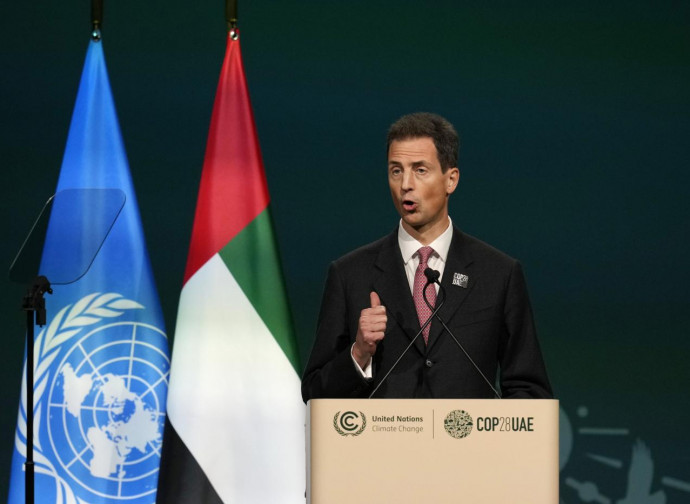
We are in Liechtenstein. In June, the centre-left opposition party Freie Liste (Free List) and feminist groups such as Women in Good Health and Women's Network launched the 'Fristenlösung für Liechtenstein' initiative. This aimed to propose a referendum on the legalisation of abortion, including the right to an abortion up to the twelfth week of pregnancy, the provision of medical information to encourage abortion, and insurance cover for the costs of the procedure. On 31 July, the organisers submitted 4,970 signatures to the Government Chancellery, which is more than enough to trigger a referendum. In Liechtenstein, abortion is currently illegal except in the following circumstances: if the mother’s life is at risk; if there is a risk of serious harm to her physical health; in cases of rape; or if the mother is under 14 years of age. Furthermore, any form of advertising relating to abortion is prohibited. Since 2015, women who travel abroad for an abortion (an average of around forty per year) have not been subject to criminal prosecution.
In an article in the Guardian, Gabriella Álvarez-Hummel, a pro-choice activist, wrote that she and her fellow activists had managed to convince 4,970 people. However, she added that they now only had to convince one man, because without his consent, even a referendum that secured 100 per cent of the 'yes' votes could never become law. This man is Crown Prince Alois, acting as regent in his father’s stead. In fact, back in June, the prince made it clear that he would veto the referendum if it was approved, thereby preventing any pro-abortion law from coming into force. His Communications Office has clarified that 'the main reason lies in the fact that the provisions relating to the termination of pregnancy do not sufficiently protect the fundamental legal right to the protection of life'.
In 2011, the pro-abortion camp succeeded in getting a referendum on abortion passed. But it backfired: 52.3 per cent of voters opposed legalisation. On that occasion, too, the reigning prince declared that, even if the ‘yes’ vote had won, he would still have vetoed it. Following this defeat, and recognising that the Prince's opposition had influenced the public's vote, another referendum was launched in 2012. This time, the focus was not on the legalisation of abortion itself, but on the main obstacle to its legalisation: the Prince’s power of veto. It was a disaster for the campaigners: 76.1 per cent opposed the abolition of the veto.
The King’s powers are untouchable. In 2016, pro-life campaigners proposed a referendum to ban abortion in all circumstances. However, 81.3 per cent of voters decided not to change the current legal framework, which permits abortion in certain circumstances.
Two quick reflections. The first: Francesco De Gregori a popular Italian pop singer sang 'La storia siamo noi' ('We are history'). More often than not, this is not true. History is not made by the masses, but by elites, technocracies and power oligarchies that influence society, and often by individual men who lead the masses. A politician, thinker, financier, banker, emir or small group of such figures frequently plays a decisive role by forging alliances amongst themselves. It is by no means uncommon for their decisions to not be in the best interests of the masses. The case of Prince Alois's veto confirms that a country's history can be shaped by the decision of a single man. Yet, on this occasion, the decision was for the good of the people. This man has previously saved several hundred children from abortion, making a real difference. Making history.
Secondly, it feels like reading a fairy tale — the most beautiful one ever written — because it is true. We have a prince who fights for the most vulnerable – children. He is not afraid to swim against the tide and does not fear losing his power because he knows that no human authority can ever take from him what is his by divine right. He is a prince who does not yield to compromise or sordid pragmatism; he is a prince of principles and a prince of life. Today, more than ever, people need courageous men of the highest integrity who are faithful to values that transcend them: men who are unyielding, strong and tenacious; men who are ready to pay dearly for their choices. Any man whose inner armour shines with these virtues is already a prince.
