

The illusion that war creates a better world
No sympathy for the Ayatollahs. No mourning for the death of a ferocious tyrant. But to think that his assassination and the eventual destruction of his regime will change the world for the better is a dangerous illusion. We are merely witnessing a game of power politics.


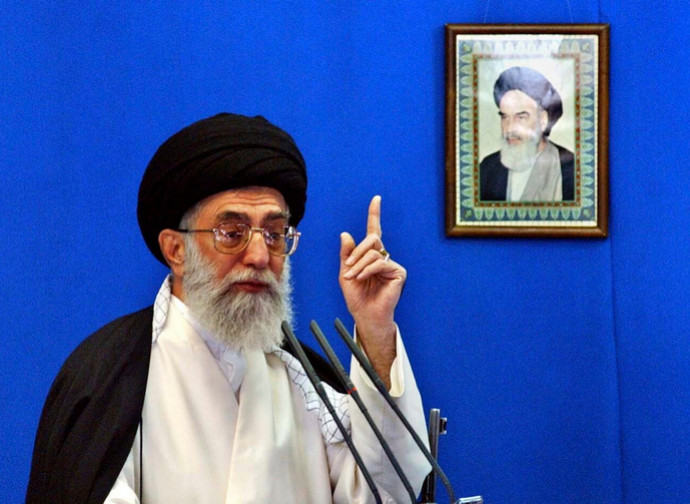
‘Violence is never the right choice,’ said Pope Leo XIV yesterday during a visit to a Roman parish, referring to the attack on Iran. Shortly before, at the Angelus, he said that 'stability and peace are not built with mutual threats or weapons, which sow destruction, pain and death, but only through reasonable, authentic and responsible dialogue'.
This is not the predictable moralistic sermon of a pope doing his job; it is a profound awareness of reality. War has never brought true peace; it has only worsened the situation. The Middle East provides irrefutable proof of this: since the First Gulf War, there has been a succession of wars and destruction which have only led to further violence, death and destabilisation.
As we mentioned on Saturday, the killing of Gaddafi and Saddam, and the overthrow of Assad, have significantly worsened the situation in Libya, Iraq and Syria. This is just as reality proved former US President Barack Obama wrong when he triumphantly declared that 'the world is now a safer place' following the killing of al-Qaeda leader Osama bin Laden on 2 May 2011. Instead, the last fifteen years have seen a huge increase in insecurity, including the rise of ISIS and the spread of jihadism.
The world will only become safer if the natural order, the order willed by God, is respected; a natural order in which the sanctity of life and respect for the dignity of every person are the cornerstone.
Yesterday, Netanyahu spoke of 'a war that ends the era of wars', but this is a false hope, even within the context of the Middle East. Not only are developments in Iran yet to be seen, but the political and strategic interests of various countries can also quickly change the landscape of alliances, as has always been the case. Furthermore, it greatly underestimates the 'hate factor', which has increased significantly among the populations of the region through years of war and violence of all kinds, not only among Palestinians. Hatred is a formidable fuel capable of igniting war at any moment.
There is no sympathy for the Iranian regime of the ayatollahs or mourning for the death of a tyrant. However, to think that his departure will necessarily lead to a transition to democracy is, at best, disarmingly naive or the result of ideological blindness.
Those who provoked it certainly do not think so. Their goal is instead to install a government that falls within the Western orbit, whether democratic or dictatorial. After all, the Shah of Persia was also a dictator who was overthrown in favour of the Islamic Republic.
Contrary to what propaganda would have us believe, there is no global struggle between democracies and dictatorships. Instead, wars are fought to define the respective spheres of influence between regional and global powers. The overthrow of Assad in Syria was not intended to establish democracy and religious freedom, but rather to eliminate an ally of Russia and Iran, as well as a 'competitor' of Israel. Western countries have even legitimised a new, clearly jihadist government in the process.
If democracy were the deciding factor, Saudi Arabia — which, despite recent reforms, remains a brutal dictatorship — could not be the West's most important ally in the region. If the aim were truly to target the financiers of anti-Western (and anti-Israeli) jihadism, Qatar would be the first port of call. Instead, it enjoys the status of 'major non-NATO ally' and is home to the region's largest American base. The examples could go on and on.
The struggle for freedom in Iran, the protests by students and women, must certainly be supported as an expression of a passion for respect for life and human dignity. Instead, what we are witnessing is the instrumental use of the Iranian people's suffering to justify other interests, to which freedom and democracy can easily be sacrificed if necessary.
