
Record number of bishops at LGBT vigils, how the Church is surrendering to the world
Twelve Italian bishops, more than double the number in 2025, attend vigils ‘to overcome homotransphobia’, a lever to change the Church’s teaching. At least 23 dioceses were involved, along with various associations, from the Scouts to Catholic Action. The impact of the CEI’s synodal document. And Ratzinger’s warning.

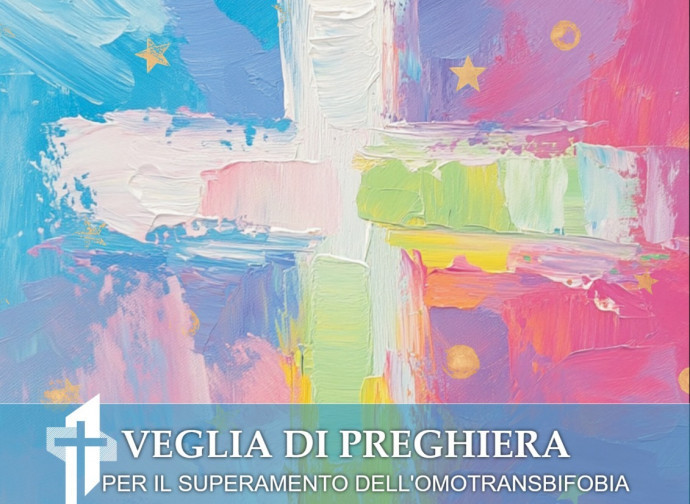
The homosexual heresy in the Italian Church is not abating, but intensifying. This sums up the current trend from south to north in the country, where dozens of vigils are scheduled for May and June. These are generally described as 'to overcome homotransphobia'. According to the latest list maintained by the Progetto Gionata website, one of the numerous 'LGBT Christian' groups that have for years been working to subvert the Church’s teaching on homosexuality, there are currently 47 events of this kind scheduled to take place, plus others taking place outside Italy, most of which are in Catholic churches or convents, but several are also in Protestant places of worship and some are 'ecumenical'.
Our focus is on the Catholic Church, which has set a new record for the number of bishops presiding over or taking part in vigils against so-called homophobia: twelve have been confirmed for 2026, more than double the five in 2025. The confirmations are as follows:The Bishop of Parma, Enrico Solmi, who presided over the 'Prayer Vigil to Overcome Fear and Discrimination' on 5 May; The Bishop of Cremona, Antonio Napolioni, who is presiding over the vigil this evening at the Church of San Giuseppe (Cambonino); The Archbishop of Florence, Gherardo Gambelli, who is presiding over the diocesan vigil on 21 May at the Maria Ausiliatrice parish in Novoli; The Bishop of Fano, Andrea Andreozzi, and the Archbishop of Pesaro, Sandro Salvucci, who are gathering once again at the San Paolo Apostolo church in Fano on 29 May.
According to the Gionata Project’s tally, seven new additions have been made compared to 2025: The Bishop of Padua, Antonio Cipolla, who will take part in the rainbow vigil on 15 May at the Church of St Bartholomew the Apostle in Padua; The Bishop of Rimini, Nicolò Anselmi (17 May); The Bishop of Modena, Erio Castellucci (21 May); The Bishop of Savona, Gero Marino (22 May);The Bishop of Verona, Domenico Pompili (4 June); The Archbishop of Bari, Giuseppe Satriano (5 June); The Bishop of Forlì, Livio Corazza (5 June).
However, that’s not all, there are several more cases where the bishop’s participation is neither planned nor announced, yet the dioceses are still involved in the organisation, support or patronage of the LGBT vigils in various ways. In fact, to the twelve dioceses mentioned above, we must add the Diocese of Como (10 May), Albano Laziale (16 May), Bolzano (16 May), Catania (17 May), Cosenza (17 May), Cuneo (18 May), Agrigento (19 May), Chiavari (20 May), Milan (22 May), Bologna (29 May) and Bergamo (5 June). Overall, therefore, at least 23 dioceses are actively involved in promoting these vigils, including that led by Cardinal Matteo Maria Zuppi, president of the Italian Episcopal Conference (CEI). We will spare readers a list of LGBT events organised in individual churches, parishes and monasteries, which are also 'recorded' by Tenda di Gionata. Several well-known Catholic groups are involved in some of these vigils, including the AGESCI Scouts, Catholic Action and the Focolare Movement.
The influence and size of certain dioceses, particularly the Ambrosian diocese, are clear signs of the disastrous state of the Italian Church, which is increasingly dominated by the LGBT agenda. The dismal attendance record of bishops at rainbow vigils was already foreseeable following the publication of the summary document of the Italian Synodal Path in October 2025, in which the CEI explicitly endorsed the aforementioned agenda. Among the various proposals set out in that document is the instruction that 'the CEI should support, through prayer and reflection, the "days" promoted by civil society to combat all forms of violence and show solidarity with those who are hurt and discriminated against' (Days against gender-based violence and discrimination, paedophilia, bullying, femicide, homophobia and transphobia, etc.). It is therefore no coincidence that the Diocese of Como, with its LGBT+ Team, refers to this passage as a point of support.
Focusing on the terms 'homophobia' and 'transphobia', it is clear that these were coined by LGBT organisations to exert pressure to change state-level laws and overturn the norms of natural morality as taught by the Catholic Church. The Church has never said, nor would any good Catholic ever say, that a person should be harmed or discriminated against because they are homosexual (see the Catechism at numbers 2357–2359), or because of any other characteristic. Rather, the Church teaches us to welcome the sinner, but not the sin.
This distinction is completely absent from the CEI document, which speaks of the 'recognition' of 'homosexual and transgender persons', without ever mentioning the need for conversion and a chaste life. The same is true of this sort of 'vigil', which is in keeping with the spirit of the world.
This year's chosen theme is also notable: 'Fear not, for I have redeemed you; I have called you by name' (Isaiah 43:1). As in previous years, an attempt has been made to twist a biblical verse to support LGBT claims, as part of a radical 'reinterpretation' of the entire Holy Scriptures. This 'reinterpretation' distorts the meaning of even the most explicit passages that condemn sodomy. However, the redemption spoken of by the prophet — and bestowed upon us by the Lord Jesus, crucified and risen — is clearly redemption from sin. This redemption requires man's cooperation, as he is called to convert in order to attain eternal salvation.
Rather than giving a nod to groups that reject the Church's constant teaching, the only path is to teach the truth in charity, as the then Prefect of the Congregation for the Doctrine of the Faith, Joseph Ratzinger, reminded us in the 1986 Letter to the Bishops of the Catholic Church on the Pastoral Care of Homosexual Persons. In addition to warning against strategies used to normalise homosexuality, Ratzinger cautioned the bishops as follows: "No authentic pastoral programme can include organisations in which homosexual persons associate with one another without it being clearly established that homosexual activity is immoral." A truly pastoral attitude recognises the need to spare homosexual persons from proximate occasions of sin. [...] Only what is true can ultimately be pastoral as well. When the Church’s position is not taken into account, homosexual men and women are prevented from receiving the care they need and are entitled to.”
