
Lebanon: a ceasefire is in place. Another of Netanyahu’s unfinished missions
Ceasefire in Lebanon. Israeli operations are suspended for ten days. Trump is set to receive the Lebanese head of state and the Israeli prime minister at the White House. Dark political clouds are gathering over Netanyahu: Like Iran and Gaza, Lebanon remains another bloody war that has been concluded without decisive results. Opponents are sharpening their weapons


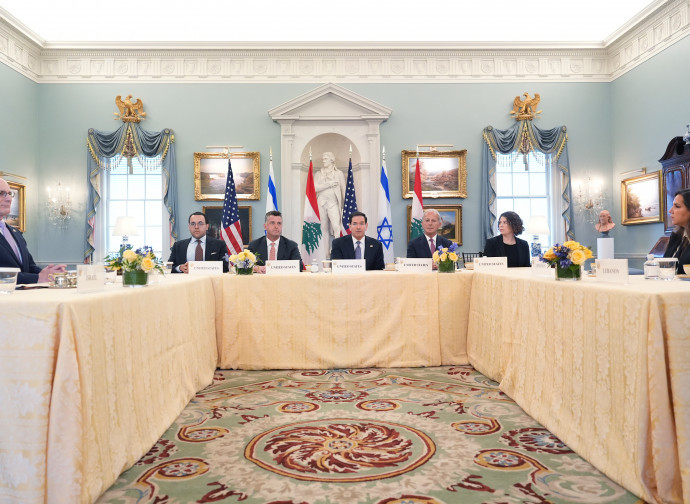
Within a few hours, the Lebanese President, Joseph Aoun, first refused to negotiate, and then a breakthrough was reached: Lebanon and Israel agreed to a ceasefire, which started last night, 16 April. US President Donald Trump announced this in a post on Truth, specifying that he had spoken with both the Lebanese head of state and Israeli Prime Minister Benjamin Netanyahu, and inviting them both to the White House for 'meaningful talks' between the two countries. He did not mention Hezbollah. Shortly afterwards, Netanyahu confirmed that he had accepted the 10-day ceasefire.
Netanyahu appears more conciliatory today, having been forced to try to bring another war to a close without having won it. Despite his bombastic proclamations, there is no sign of a strategic breakthrough, only a fragile truce paved with promises. During a recent visit to troops in southern Lebanon, whilst calling for peace talks to begin, Netanyahu declared with great emphasis: “We will not back down in the face of threats; our operations will continue for as long as necessary to protect Israeli citizens”.
However, behind the official statements, increasingly sceptical assessments are emerging. Indeed, within the Israeli Security Cabinet, it is considered unlikely that the fighting can continue until the objectives set by the Prime Minister of Israel are achieved. The emerging picture is of a possible breakthrough imposed from outside. The White House bases its narrative on two pillars: halting Iran’s uranium enrichment and reopening the Strait of Hormuz. However, both are faltering. There are no concrete signs of Iranian concessions on the nuclear issue, and Tehran could demand the definitive lifting of sanctions in return for any future concessions, which would result in an influx of tens of billions of dollars. As for the Strait of Hormuz, Iran now intends to levy tolls on ships passing through it, which could generate substantial revenue.
Tehran emerges from the conflict battered but not broken. Its military capabilities can be restored, especially with new economic resources. Despite the bombings, Iran still has the capacity to attack Israel and other Arab countries, and continues to put pressure on global maritime traffic. Even its allied militias, though weakened, remain operational. However, the bill could soon come due for Netanyahu. Elections are due within six months, and the Israeli public will have to assess the 'conclusion' of yet another inconclusive war. The Prime Minister continues to promise that the objectives will be achieved 'through an agreement or the resumption of fighting', but this claim is becoming increasingly hard to believe.
The precedent of Gaza is clear for all to see. Following a ceasefire brokered by Trump, Netanyahu promised to disarm Hamas and demilitarise the Strip. However, these objectives have remained on paper only: the Islamist movement still controls much of the territory and shows no intention of laying down its arms. Similarly, in Lebanon, despite the heavy blows inflicted, Hezbollah has not been defeated. Backed by Iran, it remains capable of threatening northern Israel with missiles and drones. Even the Israeli armed forces admit that ground operations will not definitively eliminate the danger. Therefore, the central crux of the matter lies in the Iranian dossier. The military operations of the past year have yielded tactical, but not strategic, results. Even an ideal scenario of waging war alongside the United States has not enabled Netanyahu to achieve his fundamental objective of definitively reducing the Iranian threat or bringing about regime change in Tehran.
Predictions of an imminent popular uprising have not materialised. The biblical reference to the 'ten plagues', invoked by the Prime Minister on the eve of Passover, remains an unfulfilled metaphor: unlike the story of the Exodus, there has been no decisive conclusion. Israel has struck hard at its adversaries, but final victory continues to elude it. Instead, the government is proposing a strategy of partial results and intermittent conflicts, with the possibility of returning to combat in the future. This is an option that is far from being ruled out. With the US elections just around the corner, Trump is unlikely to be able to afford to open a new conflict. Moreover, it is by no means certain that a potential White House successor would guarantee the same level of military support.
In Israel, war is no longer just a matter of security; it has become a domestic political battleground. This time, however, the most insidious front for Benjamin Netanyahu is neither in Gaza nor on the Lebanese border. It is at home. From Tel Aviv to Jerusalem, thousands of demonstrators took to the streets again last Saturday, carrying placards bearing slogans such as 'No more war, no more broken promises, no more leadership without results'. It is not just dissent; it is growing, widespread mistrust. Families of reservists, former soldiers, students and workers are all involved. Together, they form a mosaic that tells the story of a country tired of fighting without winning. The images speak for themselves: Israeli flags are waved alongside anti-government placards and chants calling for early elections. Direct accusations are levelled at an executive perceived as incapable of resolving the conflicts it starts. There is just one word that keeps coming up: failure.
Netanyahu’s strategy is under fire, with accusations that he is dragging the country into a never-ending series of fruitless conflicts. Gaza, Lebanon, Iran: different fronts, same outcome. It is a logic that many Israelis no longer accept. “You cannot live in a state of permanent war,” shout the demonstrators. Behind the protests lie months of mobilisation, an economy under pressure and communities in the south and north that are still exposed to real threats. The promise of total security has turned into a widespread perception of chronic instability.
Netanyahu appears increasingly isolated. His narrative of firmness, security and imminent victory is struggling to be believed.
The political risk is real. With elections on the horizon, discontent could manifest as a protest vote. For a leader who has built his image on these issues, being perceived as unable to deliver the promised victory would be a direct blow to his legitimacy. Israel remains a country at war. However, more and more Israelis are beginning to ask themselves: why? Above all, they are asking: for how long?
