
Khamenei Jr. promises an even tougher regime
The Islamic Republic of Iran is digging in its heels. Khamenei's son, Mojtaba, has been appointed Supreme Leader. Although he is not a recognised doctrinal leader, he acts as an intermediary between the clergy and the Revolutionary Guards. He is even more extremist than his father.

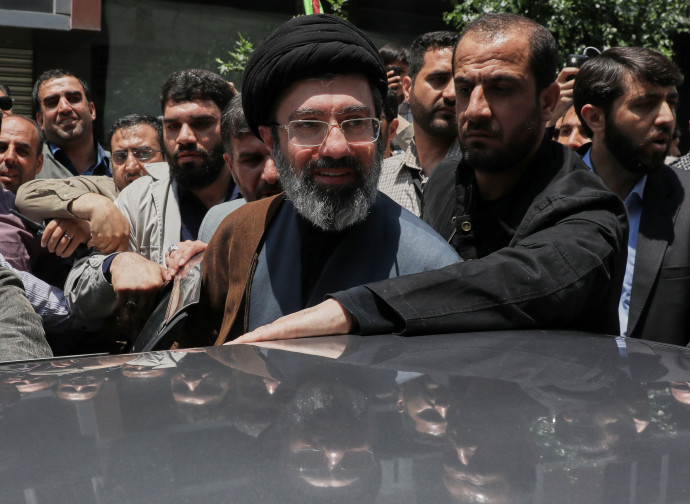
The appointment of Mojtaba Khamenei as Supreme Leader of Iran marks one of the most controversial turning points in the political history of the Islamic Republic, as it transforms the highest theocratic power into a dynastic inheritance for the first time. This succession does not result from popular elections or public consensus, but from the decision of the Assembly of Experts — the clerical body responsible for choosing the successor to the previous leader upon his death — at a time of extreme fragility for the regime.
The transition took place amid a geopolitical storm following the killing of Ayatollah Ali Khamenei in joint attacks by the United States and Israel. Entrusting the leadership to his son was therefore a highly symbolic and contradictory decision.
Unlike many contemporary leaders, Mojtaba Khamenei is a figure who grew up in the shadows. Without ever holding elected or ministerial office, he has accumulated immense power behind the scenes by acting as the 'gatekeeper' to his father's office. A true link between clerical and military power, particularly with the Iranian Revolutionary Guard Corps (IRGC) and the Basij militia, he has secretly directed the country's strategic decisions for years. According to foreign analysts and observers, he controlled access to the Supreme Leader, coordinated conservative factions, and influenced key state appointments. His current rise is therefore not a leap in the dark, but rather the culmination of a precise strategy to consolidate the regime internally.
However, the appointment has attracted some internal criticism. The ideological foundations of the Islamic Republic were created to oppose the Shah's monarchy and reject hereditary succession. The election of a son, even if formally decided by the Assembly, inevitably gives the system a dynastic appearance, undermining the regime's legitimacy.
Backed by the military and security forces, particularly the Pasdaran, who have pledged "loyalty and total obedience", Mojtaba Khamenei is seen as being even more intransigent than his father. This is reflected in his deep connection with the repressive apparatus and his confrontational policy towards Israel, Washington and Western allies.
His appointment exacerbates an already volatile situation, where the downpour of drones and missiles on the region is intertwined with Israel's explicit threat to attack the enemy's top command, rendering regional stability an almost unattainable goal.
Many aspects of this succession remain unclear to the international public, as well as to many in Iran. It remains to be seen how much influence Mojtaba had on major strategic decisions prior to his formal investiture, and what his role was in definitively marginalising the moderate factions.
A critical issue is religious and legal legitimacy: the supreme leader should have the high religious authority typical of an ayatollah. Although Mojtaba studied at the Qom seminaries and holds the rank of Hojjatoleslam, he is not universally recognised as a dominant doctrinal figure. This raises doubts about whether his appointment conforms to official theological canons.
In the coming months, Mojtaba Khamenei's leadership could lead to a dangerous intensification of the regime's strategy on two fronts. Domestically, a crackdown on political dissent and civil society is likely, further alienating the young, urban population from the clerical elite. Internationally, the new Supreme Leader seems intent on escalating regional conflict by using his allies in Yemen and Lebanon to attack Israel and the United States, adopting a confrontational strategy that allows for no compromise.
What has emerged in recent hours is not merely a change of leadership, but the adoption of a system that relies on dynastic continuity to survive its own fragility. Faced with this situation, the international community must balance firm diplomacy with support for the aspirations of a population that is becoming increasingly distant from the halls of power. Tehran's future therefore depends on the outside world's ability to maintain a high level of focus on human rights and exert coordinated pressure to prevent the regime from slipping into isolation, which would be even more dangerous for global stability.
