
Islamic holidays like Easter and Christmas: the challenge posed by UCOII
The Muslim association is calling for the recognition of two annual religious festivals and Friday prayers, equating them with Christian ones. This is a trap for Italian politics, but the comparison does not hold up because the common good is not based on religious indifference.


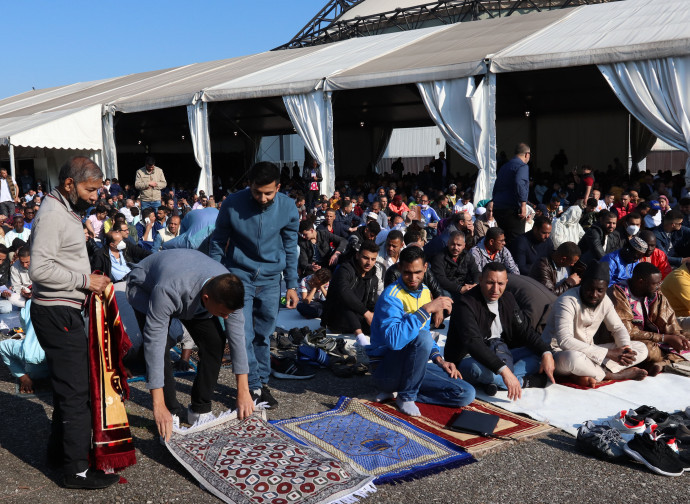
The president of the UCOII has called for the public recognition of the Islamic religion in Italy on behalf of Muslims living in the country. This demand is not merely trade union-related, but also constitutes a religious challenge to politics, particularly regarding the requested 'recognition of the two annual religious holidays and Friday prayers'. Some newspapers have effectively simplified matters by equating the two main Islamic holidays with Easter and Christmas. In yesterday's daily newspaper La Verità (4 May), Gianluigi Paragone concluded his article on the subject with these words: ‘Let's see who is capable of formulating a cultural response.’ We shall try.
A national holiday is a time when a whole nation identifies with the founding values of its community. This applies to both secular and religious holidays, such as the anniversary of the end of a war or the founding of the state. For instance, the national feast of St Francis on 4 October has been reinstated in Italy this year. Local feasts on the day of the patron saint are of this kind, too. During these events, it is customary for civil and military authorities to attend church services or participate in public processions through the streets of the town. In these cases, the festival is religious and remains so; yet it also has publicly recognised civil significance. This signifies that the associated religion – Catholicism in this case – is recognised as being highly significant for the political community, often as foundational when the saint is considered a founding father and Defensor civitatis.
One might argue that these events have become secularised, and that the widespread sense of religion's foundational public dimension has greatly diminished or even disappeared altogether. Alternatively, one might observe that these occasions relate to historical events that reflect the times in which they were established. If there is now a substantial Islamic community, for example, it is only right to recognise their festivals alongside our own and to allow minarets to stand alongside bell towers. However, nothing is inherently true, false, good or bad based on the consensus it receives or whether it conforms to the fashions of the time.
The political dimension of religion, evident in national religious festivals and the ringing of bells, has deeper reasons that are not merely historical or sociological. They express the conviction that religion proposes truths and a shared sense of community, without which there can be no common good, and that religion, with its timeless principles, corrects the dysfunctions of politics itself whilst courageously pushing it forward, confirming its limits.
Politics has adopted values from religion that it forgets if religion does not remind it of them; consider the concept of the 'person', for example.
The public role of the Catholic religion, as seen in national holidays, does not stem solely from past customs or folklore, which would merely be residual manifestations of these. Politics must seek out true religion, the kind that confirms and strengthens its natural truths by purifying them. Religious festivals in Italy have national significance because politics regards them as expressions of a true religion that are indispensable for pursuing the common good. This is not a favour granted to any random religion or to the one that happens to be on our doorstep for historical reasons.
These words describe how things ought to be, not how they are. However, today, politics does not seem capable of doing this. It appears unable to distinguish between religions, which, due to a misguided interpretation of the right to religious freedom, are regarded as an act of personal will that the state must publicly guarantee in all cases. However, religions are not merely a personal choice; they have specific tenets that politics cannot ignore. We should grant freedom of religious belief, but not the automatic public legitimacy of what is believed. Many religions propose ways of life that are contrary to the common good. Often, this is not merely a matter of specific rules, but of the culture that the religion brings with it. This is precisely the case with Islam.
Modern liberal secularism is unable to address this problem, and referring to individuals' right to have their religion publicly recognised will lead it to fall into the trap of 'discrimination' (in this case, Islamophobia), which must be avoided. The Italian Catholic Church will not help the political sphere exercise reason, as it has long been engaged in religious indifference, improperly motivated by interreligious dialogue. Anti-Catholic political forces, in agreement with the CEI, will exploit this to denounce the inappropriateness of the public role assigned to Catholicism.
For these reasons, the issue of the UCOII’s request will be decisive: having put forward our cultural proposal, we are eager to see if any party will take it on board. However, we must admit to being rather pessimistic.
