
Gulf War at risk of escalating
The need to overcome Iran’s blockade of the Strait of Hormuz is prompting other countries to become more involved, whilst Russia is expressing its full support for the Ayatollahs’ regime. Who will heed the Pope’s call to ‘embark on paths of peace’?


There are five days to go until the end of the four weeks of war predicted by US President Donald Trump following the start of the war against Iran on 28 February. However, the end of the war seems much further off. In fact, three days ago, the Pentagon asked Congress for $200 billion to continue the war, and various reports suggest that preparations for a ground operation are underway. Therefore, barring a sudden – and as yet unforeseeable – collapse of the Iranian regime, the war appears far from drawing to a close. Nor are there any signs of the hostilities easing, as announced by Trump.
Indeed, Trump's 48-hour ultimatum to the Iranian authorities to 'clear' the Strait of Hormuz, or face an attack on Iran's power stations, threatens further escalation. This escalation is already evident on another front of this war: Lebanon, where the Israelis have begun bombing bridges and infrastructure in the south of the country. According to Lebanese President, Joseph Aoun, this is the prelude to a ground invasion. Israeli Prime Minister Benjamin Netanyahu’s plan is to take control of Lebanese territory up to the Litani River, and it is not even particularly hidden.
Going back to Trump’s ultimatum, the Gulf states are clearly extremely concerned. According to the Wall Street Journal, they are pressuring the US administration to prevent attacks that would put their energy infrastructure at risk of attack by the Iranian regime. Tehran has indeed demonstrated its ability to carry out acts of retaliation against countries hosting US bases, despite the severe damage inflicted on its military apparatus by the US and Israel.
In this increasingly worrying situation, in which Europe is set to be the main economic victim of the conflict, the debate dominating newspapers and social media seems, at best, cynical: 'Who is winning the war?' 'Who will win in the end?' Once again, fan clubs triumph: those who support the US and Israel unconditionally and dismiss any mention of the unforeseen difficulties of this war as propaganda; and those who hate them unconditionally and cheer every Iranian missile that breaches Israeli and American defences, hoping for the triumph of the ayatollahs.
These positions are, in our view, irresponsible. As the Pope said yesterday at the Angelus, 'The death and suffering caused by these wars are a scandal for the entire human family and a cry that rises to God!', and war means 'the suffering of so many people, defenceless victims of these conflicts'.
We must realise that, whatever the outcome of this war, the consequences will be severe for the whole world, as we are already seeing. It is a tragic delusion to think that the destruction of the Ayatollahs' regime will bring peace, just as it would be a delusion to think that a new Vietnam would bring peace to the American-Israeli duo. In both cases, the most likely scenario is a new phase of instability and war.
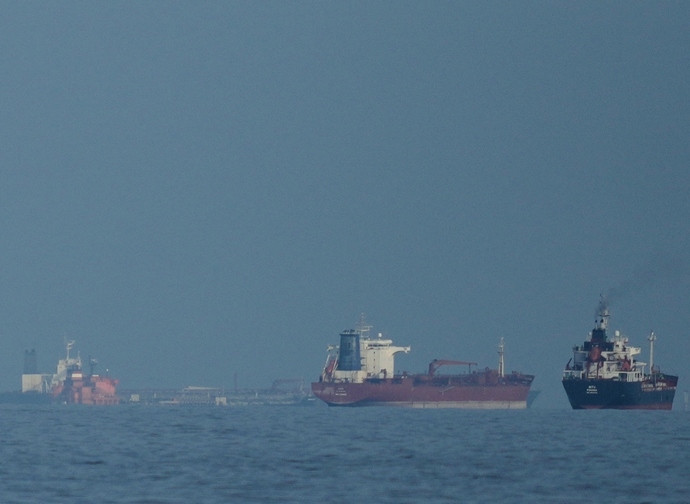
However, the gravest danger today is that, if difficulties are encountered in achieving the desired results, the conflict will escalate and involve new parties, potentially leading to a full-scale world war. In recent days, Trump has insulted European countries and NATO members for failing to intervene to free the Strait of Hormuz, through which 20% of the world's oil passes. Gradually, there are signs of a willingness to engage, albeit on the condition that the fighting stops. Who knows what will happen in a few days' time? Meanwhile, after an initial refusal, Saudi Arabia and the United Kingdom have agreed to allow the Americans to use their bases. Last night, Downing Street released a statement on the phone call between Trump and British Prime Minister Keir Starmer. Whilst emphasising that 'the reopening of the Strait of Hormuz is essential to ensuring the stability of the global energy market', the statement suggests that London could become more involved in the conflict.
Conversely, Russia is flaunting its friendship with Iran. Yesterday, Russian President Vladimir Putin sent Iranian President Masoud Pezeshkian a significant message of good wishes for the Persian New Year, describing himself as a ‘loyal friend and reliable partner’ to Tehran. Kremlin spokesman Dmitry Peskov also condemned the assassinations of Iranian leaders, speaking of ‘very profound consequences’. China is also offering its help to Tehran, albeit discreetly for now.
We are teetering on the brink, so it is easy to see why the Pope made his appeal again at the Angelus for us to embark immediately on 'paths of peace founded on sincere dialogue and respect for the dignity of every human person'. Given the current situation, this appeal sounds unrealistic, yet it is the most realistic way to avoid the worst. The problem is, who today can grasp the depth of those words and turn them into action?
