
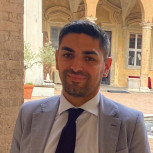
Worrying news from Italy: bishop removed because of malicious media campaign
Monsignor Gallese's tenure at the helm of the Diocese of Alessandria has officially come to an end following his 'resignation'. The controversy surrounding his ownership of a Tesla and his alleged, though unproven, extravagant spending proved fatal. Meanwhile, bishops who deny the doctrine remain in office.

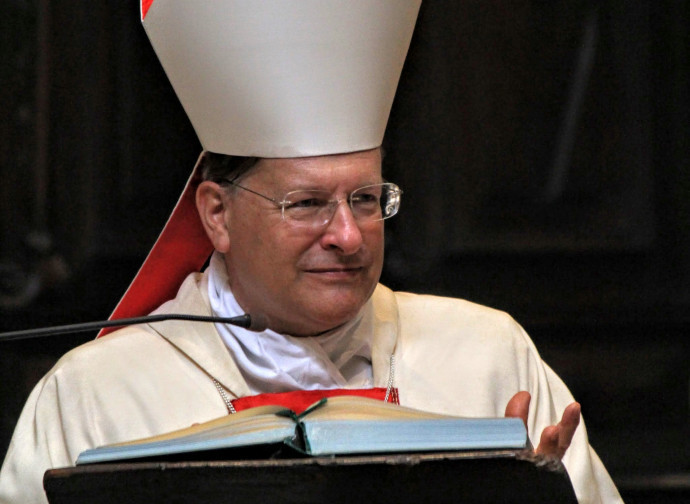
The case of the bishop with the Tesla has ended in a classic 'promoveatur ut amoveatur' scenario. At just 64 years of age, Monsignor Guido Gallese has stepped down as head of the Diocese of Alessandria in northwestern Italy, and has been appointed the new ecclesiastical assistant to the National Association of Shrines. The consolation prize that does little to take the bitter taste out of his early departure – officially described by the Vatican as a ‘resignation’ – from the see he had held for 14 years.
Monsignor Gallese fell victim to a media campaign that vilified him for travelling by motorbike (second-hand) and for his passion for kitesurfing, as well as for owning the aforementioned Tesla. These details were splashed across the media with the clear intention of lending credence to rumours of extravagant spending. In reality, according to reports, the diocese's finances are in order. The bishop's real 'crime' was not being liked by everyone, and so complaints from eastern Piedmont reached as far as Rome. He was criticised for his governance, particularly the amalgamation of parishes, management of pastoral units, and transfer of parish priests. Similar letters had already been sent to the Holy See a few years ago when Gallese found himself facing a rebellion by the faithful over the transfer of a priest from a church in Valenza.
The Vatican ordered an apostolic visitation in early 2026, entrusting it to Cardinal Giuseppe Bertello. However, it concluded without 'a single written word or any sanctions', as the bishop was keen to point out in an interview with the local newspaper La Voce Alessandrina. ‘Nevertheless, the general climate and the circumstances that have arisen have highlighted the need for everyone to turn the page,’ explained Monsignor Gallese. After years in which populism and a witch-hunt mentality seemed to be rampant even within the governance of the Church, there was hope that the election of a canonist such as Robert Prevost might signal the end of the era of arbitrary removals fuelled by media pressure. For this reason, the case of Alessandria is causing some disappointment, as Gallese claims that no sanction has been issued from Rome following an inspection.
Now, Leo XIV has appointed an apostolic administrator for Alessandria: the Bishop of Acqui, Monsignor Luigi Testore. On 4 October, Gallese will officially bid farewell to the diocese entrusted to him by Benedict XVI in 2012.
The bishop reacted gracefully to his demotion, commenting favourably on his appointment as ecclesiastical assistant because his ‘vocation was born precisely in a place of pilgrimage: Medjugorje’. However, the bitterness he displayed at the end of January this year remains, when he lamented how painful it was to see his life 'put through the sieve of prejudice'. In fact, the situation in Alessandria is concerning: while there was no extravagant spending, there was plenty of gossip, so it is best to remove the bishop and move on. After the numerous cases during Pope Francis's twelve-year reign, we had hoped not to see any more bishops retire (or nearly retire) well before the canonical age of 75. Yet here we are again, commenting on another case. The lesson from Alessandria is clear: a bishop may deny doctrine and challenge the authority of Rome, as is happening systematically in numerous German dioceses, but he had better not be caught travelling in a Tesla. It is rather disheartening.
