
Vietnam prepares for the beatification of the martyr Father Diệp
A Mass for the beatification of Father Francis Xavier Truong Buu Diệp, who died a martyr in March 1946 during a period of chaos following the Second World War, will be celebrated on 2 July. This is an exceptional event for one of Asia’s largest Catholic communities.

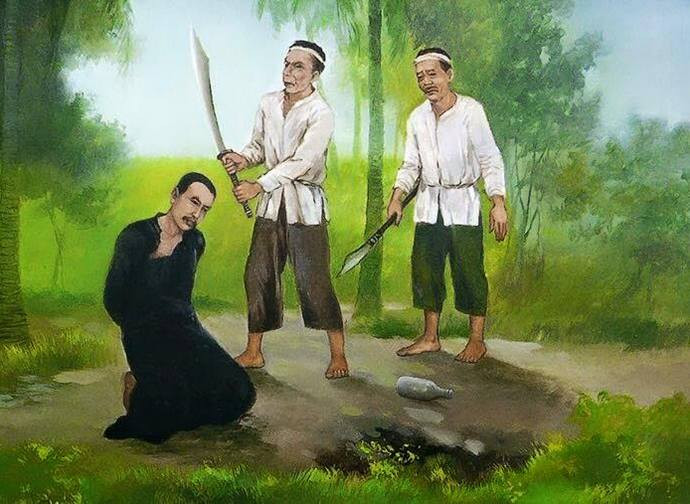
Vietnamese Catholics are anticipating with joy and fervent faith for the beatification of Father Francis Xavier Truong Buu Diệp, a beloved martyr‑pastor whose blood sealed his love for Our Lord Jesus Christ Christ and His flock in 1946.
In March this year, tens of thousands of pilgrims—Catholics and non‑Catholics alike—gathered for the Tac Say Pilgrimage Center in Vietnam’s Mekong Delta to celebrate the 80th anniversary of Father Diep’s martyrdom and to express gratitude for the news of his impending beatification ceremony, which will take place on 2 July, 2026.
On December 19, Bishop Peter Le Tan Loi of Can Tho proclaimed that the Vatican had approved the beatification rite to take place at the Tac Say Pilgrimage Center in southern Ca Mau province, the shrine containing Father Diep’s relics.
Bishop Loi elaborated that Cardinal Luis Antonio Tagle, pro-prefect of the Dicastery for Evangelization, will lead the beatification ceremony as the special envoy of Pope Leo XIV. Church authorities are making contingency plans for hundreds of thousands of Catholics to attend the ceremony.
Fr. Joseph Vo Van Hoai, who supervises the Tac Say Pilgrimage Center, pointed out that extensive arrangements were in progress for what may be among Vietnam's biggest Catholic events in recent memory. The shrine holds around 20,000 worshippers, so the ceremony will take place in an adjacent five-hectare park capable of seating up to 100,000 faithful.
Giant screens throughout the site will let everyone be up to date with the proceedings, UCA News reported.
“More than eighty years ago, in this remote area of Tac Say, there was a priest who quietly served with loving compassion for all people. That was Father Francis Xavier Truong Buu Diệp, who later sacrificed his own life for his flock,"Bishop Loi stated.
Addressing the non-Catholic community, Bishop Loi said: “I know you all love Father Truong Buu Diệp very much, and many of you have received blessings, both spiritual and material from him through his intercession. That is very precious, and I want to invite you to go a step further: Father Truong Buu Diệp does not only intercede for you for material or physical blessings, but perhaps what Father Diệp most desires to intercede with God is to bestow upon you the grace of faith in Jesus Christ, so that you may then be guided towards eternal life, which Catholics believe in.”
Fr. Peter Vu Van Hai, vicar general of the diocese, shared that local authorities have pledged their backing for the occasion and will assist in ensuring security throughout the festivities. “This is not only an event for our diocese but for the entire Catholic Church in Vietnam,” Fr Hai declared.
For many Vietnamese Catholics, this moment is not only the recognition of a holy priest, but a public vindication of the Catholic Church’s fidelity in a land long scarred by persecution, war, and ideological animosities.
Born in 1897, Father Diệp, a native of An Giang province, joined the seminary in his youth and received priestly ordination in 1924. He ministered as a pastor for more than two decades across Mekong Delta parishes, among them Tac Say—now the site of his tomb. Father Diệp’s priestly service stood out for its profound charity and steadfast commitment to his flock, particularly amid times of political turmoil and societal strife.
In March 1946, as chaos overtook the area, Father Diệp was seized along with several parishioners. Even with chances to flee, he opted to stand by his flock, stating that “I will die in place of my people.”
Father Diệp’s executioners put him to death, and his disfigured remains were found afterward. Though battered by evident injuries, onlookers noted his tranquil countenance and hands still joined in prayer—a sign of his immovable faith right up to the end, UCA News reported.
Following Father Diệp’s death, millions of pilgrims flock annually to his Tac Say Church shrine seeking graces, cures, and comfort. Strikingly, most are non-Catholics who display his picture or statues in their homes and offices. They trust in his prayers for safeguarding and direction.
In 2017, the Diocese of Can Tho finalized gathering all required testimonies from the diocesan inquiry stage of the sainthood process, assembling a comprehensive file on Father Diệp’s martyrdom and related miracles before forwarding it to the Vatican.
On November 25, 2024, Pope Francis verified Father Diệp’s martyrdom in defense of his sheep, stating that the priest met death “in odium fidei” on March 12, 1946.
Father Diệp’s life and death offer at least three concrete lessons for Catholics today.
First, Father Diệp reminds us that priesthood is sacrificial and pastoral: he refused safety when it meant ditching his people, epitomizing Christ’s words about the good shepherd who “lays down his life for the sheep.” In a time when clergy and laity alike can be tempted by comfort, careerism, or fear, Father Diệp’s fidelity can encourage priests to remain close to their flock and calls the faithful to pray and sacrifice for their pastors.
Second, Father Diệp’s life depicts how his martyrdom was the culmination of years dedicated to his people in sheltering the homeless, and patiently teaching and preaching. Ordinary acts of charity over time, prepared Father Diệp’s heart for extraordinary heroism.
Third, popular devotion to Father Diệp showcases how his life example and holiness could evangelize Vietnam.
As the Church in Vietnam prepares to celebrate Father Diệp’s beatification, Catholics around the world can ask this priest to intercede for persecuted Christians, for courageous priests, and for our own faithfulness in daily trials. May Father Diệp’s memorable words—“I am ready to die for them”—echo in our hearts and inspire us to give our lives for the love of Christ and His Catholic Church.
