
The Irish majority want to see immigration curbed
According to the European Commission’s autumn report, Irish people are becoming increasingly concerned about high levels of immigration and too-liberal policies on the issue. Nonetheless, their concerns are being ignored by the majority of MPs.

A new poll from an unlikely source has shone light on the remarkable shift in opinion of the Irish public on immigration. The European Commission’s (EC) autumn report noted that the Irish have become increasingly concerned by the levels of immigration into the country over the past year: “Concerns about immigration have jumped significantly, with 26% now identifying it as one of the two most concerning issues facing the country, up 8 percentage points since Spring 2025,” states the EC’s autumn report, released December 17. It is notable that Ireland Ireland’s immigration concerns are 11% higher than the European Union’s average of 15%. Regarding the most pressing issues facing the EU, 35% of Irish people polled viewed immigration as being a top priority – second only to Cyprus (45%).
Poorly enforced and exceptionally liberal immigration policies, as well as deliberate misinformation from cultural political elites, have rapidly led to deep dissatisfaction with Ireland’s immigration policies and enforcement. Disadvantaged communities are bearing the brunt of the rapid arrival of migrants to the country, while until recently the Irish government has ignored warnings from community groups and local politicians regarding the dangers this poses to social cohesion. Instead, policy has been driven by the advice of government-funded, overwhelmingly left-wing non-governmental organisations (NGOs). The predictable result has been a breakdown in social cohesion and rising tensions, with protests, riots and occasional genuine far-right action.
We have seen a slight but definite shift to right over the past year or even two among the Irish people. Beside the EC’s report, polls frequently record the Irish people’s dissatisfaction with immigration policies and indicate it is only increasing. Back in February 2024, a poll run by global market researcher IPSOS found that 59% of people polled favoured a more closed immigration policy, with only 19% saying the present policy is just right. More recently, The Business Post’s poll from November found that 72% support plans by the Department for Justice to make it more difficult for migrants to come/remain in Ireland. Only 11% oppose the plans.
The reasons driving this rising concern are manifold, so I will highlight the three most significant ones. First is the mismanagement of the housing of applicants for asylum in IPAS (International Protection and Asylum Seekers) Centres and the related condescension from liberal politicians, charities and media. These centres are mostly located in disadvantaged and politically voiceless communities, meaning working class city locations or rural towns and villages. Local communities are routinely not consulted or informed prior to the IPAS centres being set up. If they question it or raise concerns, they are labelled “far-right”, “Trumpian” and other such liberal slurs by government officials, NGOs and traditional media.
As these centres have proliferated due to Ireland’s liberal migration policies, tensions have risen across the country and the IPAS centres have become flashpoints for protests and riots. In 2023, an Algerian born Irish-national allegedly stabbed children and their care worker in the heart of Dublin city, precipitating a night of rioting and violence. More recently, in October, protests turned to rioting at Citywest IPAS centre, on the outskirts of Dublin’s capital, following the alleged assault of a 10-year-old girl by an African asylum seeker. The alleged assault highlights two related reasons sentiment has turned against Ireland’s immigration policy; violent crimes carried out by migrants and lack of enforcement of already liberal migration policies.
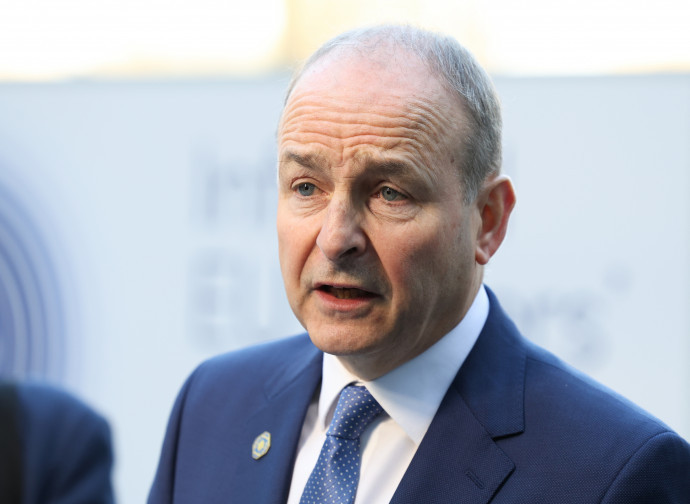
In this case, the alleged assailant of the little girl had already received a deportation order in March of this year, per a report in The Irish Times. It also states that “the suspect arrived in Ireland six years ago and failed in his application for international protection in 2024”. But Ireland does not enforce its own deportation orders, meaning we have no idea how many leave the country, leaving it ripe for abuse. Only a month and a half ago, An Taoiseach (the Irish Prime Minister) Mícheál Martin admitted that as many as 80% of present asylum seekers in IPAS centres are actually economic migrants. According to Gript, one of Ireland’s only conservative news publications, although Ireland rejects between 65-80% of asylum seeker claims, we have the highest rate of successful appeals recorded in the EU.
Regarding migrant crime, the Minister for Justice Jim O’Callaghan has claimed that there is no link between migrants and increased criminality around IPAS centres. He cited no statistics to back up his point, however, and without these he will struggle to overcome a definite narrative that has predominated ever since the brutal murder of Irish teacher Ashling Murphy by Slovakian migrant Jozef Puška in 2022. This case and the others previously mentioned are no longer isolated incidents. Regardless of whether migrants are more likely to commit crimes than others, the nature of these attacks – violent, random, striking at the hearts of communities – are decidedly different from the types of crime we typically see here.
These issues come against the backdrop of a housing crisis and infrastructural shortcomings that have angered the Irish people for at least a decade. While this is an issue across the western nations, Ireland’s crisis is particularly acute. Every month we reach a new record number of homeless, while just 9,000 mortgages were drawn down in 2024, representing just 0.4% of the housing stock. The lack of houses being built is a persistent problem. Projected housing completions are expected to fall short of the 300,000 needed by 2030, with just 155,000 predicted to be completed. Given these issues, the immigration-driven record growth of the population has raised eyebrows. Increasingly there is a perception that the government will bend over backwards for migrants, while neglecting their own citizens – and voters.
The decisive nature of the public mood surrounding immigration makes it remarkable that their view is almost completely unrepresented at a national level. Of the 174 TDs (members of the Dáil, the Irish parliament) only around 20 TDs can be described as conservative. The major parties, in government and in opposition, have until very recently poured scorn on any TD or member of the public who dares to question Irish immigration policy. There are tentative signs that for the two main parties in government, Fianna Fáil and Fine Gael, may finally heed the public outcry. Ever since both parties’ candidates were overwhelmingly defeated in the October’s presidential election, the rhetoric from the party leaders has increasingly reflected the frustration of voters, while Minister for Justice Jim O’Callaghan moved to strengthen migration legislation and introduce new rules on asylum and citizenship in November.
However, given how extreme Ireland’s immigration policy has been for so many years, and how poorly it has been enforced, these tentative signs are unlikely to convince anyone. We await developments in 2026, to see if there really is a will in government to tackle illegal immigration and limit legal immigration to more reasonable levels.
