

The EU has bet 90 billion on Russia's defeat
The EU has frozen Russian financial assets in Europe indefinitely. Although this is a less drastic measure than the proposed seizure, it is still dangerous because we will only get that money back if Russia is defeated, which is not currently likely.

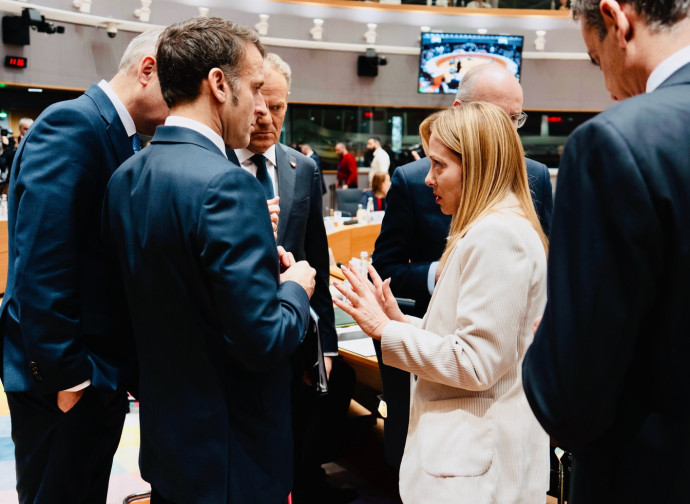
The EU has frozen Russian financial assets in Europe indefinitely. This is a less drastic solution than seizing them, but it is still dangerous in terms of Europe's credibility with international investors.
The alternative solution of a joint €90 billion loan to finance Ukraine has led to a rift between partners and different assessments of the risks to which the Union is exposing itself. For months, all the main European commissioners and many national leaders have been trying to seize Russian assets to finance Ukraine, justifying the illegal act by saying that it is morally right to support Kiev with the money of its Russian enemy. Rather than making proclamations for months and labelling anyone who questioned the wisdom and legality of seizing Russian assets as 'Putinists', European leaders would have avoided a great deal of embarrassment by meeting behind closed doors to reach a joint decision without much fanfare.
The consequence of sensationalising the debate on Russian assets is that the cautious positions of five countries, including Italy and Belgium, who are concerned about facing legal action and the collapse of the Eurozone's credibility in the eyes of international investors, have prevailed. However, this risk has not been entirely averted, as freezing Russian assets indefinitely will not inspire confidence in Europe as a political, strategic or financial partner.
The Mitteleuropa axis, comprising Hungary, Slovakia and the Czech Republic, also emerged victorious, having withdrawn from the commitment to finance the €90 billion loan to Ukraine. Kyiv is also a winner, having received a substantial sum that it can allocate as it sees fit, despite the country's rampant corruption. As President Zelensky has pointed out, this money will only be returned to the Europeans once Russia has paid war reparations. This condition requires Moscow to lose the war.
Although the von der Leyen Commission has been defeated in its intentions, it has nevertheless found a way to supply Ukraine with huge sums of money, which some observers say will be enough for Kyiv to hold out on the battlefield for another year. This is based on the hope that the Russians will tire of fighting and that the conflict will wear down Moscow's economy. In reality, however, the €90 billion provided by the EU does not seem to be enough to sustain Ukraine's public and war spending in 2026. According to the International Monetary Fund, Ukraine's needs for next year will be at least 136 billion. After all, last July, Kyiv asked Europe for 120 billion dollars for military support alone.
The most important aspect is that the EU is betting on Moscow's defeat with its citizens money. It is doing so by supporting Ukraine's war effort with funding, whose absence (or postponement) would have favoured the success of the US peace plan. This plan envisages Ukraine's neutrality and the transfer of occupied territories to Russia. On the other hand, the EU is also banking on Russia's defeat, assuming that the war reparations Moscow will have to pay Kiev will enable Ukraine to repay the Europeans in the future.
This is a future about which serious doubts can be expressed. Firstly, the EU is assuming the political responsibility of thwarting Trump's plan, which implies indirect military belligerence that would inevitably align it with the losers if Kiev were to lose the war.
Supporting the US plan would have resulted in Ukraine's defeat, but prevented its collapse. Scrapping it, as the EU is doing, risks having disastrous effects on relations with the US, especially if Washington and Moscow strengthen their bilateral ties as intended. Even taking this into account, no European nation is willing to send its own troops to Ukraine to fight the Russians.
Currently, there is no concrete evidence that the Ukrainians can recapture lost territories or prevent the Russians from conquering more. In fact, judging by the rapid fall of strongholds such as Seversk and Gulyapole (the latter of which is now largely under Russian control), it seems that Ukrainian troops' capacity for resistance is gradually weakening. Even reports from Ukraine and Western think tanks loyal to Ukraine must admit that Russia is advancing daily in all the disputed regions, from Donetsk to Zaporizhia and from Dnipro to Kharkiv. Russia is also opening new fronts in the Sumy region, penetrating from the Russian border with the aim of undermining Kyiv's military system, which is running out of reserves.
Assuming it is not squandered by Kyiv's leadership on luxury villas abroad and gold toilets, money alone will not be enough to change the course of the conflict on the battlefield. Weapons and ammunition are needed, which Europe is supplying in ever-decreasing quantities, as highlighted by the Kiel Institute, as well as well-trained troops, which Kiev is increasingly lacking.
Financially, counting on Moscow to pay war reparations to Ukraine is a gamble based on the belief that the Russians will be defeated. Reparations are paid by those who lose wars, and there is currently no concrete evidence to suggest that the Russians will be defeated, or that the £90 billion lent to Kyiv will be repaid to European nations.
As early as 2022, it was evident to anyone who did not view this conflict through ideological blinders that Europe would be among the losers in this war, but it was certainly not foreseeable that the EU would magnify the scale of its mistakes to such an extent, pursuing an economic, energy and strategic disaster with suicidal determination. In the interests of Europe, it would be advisable to end the conflict now by forcing Kyiv to accept territorial losses in exchange for reconstruction and future EU membership.
The EU therefore emerges from the renewal of financial support to Ukraine weakened and divided, increasingly in opposition not only to Russia, but also to the United States. Rather than acknowledging the mistakes made over the last four years and developing alternative strategies, the von der Leyen Commission is repeating them in the hope that Russia will collapse before Europe does.
