
Israel army veterans suffer psychiatric trauma
Netanyahu's government has called up over 100,000 reservists, but has to deal with 30,000 soldiers suffering from post-traumatic stress disorder. It is estimated that this number will rise to 100,000 by 2028.


The first week of war ended with a paradox that will continue in the coming weeks: Iran has been left militarily devastated, with its air force destroyed, its navy sunk and 32 ships lost at sea, its top leaders eliminated and Khamenei's personal refuge razed to the ground, yet the Middle Eastern country is refusing to surrender and is escalating the conflict, having secured the formal support of the world's second-largest economy, China.
The week that has just begun opened with three structural unknowns. The first: Trump has shifted his goal from nuclear disarmament to the surrender of the regime — a goal that he and his generals do not know how to define operationally. Secondly, Russia is now providing intelligence to Iran, effectively turning an apparently bilateral conflict into a proxy war with global implications. Thirdly, China is playing on two fronts: providing diplomatic support to Tehran while applying economic pressure to reopen the Strait of Hormuz, or possibly establish a preferential corridor.
The point of no return has been reached: war between Israel and the US against Iran is now a dramatic reality. Tel Aviv has not hesitated, deploying 100,000 reservists who are advancing towards the most intense areas of conflict. Missiles are flying through the skies and troops are on the move. There is no longer talk of tension, but of an open battle that is shaking the entire Middle East. Operation Roaring Lion is no longer just a threat; it is underway. The lion is roaring amid the rubble and in the region's air-raid shelters. The Israeli Defence Forces have launched a massive mobilisation, with reservists being deployed continuously. Iran is the main target, with military action escalating hour by hour.
Israel's goal is to destroy Iran's fuel depots, and Trump is growing increasingly anxious about his ally. Steve Witkoff and Trump's son-in-law Jared Kushner, who were expected to meet Prime Minister Benjamin Netanyahu during their visit to Israel, have suddenly postponed their trip. This comes just hours after disagreements between Washington and Tel Aviv regarding the management of fuel depots came to light. Further complicating matters is the appointment of Khamenei's second son, Mojtaba, as Iran's new supreme leader. This handover could significantly affect the diplomatic balance of the entire region, while ensuring continuity with his father's legacy. The successor is considered to embody the regime's hardline stance and has established ties to the Revolutionary Guards.
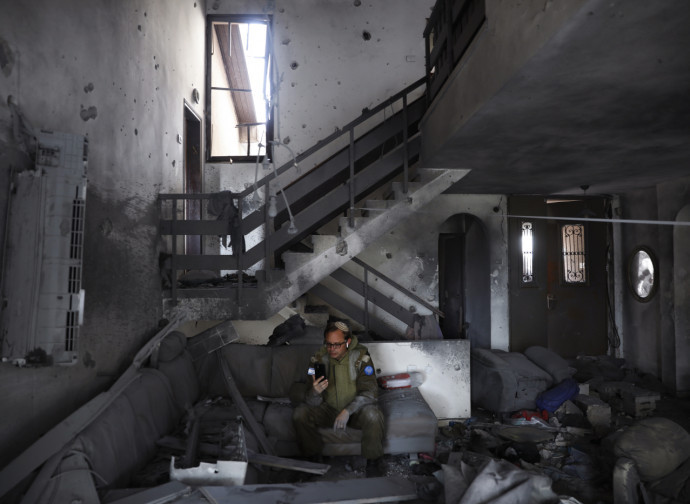
War brings destruction and death, but it also has an impact on another, less visible battlefield: the minds of soldiers. In the case of the Israeli army, this front is reaching a level that is beginning to concern even the military authorities.
Behind the rhetoric of national security and the 'most moral army in the world', official data and veterans' testimonies reveal a much more brutal reality: thousands of Israeli soldiers are returning from the front with deep, often permanent, psychological wounds.
According to the Israeli Ministry of Defence, the number of Israeli military personnel wounded has increased significantly since the start of the war with Gaza following the Hamas attack on 7 October 2023. According to data released by government sources, more than 14,700 soldiers and security personnel have been wounded since that terrible day. More than half of these suffer from psychological problems, primarily post-traumatic stress disorder (PTSD), severe depression, and chronic anxiety.
The Ministry of Defence's rehabilitation system already supports over 81,000 wounded and disabled veterans, around 31,000 of whom are classified as having psychological trauma. Projections estimate that, by 2028, the number of veterans in treatment could reach 100,000, at least half of whom will be suffering from combat-related mental health issues. This is not a marginal crisis, but rather a social time bomb that will slowly explode.
Studies by Tel Aviv University suggest that around 12% of reservists exhibit symptoms of PTSD — over twice the rate recorded prior to the war. Tens of thousands of people are returning to civilian life with nightmares, panic attacks, insomnia, and difficulty reintegrating into everyday life. The consequences are already visible: according to recent data, more than 1,100 soldiers have been discharged from military service due to PTSD since the beginning of the conflict. Others remain formally in service but are being monitored by military psychologists or undergoing drug therapy. The psychological pressure is so intense that the issue of suicide among military personnel cannot be ignored. According to military sources, hundreds of soldiers have attempted suicide or reported suicidal thoughts in the last two years.
This is a symptom of something deeper: the gap between the heroic narrative of war and the psychological reality experienced by soldiers. Military psychologists are increasingly discussing 'moral injury', which is a moral wound that is distinct from combat trauma. It is a deep psychological and existential wound that stems from having committed or witnessed acts that violate one's fundamental ethical values, causing a profound sense of guilt. Examples include being present during operations in densely populated areas involving the destruction of civilian infrastructure and the killing of children and families. Unlike classic PTSD, moral injury brings with it feelings of guilt, shame, anger, and social alienation. Many veterans say they cannot talk to anyone about what they have seen or done. Some stop seeing friends and family, while others turn to alcohol or drugs to help them sleep.
The result is a society that is slowly filling up with traumatised veterans. This crisis also affects their families, the healthcare system, and the entire Israeli social fabric. Rehabilitation centres are under pressure, and psychologists are reporting staff shortages and long waiting lists. The paradox is clear: while the government invests enormous resources in the military, the psychological support system is struggling to keep up with this emergency.
Work seems meaningless, daily life distant and personal relationships fractured. Some feel like 'strangers' in society, unable to explain what they have been through.
Meanwhile, the war continues to produce new cases of traumatised soldiers. While military analysts often discuss technological superiority, operational strategies and deterrence capabilities, they rarely address the long-term psychological cost of these conflicts. The numbers speak for themselves: thousands of wounded soldiers, tens of thousands of traumatised veterans, a healthcare system under pressure, and a generation that will bear the invisible scars of war for years — perhaps for the rest of their lives. Wars do not end when the bombing stops. They continue in the nightmares of soldiers, in psychiatric hospital corridors and in families trying to rebuild an impossible normality.
In Israel, this internal war has only just begun.
