
Statue of Jesus destroyed by Israeli soldiers – just the tip of the iceberg
Thirty days’ military detention for the soldier who destroyed the statue of Jesus in southern Lebanon, and the same punishment for the soldier who photographed it. The IDF and Netanyahu’s government hope this will put an end to the incident, but the affair is a sign of a much wider problem of attacks on Christians.

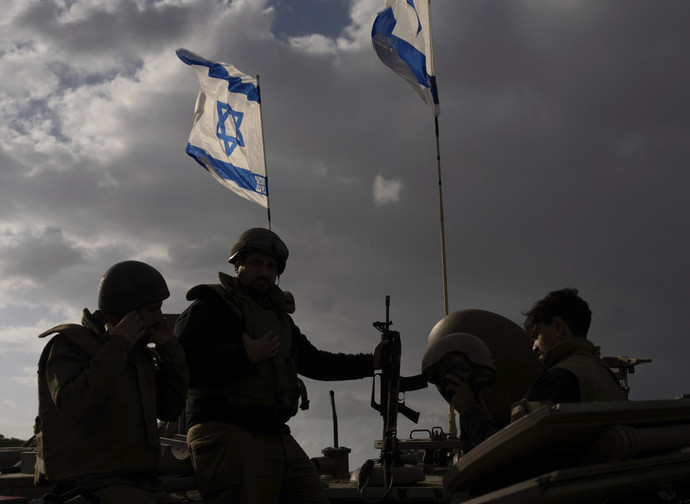
Thirty days’ military detention and discharge from combat service. This is the punishment decided by the Israel Defence Forces (IDF) for the two soldiers featured in the viral photo from 19 April: the soldier who smashed a statue of the crucified Jesus with a hammer, and his comrade who photographed him. The sensational incident, which took place in the Christian village of Debel in southern Lebanon, provoked widespread international condemnation, as well as causing considerable embarrassment for the IDF leadership and Israeli Prime Minister Benjamin Netanyahu. Mr Netanyahu said he was ‘shocked and saddened’ by the incident.
In an attempt to repair the serious damage to its image caused by the incident, the IDF announced that it had replaced the destroyed statue with a new one. In a statement released yesterday, the IDF also declared that 'the soldiers' behaviour was completely at odds with IDF orders and values', and announced that six other soldiers present at the scene would be punished for failing to intervene.
Although the army leadership has expressed 'deep regret' over the incident and reiterated that operations in Lebanon are directed exclusively against Hezbollah terrorists and not against civilians, many factors cast doubt on the credibility of these words. Instead, it is suggested that the prompt sanctions against those responsible were motivated more by the incident being made public than by the desecration itself. However, this is not an isolated case. One need only recall the killing of the parish priest of the village of Qlayaa, Father Pierre al Rahi, less than a month ago. He was deliberately shot by Israeli soldiers while going to assist victims of a previous Israeli attack.
Moreover, the incident involving the toppled crucifix is not an isolated event: there have already been other similar incidents in the area, according to what the parish priest of Debel, Father Fadi Flaifel, told the BBC. Furthermore, the Latin Patriarch of Jerusalem, Cardinal Pierbattista Pizzaballa, described the act committed in Debel as ‘a grave affront to the Christian faith’ in a strongly worded statement, and stated that it ‘joins other episodes of desecration of Christian symbols by IDF soldiers in southern Lebanon’.
Moreover, the nature of the desecration itself confirms this; it was not the act of a single soldier, but a group of soldiers who were so certain of their impunity that they even took photographs of the scene.
Cardinal Pizzaballa's statement, published at the conclusion of the Assembly of Catholic Ordinaries of the Holy Land, continues, saying that the incident "reveals a worrying gap in moral and human formation, in which even the most basic reverence for the sacred and for the dignity of others has been seriously compromised". Therefore, 'immediate and decisive disciplinary action, a credible process of accountability, and clear guarantees that such conduct will neither be tolerated nor repeated' are required.
Can the sanction announced last night be considered a satisfactory response to this demand? Not really, when compared with other sanctions imposed by the IDF on its soldiers during this period. For example, just last week, three female soldiers were court-martialled and had their pay cut by a third for wearing clothes deemed too revealing on their day off at the military base. Also four border guards were sentenced to 15 days’ military detention for ‘offending religion and Judaism’ after organising a barbecue in a restricted area during Shabbat. There is rather the impression of an oversensitivity to the precepts of the Jewish faith and less attention to the faithful of other religions.
On the other hand, Prime Minister Netanyahu cannot hide his responsibility for what is happening. Although he continues to boast that Israel is the only country in the region to guarantee religious freedom for Christians, it is a fact that attacks against Christians in Israel have been on the rise for a long time, as we have repeatedly documented in the Daily Compass. Not to mention the attacks on Christian villages in the West Bank by settlers, who often act with the complicity of the IDF. We cannot forget last July's attack on the Catholic parish in Gaza, which left three people dead and injured the parish priest, Father Gabriel Romanelli. Nor can we forget the latest diplomatic incident, when Cardinal Pizzaballa was stopped and turned back by the military on Palm Sunday while en route to the Holy Sepulchre.
Although the Israeli Prime Minister has intervened to express regret over these incidents and promise investigations, he has shown himself to be granting ample leeway to the most extremist factions within his government and present in the country. There has been a significant increase in radicalisation since 7 October 2023. In fact, the Times of Israel has written that 'Israel is moving away from tolerance and democratic values towards religious and political extremism'.
The incident in which a soldier smashed a statue of Jesus with a hammer is therefore a serious episode that comes as anything but a surprise, and is understandable within the current context. It will take far more than disciplining the soldiers responsible – as if this were an isolated incident caused by a few bad apples – to remedy the situation.
