
Monaco: a positive example of Catholicism as state religion
During his apostolic journey to the Principality of Monaco, Pope Leo XIV praised Catholicism as the state religion. This is a rare occurrence and a blow to the modern dogma of state secularism. Provided that Catholicism is genuinely practised as a public religion.

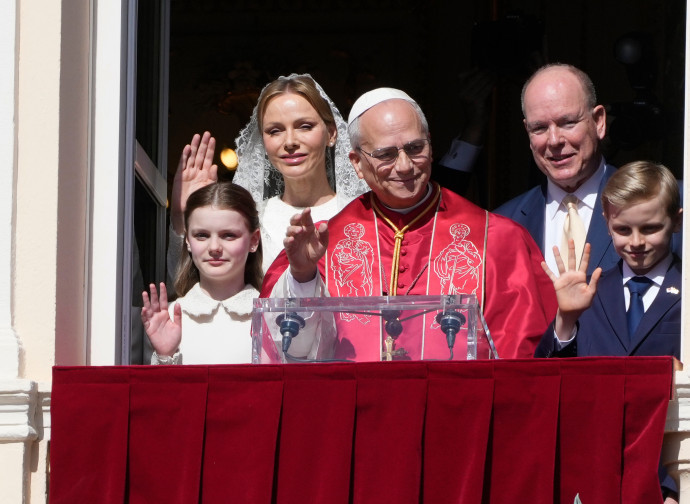
Leo XIV’s visit to the Principality of Monaco last Saturday, 28 March, was of twofold interest, as the press was quick to point out. Firstly, the Principality is one of the few remaining Catholic states where Catholicism is the state religion. Secondly, the Prince recently refused to sign a law approved by the National Council last May, which would have permitted abortion up to the twelfth week of pregnancy. He cited his status as a Catholic sovereign as the reason for his refusal. The two reasons are linked, but it is clear that the first arouses the greatest curiosity. Today, the idea of a Catholic state is considered blasphemous by the prevailing secular ideology.
For this reason, it can be said that the visit also carried a provocative significance with regard to one of the most widely accepted dogmas of Western politics. During his courtesy visit to the Principality of Monaco, Leo XIV made direct reference to the subject of the Catholic state in a passage of great interest: ‘The Catholic faith, which you are among the few countries in the world to have as a state religion, places us before the sovereignty of Jesus’.
By accepting the idea of a state religion, the Pope is sending a positive message. The Pope makes no mention of the 'legitimate autonomy' of the state, a term often used to conceal acceptance of modern secularism. Nor does he speak of a secularism 'open' to religions, an idea which often leads to religious indifference and the political equivalence of the various religions. By appreciating the state religion, he confirms that Catholicism in the Principality of Monaco occupies a primary and unique position, and implicitly maintains that this is just, in accordance with the demands of the Catholic religion itself. Pope Leo XIV implicitly recognised a privileged relationship between the state and a single religion, and not merely the person of the prince or his family.
Of considerable importance is the reference to the sovereignty of Christ as the foundation of the state religion, with all that this concept of kingship has meant and still means, notwithstanding recent theological re-evaluations. The sovereignty of Christ demands a state religion. This makes the situation of the Principality a rule rather than a residual exception. Perhaps this explains the Pope's focus on seemingly minor details, as the Principality of Monaco is small, yet these details can play a significant role in God's providential plan.
The Pope continued that this sovereignty of Christ ‘commits Christians to becoming a kingdom of brothers and sisters in the world, a presence that uplifts rather than crushes, connects rather than separates, and is ever ready to protect every human life with love at any time and in any circumstance so that no one is excluded from the table of brotherhood’.
This development in the discourse can be understood as the light that emanates from true religion and animates society as a whole, creating a brotherhood which, if not founded on religion, always risks falling apart. While we are all brothers and sisters on a natural level, without the sovereignty of Christ, this natural brotherhood is lost.
Prince Albert II also referred to the social function of religion, stating that the current framework respects who they are, given the role of the Catholic religion in their country, while ensuring secure, humane support.
It would be superficial not to acknowledge these new developments that emerged from the papal visit to the Principality of Monaco. Recognising the public, political and even institutional role of the Catholic religion is a counter-revolution against the irreligious religion that dominates Western politics, especially in Europe. It calls for a fundamental rethinking of the outdated concept of secularism. However, it would also be naive to believe that the Pope's speeches in Monaco amounted to a call for a return to Christian rule. The Principality, as Leo acknowledged himself, is a microcosm: a highly secularised, extremely affluent society. In this context, the state religion risks becoming a mere formality rather than a living reality. While it is true that the Prince opposed the abortion law, the National Council approved it.
This is where the Pope’s call to the Catholic community takes on meaning: he urges them to develop the insights derived from being the state religion in their own lives. The state religion requires the privileged relationship with the Catholic faith to be realised in the life of the community while respecting other religions and cultures. However, it must primarily manifest itself as a public religion and a social and political culture. If the Catholic faith remains confined to private devotion, its recognition as the state religion will remain superficial, and a few high-profile statements by the Prince will not suffice to guarantee this recognition.
