

Martina, the little girl on a mission for the Virgin Mary
“From the moment she was born, she was guided by someone, although we only realised this clearly when she fell ill: Maria Rosa Mistica came into her life after she was given a small holy card.” The story of Martina Kluzer, who died of cancer at the age of 7, after offering her life to Jesus and Mary for the conversion of hearts: Bussola interviewed her family.


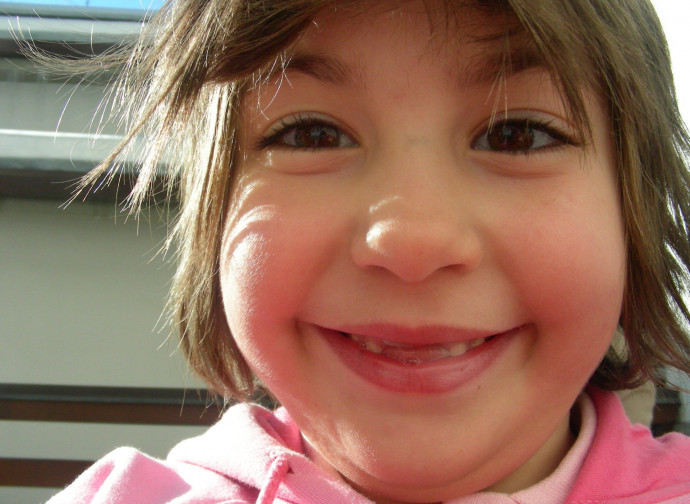
It was amongst the old buildings on the outskirts of Milan, within a humble family, that the Lord chose to reveal Himself in an extraordinary way. This event took place some twenty years ago; it was kept private for a long time and has only now been made public through a story published by Ares and entitled Martina, the Heart and the Rose. Thus, whilst holiness seems to be the legacy of a past that came to an end with the death of public figures such as Saint John Paul II or Saint Teresa of Calcutta – in a century that strikes at innocence, thereby making the face of God less clear to mankind – the giants of faith and mysticism today are the child saints. It seems that God takes them before society can seduce them, and that He instructs and guides them, asking of them a total offering. This is what He did with Martina Kluzer († 7 June 2007), showing the world how to live and die (at the age of seven) without the fear that assails it today.
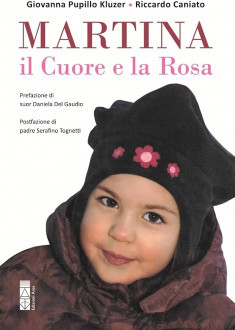 With her three other daughters and her husband by her side, Giovanna Pupillo Kluzer, Martina’s mother and co-author of the book with the journalist Riccardo Caniato, explains to Nuova Bussola Quotidiana: ‘It was 1999; my husband Claudio and I were in our twenties when we conceived Martina. We loved each other but did not know Jesus or his teachings, yet God had mercy on us.’ Giovanna, in fact, had dreamt of Saint Peter and Saint Charles Borromeo telling her that she would receive a gift: ‘At first I didn’t understand, but then I discovered I was expecting Martina. The pregnancy proved difficult due to some infections I’d contracted. In hospital, I dreamt of Padre Pio, whom I recognised because my family are originally from Puglia; yet despite the antibiotics, the doctors said the baby was at risk. That night, whilst sleeping, I saw a large hand clasping a tiny one. By the morning, the infection markers had dropped. A few days later, I got married.”
Martina was born and ‘we noticed something special from her earliest childhood: there was a mystery within her. It wasn’t difficult to bring her up, but to understand her. I had to be tactful, not least because she was respectful, thoughtful and not at all self-centred’. In the book, it becomes clear that there was someone else bringing her up, apart from her parents: ‘She was a normal little girl: she loved Barbies and chocolate. She loved dressing up. But even at nursery, if her father and I were arguing, she’d tell us off; and if he was watching the showgirls on the telly, she’d switch it off and tell him off.” But her parents thought “she was just a bit unusual, even though I sometimes wondered how she managed to teach us right from wrong with such authority.” Martina, too, was always thinking of others: “If she got a bit of pocket money from her grandmother, she’d buy clothes for me. She’d go without things herself to give them to those asking for charity, and even more so after she fell ill.”
Her sister Doriana, who spent the first five years of her life with Martina, recalls: ‘I remember the ward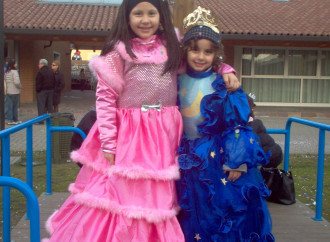 corridor and, at the end of it, a lounge with tables for the children, toys, a drawing corner and a bracelet-making corner, and there she was, happy, creating new things to give to the little patients in bed.’ Only now does Doriana realise how extraordinary it was that a ‘little girl undergoing gruelling treatment was still so full of life.
I couldn’t wait to be with her because her aim was to keep me entertained; she was worried about the strain her hospital stays were putting on me. Before she died, when she just wanted to pray, she made room for me in her bed because I wanted to watch a cartoon with her. Then she went back to praying.” The family explains that “she enjoyed herself in hospital. During a treatment session, she started dancing on the bed with her drip still attached, and when a doctor came in and told her off, asking what on earth she was up to, she replied that she was dancing. He burst out laughing – something doctors don’t usually do in that ward.”
Her parents had already realised that Martina saw the Virgin Mary and spoke to Jesus. Giovanna explains: ‘Ever since she was born, she had been guided by someone, although we only realised this clearly when she fell ill: Maria Rosa Mistica came into her life after she was given a small holy card. At the same time, we began praying at the Bozzola shrine: we were on our way to visit my sister, who was a Buddhist at the time and is now a Christian thanks to Marti, but we got lost and found ourselves in front of the shrine. My daughter wanted to go in, and we let her. She met Father Gregorio, who invited her to go and pray there every Wednesday evening, taking part in the Mass for healing and deliverance. She didn’t want to miss a single one. When Father Gregorio would walk down the aisles giving his blessing, Marti would tell me she could see Jesus standing beside the priest, touching the people; at that point she would bow her head, clasp her little hands together and pray. Around the same time, she began constantly asking us to go to Montichiari, where the Chapel of Rosa Mistica is located (the Virgin Mary appeared to Pierina Gilli and the Church has granted the nihil obstat for its veneration, editor’s note). The journey by car took over an hour. My husband once said ‘no’: he was tired, as was Doriana, and besides, having lost my job to be with her, we had to keep a close eye on our spending. But she wept and pleaded: ‘Don’t you understand? Our Lady is calling me.’ We could no longer refuse.”
Our Lady made many requests of Martina, but that day was special because ‘she’d been in hospital from 7 am to 4 pm for chemotherapy. When we arrived in Montichiari, she first ran to the Crucified Christ, then into the chapel of Our Lady, and then down towards the church, all barefoot. Before entering, she kissed the cross (which now stands at the foot of the steps, ed.), then dipped her feet into the icy spring, staying there for a long time, turning round and round whilst praying. Finally, as always, she climbed up and down the steps on her knees’. How does a parent feel when they see their daughter adding further sacrifices to those already demanded by such gruelling treatment? Giovanna recalls: ‘We scolded her because she was hurting herself going up and down the stairs like that, but in the end we gave in to her strength and faith.’ And what about her? ‘That time she replied that there were children in the children’s home who couldn’t go to the Madonna, so she had to do it for them.’ Martina didn’t have an easy time at school either: ‘There were children who, out of ignorance, would wipe down the chair she’d just got up from and keep their distance from her. I’d urge her to stand up for herself, and she’d explain to me that even Jesus had suffered cruelty, but that evil is overcome by good.’ Giovanna struggled to understand, but ‘she triumphed: all her classmates came to see her in her coffin and said she smelled lovely, that she was beautiful, rosy-cheeked and smiling. Two hundred people from the school attended the funeral.’
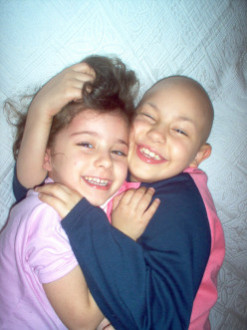 She was kind but not a do-gooder: “When someone approached her who was not ignorant but malicious, she would lower her head and remain silent. If she saw that I was opening up, she would become serious; I understood and stopped.” Father Serafino Tognetti, in the book’s afterword, speaks of a little girl of extraordinary clarity because “as the Christian life demands, her good is the good of others”. Her mother confirms: “When we went to Lourdes, she wanted to fill the camper van with jerrycans of water to take to the cancer centre: she went into every room, asked everyone to drink, and even if people said they didn’t believe, she would reply: ‘Do it anyway, and if you like, say the Hail Mary – that’s better.’ She gave water to the doctors too. Most of the people were far from the Lord, but they all drank it. It was a great grace.’ Martina ‘would get angry if the doctors didn’t laugh, if the priest who brought her the Eucharist (which she received in advance, ed.) looked sad, and she would tell me to remind him that she was happy to give her life to God’.
But what does it mean that she decided to offer herself to Jesus? Her mother replies: “She first showed us that, through prayer and faith, God can do anything, and then that the purpose of life is heaven.” Deeply moved, along with her husband, Giovanna emphasises: “She was completely healed, but when they told us, she wasn’t surprised because she was certain that God would answer our prayers.” In short, Martina never gave up until she got her way, as other episodes show. “But she revealed more to us”: after a Mass at La Bozzola, she fell asleep in the car and dreamt of the Virgin Mary, who asked her if she wanted to go with her. ‘I asked her what she’d replied, and when she told me “yes”, I got angry. But she replied that I shouldn’t be, because in return she’d secured Heaven for me, my husband and Doriana, and the grace of always feeling her presence. Even Father Gregorio, taken aback, asked her why she’d made that choice: her answer was that we had to trust Our Lady.’
In a world that shuns suffering Martina, now in her death throes, even refused morphine. “She said that otherwise she couldn’t speak with Jesus and that He was the only one capable of alleviating her suffering.” Miracles occurred on her deathbed: “I could see her talking to someone and moving, touching things I couldn’t see. I asked her questions and she told me in a whisper that she was caressing Jesus, that He was beautiful and that He was healing her.” In fact, at one point Martina began to move despite the paralysis in her legs, “but then she told me that Jesus had asked her whether she wanted to be healed in body or to follow Him to Heaven to fulfil a plan He had for her. She chose to go with Him and said her second ‘yes’. After that, her legs froze up again; it was only the following day at 3 pm that she crossed them, assuming the position of the crucified Christ. I tried to lower her leg out of fear, but there was no way. We offered her water because she’d said she was thirsty, but she refused it. She ascended to Heaven that evening, her face radiant with joy.”
This is how Martina now appears in dreams to various people, healing children and the sick. A project that is coming to fruition: “And it’s true, I feel her presence,” confirms Giovanna, along with her daughters: “When we pray to her for guidance on an important decision, she gives us clear signs to show us the way; she places shapes or animals she loved near us, such as hearts, ladybirds or butterflies.”
Indeed, Martina seems to live on in this house, known and cherished as a treasure even by her two younger sisters. Thanks to Martina, people who have strayed from God are being converted today, just as they were during her time on earth. “I am the first convert,” explains her father Claudio: “Her illness was a heavy blow, but she showed us that Jesus is alive and at work. She was a fighter, and she was given to me so that I might have the faith and hope with which I face the present.”
