
Calls for Pope to stop new synodality increase
The open letter from Dutch bishop Mutsaerts is the latest initiative to call on Pope Francis to halt the numerous reckless moves by bishops who, under the pretext of synodality, are distorting Catholic doctrine. The fundamental question that must be answered is: what is the Church?

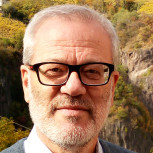
On 13 August, the auxiliary bishop of ‘s-Hertogenbosch in the Netherlands, Bishop Robert Mutsaerts, published on his blog a lengthy Open Letter to Pope Leo XIV in which he sets out, in a respectful yet firm, well-argued and clearly articulated manner, the serious reasons why the ‘new synodality’ is unacceptable, as it is considered detrimental to the Church and harmful to the salvation of souls.
This statement, clearly prompted by grave concern and a strong sense of episcopal responsibility, joins other appeals made to Pope Leo XIV to halt the numerous processes causing the Church to go off the rails.
In recent days, we reported that Cardinals Sarah and Burke had asked the Pope to say 'Enough is enough!': to stop the new synodality, not allow the Group 9 Synod report on gender and homosexuality to circulate in dioceses, preserve the Church from pagan infiltration, and revise or tacitly allow Traditionis Custodes to lapse regarding restrictions on the Tridentine Rite.
On 13 August, the Daily Compass reported that parents of pupils at Catholic schools in the Diocese of Hamburg had also written to the Pope, asking him to block the imposition of the Guidelines on Gender Education sought by their bishop, Stefan Hesse.
Added to this is now Bishop Mutsaerts' call for another 'enough is enough!' regarding the new synodality. Synods have always existed, but they were convened to address specific topics and then concluded. However, the new synod on synodality is permanent, according to the bishop, and 'it could be compared to a meeting that drags on indefinitely about how we should meet'. Synodality has evolved from a means to an end, aspiring to become a 'permanent ecclesial paradigm'.
Although it engages in dialogue, the Church, as the bishop continues, is not dialogue itself, but a reality that has been received. St Paul uses verbs such as 'to receive', 'to pass on' and 'to preserve' to describe this reality. The new synodality focuses on structures, participation, decision-making processes, women's responsibilities, inclusivity, and the functioning of ecclesiastical bodies. Meanwhile, the Church's faith is in dire straits: 'The less evangelisation there is, the more commissions on evangelisation are set up'.
A moment of realistic desolation is when the Letter states that 'we are sailing without a compass'. The new synodality is a process of analysing processes. 'During the various consultative phases,' the bishop observes, 'topics have been admitted that touch on issues on which the Church already has a clear doctrine.' If these topics continue to be discussed for years, the impression is given that the doctrine might be revised. The analyses are either destined to change the doctrine without saying so or to raise expectations that cannot be met.
Rather than starting from what it has received, the new synodal Church starts from listening to the desires, experiences, frustrations and expectations of people today. Yet, when these conflict with the Gospel, it is man who must change, not the other way around. 'The Church of the martyrs did not change the Roman world by organising listening sessions on how Romans might perceive the Christian community in a more inclusive way.'
The Daily Compass has repeatedly highlighted the dangers of the new synodality, showing that, as Bishop Mutsaerts also states, it is a method which claims not merely to be a method, but to be the very essence and manifestation of the Church. Thus, it reveals that it is underpinned by a neo-modernist theology that equates doctrine with practice and essence with existence. In conclusion, the bishop points out that the issue is fundamentally ecclesiological, and ‘concerns the question: 'What is the Church?' Is it, first and foremost, a community that seeks together what it is to become? Or is it, first and foremost, a divine reality that has received what it is to be?’
Warnings such as this latest one from Monsignor Mutsaerts, as well as calls for Leo to take action, are well-founded. In this pontificate, no other issue seems to carry such weight because the new synodality claims to encompass every aspect of the Church’s life. Many things are getting out of hand. The initiative by the Bishop of Hamburg, mentioned above, is a prime example of this, given that the new synodality proceeds by the method of 'existential inclusion'. The same applies to the Mexican bishops who hosted the Fourth National Meeting of Mexico’s Catholic Rainbow Network in early August and declared that homosexuality is not a sin, and to the parish priests and communities in Germany who continue to entrust homilies to laypeople despite the Vatican’s ban.
We witness bold moves by ecclesiastical pioneers every day, spurred on by the new synodality as a new way of being for the Church. Mutsaerts, on the other hand, says that we need 'Catholics who do not constantly ask themselves how the Church should adapt to the world, but who have the courage to invite the world to allow itself to be transformed by Christ'
Will the Pope heed these calls? The evidence suggests that Prevost had been a firm believer in the new synodality for a long time, even before his election. On this issue, he could therefore help to shape Francis’s new direction. However, history is not always shaped by the evidence that precedes it. Otherwise, the auxiliary bishop of 's-Hertogenbosch would have kept his concerns to himself.
The open letter from Dutch Bishop Mutsaerts is the latest initiative calling on Leo XIV to halt the numerous reckless moves by bishops who, under the pretext of synodality, are distorting Catholic doctrine. The fundamental question that must be answered is: what is the Church?

The Instrumentum Laboris confirms synodality dangers
The Synod working document is full of 'listening', 'circularity', 'relational conversion' and 'conversation in the Spirit'. For 'walking together' the how is sufficient, without knowing where to go.
- Instrumentum Laboris, torture by words prepares October Synod by Nico Spuntoni
Cardinal Burke: “Synodality contradicts the true identity of the Church”
“The Synod that will begin tomorrow conceals an agenda that is more political and human than ecclesial and divine.” “The will is to profoundly change the hierarchical constitution of the Church is clear, with a further consequence a weakening of teaching on morality as well as discipline in the Church.” The speech of cardinal Burke at the Conference “The Synodal Tower of Babel”
- The photo gallery of the conference