

Islamised British universities alarm Abu Dhabi
Forget Islamophobia; it is the United Arab Emirates that is warning London about the advance of the Muslim Brotherhood. The UAE no longer trusts British universities, which have become fertile ground for radicalisation, to educate its children.


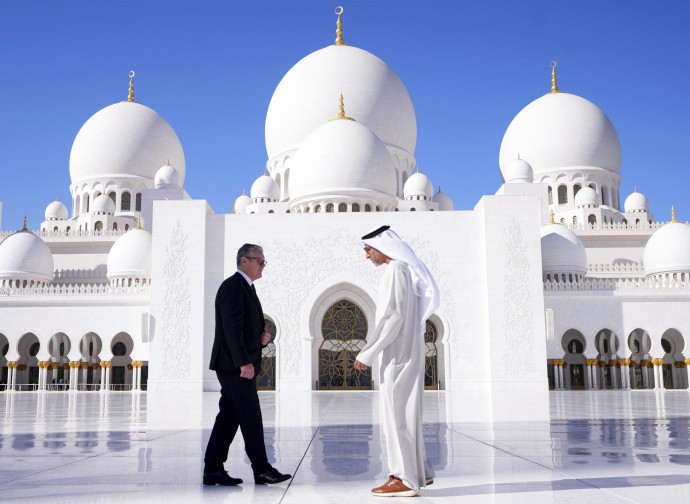
The United Arab Emirates is closing the door to British education. Concerns about the influence of the Muslim Brotherhood in elite UK colleges will not be ignored, and Abu Dhabi has decided to exclude all British universities from the official list of institutions eligible for state scholarships. Directly from the column: "What is the last straw for the United Arab Emirates? Seeing Europe Islamise its children”.
Abu Dhabi is convinced that the Muslim Brotherhood has established itself by exploiting British campuses as fertile ground for radicalisation and using student associations to invite Islamist speakers and spread Islamist messages.
For a long time, London represented the epitome of social and professional success in Europe, particularly in the eyes of those from the East. Standing at the foot of Big Ben was an unmistakable sign of success. Today, however, that scenario has lost all its appeal for the United Arab Emirates — historically one of the main financiers of academic education in Europe and long seduced by that paradigm. They no longer send their children there amid so much Islamism. So much for Islamophobia. The Ministry of Higher Education has therefore published a revised list of approved foreign universities, including those in the United States, Australia, France and Israel. For the first time, the United Kingdom is not on the list.
The United Arab Emirates has chosen to intervene, viewing the rise of Islamism in the United Kingdom as a structural risk, rather than an episodic one. Official British figures reinforce this view: in the 2023–24 academic year, 70 university students were reported for possible inclusion in the country's Prevent programme for tackling Islamist radicalisation. This is almost double the number from the previous year. In the year ending September 2025, only 213 study visas were granted to Emirati citizens to study in Britain, representing a 27 per cent drop compared to the previous twelve months, and a 55 per cent drop compared to 2022.
Abu Dhabi has adopted an even tougher stance by announcing that it will not recognise degrees awarded by universities not included on the official list, thereby rendering British degrees invalid for its students. This is a concrete extension of a strategy pursued by the United Arab Emirates since 2011, when it adopted an uncompromising stance against Islamist movements at home and abroad in the aftermath of the Arab Spring, considering them a structurally destabilising factor for the state.
Under the leadership of Sheikh Mohammed bin Zayed Al Nahyan, Abu Dhabi has repeatedly urged London to ban the Muslim Brotherhood, which is classified as a terrorist organisation. The Muslim Brotherhood operates under the principle that 'Islam is the solution', aiming to establish states governed by Sharia law, particularly in Europe. In this context, the Emirates decision appears to be a political message rather than an isolated gesture.
Moreover, it does not come at a random moment. Firstly, a recent report by French intelligence warned of the Muslim Brotherhood's pervasive presence in all areas of society and political life in France, including schools, universities, and sports organisations. Paris itself has turned the spotlight on pan-European programmes such as Erasmus, which are considered to be instrumental in supporting Islamist activism, and has urged Brussels to strengthen controls on lobbying activities and institutional partnerships.
Then there is Italy, which has been overwhelmed by the Domino maxi-investigation scandal. This brought to light a Hamas cell — the Palestinian arm of the Brotherhood — operating in the country. It also revealed a dense network of links between Islamic cultural centres and Brotherhood-affiliated circles throughout the peninsula — a nightmare for the government and prosecutors. Thus, while the movement's influence is waning in much of the Middle East, it is growing in Europe.
In the United Kingdom, the phenomenon has been under official observation for years. In 2014, the Cameron government was forced to launch an investigation into the Brotherhood's activities in the UK. The review concluded that the movement's ideology and practices were contrary to the United Kingdom's values, national interests and security, but London chose not to ban the organisation or classify it as terrorist. This hesitation is now at the centre of a political and diplomatic clash, reaching breaking point.
According to the Emirates, university campuses are places where activities linked to the Muslim Brotherhood are most visible. For example, student associations at the London School of Economics and King's College London have hosted speakers linked to Islamist movements ideologically aligned with the Brotherhood. One emblematic case is that of Umar Farouk Abdulmutallab: the Nigerian who flew to the UK to study engineering at University College London between 2005 and 2008. He graduated and then, on Christmas Day 2009, attempted to blow himself up on a flight from Amsterdam to Detroit with around 290 people on board; he had been trained by al-Qaeda. During his time at the university, he became president of the Islamic Society, the longest-standing and most active Islamic community in Britain.
Several organisations based in the United Kingdom have leaders with links to Brotherhood-influenced networks, including the Cordoba Foundation, which has been cited in parliamentary reports for its links to the organisation. The foundation runs Islamist awareness campaigns that have resulted in stable, structured influence, with the capacity to create parallel courts where Islamic law is the only law applied.
For the United Arab Emirates, political Islamism is a strategic threat. All of these incidents are connected; this is not an isolated phenomenon. It is a form of conformism capable of influencing young European minds, normalising terrorism, and transforming radicalisation into a cultural phenomenon through closed networks and selective information.
They have therefore decided to send an unambiguous message to the United Kingdom: if your educational institutions are unable to remain as such without turning into ideological hotbeds, you will no longer be permitted to train our future ruling class.
