

Holy Shroud: new research confirms its Middle Eastern origins
Nineteen scientists led by Gianni Barcaccia have conducted significant research on material taken from the Shroud, confirming the presence of DNA of Middle Eastern origin. Those who deny the authenticity of the Holy Shroud have already sprung into action, relying on the discredited radiocarbon dating results from 1988.


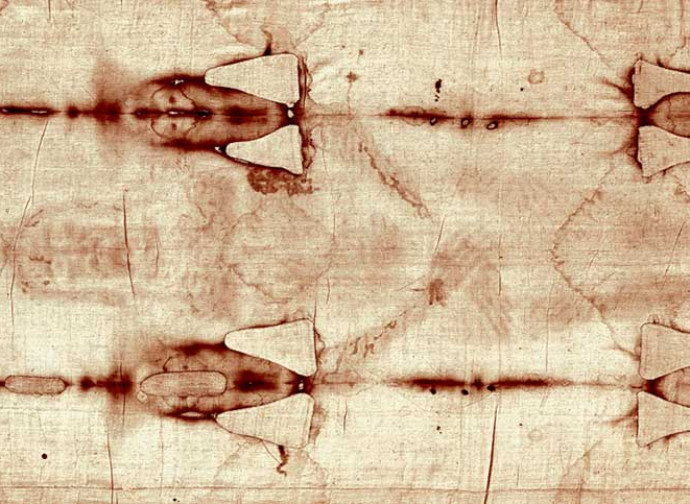
A major study was recently conducted by nineteen scientists from prestigious universities on material officially taken from the Shroud in 1978. Pier Luigi Baima Bollone, a renowned professor of forensic medicine in Turin and the person who carried out the sampling, sadly passed away last November. A conference was organised in Turin on 17 February in his memory. Baima Bollone is renowned for demonstrating the presence of human blood of blood group AB on the Shroud. The nineteen scientists, coordinated by Gianni Barcaccia (Professor of Genetics and Genomics at the University of Padua), are about to publish the new research, which is currently available as a preprint. Baima Bollone is also among the authors of the article and made a fundamental contribution to the work until his death.
In 2015, Barcaccia and his colleagues published an interesting article in Nature Scientific Reports announcing the discovery of DNA contamination from people who had touched the Shroud. They found that over 55.6% of the DNA came from the Near East, around 38.7% from India and less than 5.6% from Europe. The presence of Indian DNA is easily explained: fine Indian linen fabrics were used for the high priest’s vestments at the Temple in Jerusalem during the time of Jesus. During the Yom Kippur festival, the high priest wore them during the afternoon rituals, as noted by palaeographer Ada Grossi.
The new article states: "The presence of approximately 38.7% Indian ethnic lineages could be the result of historical interactions or the Romans importing linen from regions near the Indus Valley. This is associated with the term 'Hindoyin' found in rabbinic texts. In particular, the term 'Sindone', derived from the Greek 'Sindôn' meaning 'fine linen', could be related to 'Sindh', a region renowned for its high-quality textiles. Historical evidence supports trade links between India and the Mediterranean, highlighting the importance of these textiles and inviting further exploration of ancient cultural interactions and trade practices.’ Indeed, the biblical scholar Lavergne has stated that the term 'Sindôn' refers to a fabric of Indian origin, prized for its qualities and used for various purposes. In short, re-evaluating these findings from the analysis of DNA traces on the Shroud of Turin suggests that the fabric circulated widely in the Mediterranean region and that the yarn may have been produced in India. The researchers add: ‘Overall, our findings, both previous and current, provide valuable information on the geographical origins of the individuals who interacted with the Shroud during its historical journey through different regions, populations, and eras.’
The newly announced research confirms the presence of haplogroup H33, which is prevalent in the Near East and common among the Druze. It is further specified: 'In particular, the Druze population shares a common genetic ancestry with Jews and Cypriots, and has historically intermingled with other Levantine populations, including Palestinians and Syrians'. The presence of microorganisms is also noteworthy because 'the reconstructed microbiome of the Holy Shroud reveals a rich variety of microorganisms commonly found on human skin, as well as communities of halophilic archaea and fungi, including moulds'. Halophilic archaea indicate preservation in a saline environment or under saline storage conditions.
In addition to confirming the Shroud’s stay in the Middle East, preservation in a saline environment, such as near the Dead Sea, is a plausible theory. This adds another element to the list of scientific evidence supporting the Shroud's authenticity. Vatican News reported on this on 1 April.
As might have been expected, those who deny the Shroud's authenticity are not happy about the new discoveries. Archaeologist Anders Götherström, a researcher at Stockholm University in Sweden and an expert in ancient DNA, has immediately entered the fray. In an article by Antonello Buzzi published in Tom's Hardware Italia, Götherström reiterates that the 1988 radiocarbon dating remains the cornerstone of the scientific interpretation of the Shroud. “I still see no reason to doubt that the Shroud is French and dates back to the 13th–14th centuries,” he states, adding that the relic's documented history as an object of medieval European veneration could be more significant than any hypothesis regarding its legendary origins lacking solid empirical support. All the prestigious research by the nineteen scientists is dismissed as 'hypotheses regarding legendary origins lacking solid empirical support'! Buzzi’s article also highlights that the material analysed by the scientists shows significant plant and animal contamination. This is emphasised in both the title, 'Turin Shroud: DNA reveals traces of people, animals and plants' and in the subtitle 'Genetic analysis reveals traces accumulated from numerous individuals and species, the result of centuries of exposure, handling and environmental contact'.
The list of contaminants found is as follows: ‘The new research significantly broadens that perspective, revealing a veritable biological encyclopaedia trapped within the fibres of the cloth.’ In terms of fauna, the identified DNA covers a wide variety of domestic and wild species, including cats and dogs, farm animals such as chickens, cattle, goats, sheep, pigs and horses, as well as wild animals like deer and rabbits. Aquatic species include the grey mullet (Mugil cephalus), Atlantic cod (Gadus morhua), and other ray-finned fish. The presence of marine crustaceans, flies, aphids and arachnids, such as dust mites, skin mites and ticks, completes the picture of biological contamination, which is broad and layered over time.’
Equally varied is the plant component. Among the most common species are carrots and various types of wheat, as well as peppers, tomatoes and potatoes — plants whose spread across Europe is closely linked to 15th century explorations towards Asia and the Americas. These data confirm that the Shroud has passed through very different environments and historical contexts, accumulating biological traces at times that cannot be precisely determined.’
As for human DNA, the researchers identified genetic material from numerous individuals who have handled the fabric over the centuries, including members of the 1978 sampling team. As the authors write in their study, ‘The Shroud has come into contact with numerous individuals, making it extremely difficult to isolate the artefact’s original DNA’. This overlap of genetic contributors constitutes a significant methodological limitation for any attempt at historical reconstruction based on DNA analysis”.
This contamination is being used in an attempt to discredit the work of Barcaccia and his colleagues, despite the fact that they have scrupulously distinguished Indian and Middle Eastern DNA from the other DNA present. It has long been known, of course, that the DNA of people who have come into contact with the Shroud, such as the Poor Clares who mended the fabric, has been added to that of the Man of the Shroud over time. Baima Bollone and some of his colleagues published an important article on this subject. However, this in no way invalidates the rigorous research of the nineteen scientists. Might the significant contamination not have altered the result of the 1988 radiocarbon dating? Today, laboratories carrying out C14 dating are very cautious about results obtained from contaminated textiles. Beta Analytic in Miami, Florida, one of the world’s largest C14 dating laboratories, warns: “The laboratory does not date textiles or other items of high or inestimable value unless payment and sample submission are made by a government body, museum, or other recognised institution studying the materials as part of a multidisciplinary research project.” Alternatively, it is possible to send the material via a professional archaeologist who can confirm that the sample is suitable for radiocarbon dating.” The laboratory also emphasises: ‘Well-preserved fabric samples with a good structure that have not been treated with preservatives yield accurate results. Samples taken from fabric treated with additives or preservatives yield a false radiocarbon age”.
Buzzi makes no mention of the scientific refutation of the medieval dating that appeared in Archaeometry, a University of Oxford journal, in 2019. This was authored by Tristan Casabianca, Emanuela Marinelli, Benedetto Torrisi and Giuseppe Pernagallo and was based on the raw measurement data finally obtained from the British Museum thanks to international legal action. He dismisses the challenge to the 1988 results as follows: “This dating, though contested by some Christian scholars, is considered sufficiently robust by the majority of the scientific community”.
It is sad to see how news is disseminated by certain journalists, but we have grown accustomed to it. Yes, I am one of those 'Christian scholars', and for this reason, Wikipedia (on which I have been featured for some time!) describes me as follows:
"A figure of absolutely minor importance, she has made no significant scientific contributions regarding the Shroud, focusing exclusively on uncritical authenticism". However, as St. Daniel Comboni wrote, as reported in an article from a few years ago: ‘One must suffer great things for the love of Jesus Christ [...] fight against the powerful, the Turks, the atheists, the Freemasons, the barbarians, the elements, the friars and priests [...] but with His grace, we shall triumph over the Paschas, the Freemasons, atheist governments, the perverted minds of the virtuous, the cunning of the wicked and the snares of the world and hell [...] all our trust is in Him who died and rose again for us and chooses the weakest means to accomplish His works’.
