

Answering God's call: the true story of Opus Dei
The co-author of the first historiographical text dedicated to Opus Dei founded by St Josemaría Escrivá talks to the Daily Compass about his research in the movement’s archives and his love for the charism. Almost a century of life and a multitude of men and women dedicated to practising (and studying) their faith.


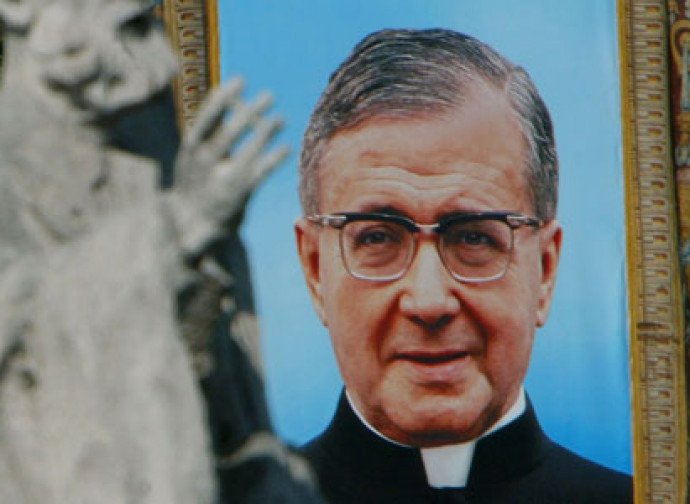
"If the people of the institution that preserves it make it their own and spread it with care, a divine and charismatic message remains intact," explains José Luis González Gullón, a priest of Opus Dei and professor of history at the Pontifical University of the Holy Cross, in an interview with Daily Compass. However, this is not possible without knowledge of its own history. Therefore, Gullón and John F. Coverdale, former professor of history at Princeton University, decided to publish a historiographical volume on the charismatic reality founded by St Josemaría Escrivá (Opus Dei. Una storia, Ares, Milan 2025). This is especially important now that 'the people who were part of his inner circle' are no longer with us. 'It made sense to recount those years, which were so important for the institution. Until now, no history had been published, and as a historian and a priest of Opus Dei, I had questions about its past. After extensive research in the archives, I believe I have found some answers, which I share with everyone in the book.'
For Saint Thérèse of Lisieux, holiness meant offering every little gesture to God, while Escrivá emphasised that this was possible for everyone, including lay people. However, one might wonder how it is possible to conduct one’s life and prayer proposed by the founder of the Work in today's frenetic world.
According to the charism he had received, Saint Josemaría said that the intense pace at which we live is not an obstacle, but a path for those who feel and live as children of God. Undoubtedly, Escrivá's proposal to contemplate Jesus in all our activities is surprising. He affirmed that it is not only possible, but also vocational: God calls you to be united with Jesus wherever you are: at home, at work, or wherever you may be. This is the Gospel message that Opus Dei reminds us of. As for how to achieve this, Escrivá explained that, on the one hand, we Christians have our relationship with God through prayer and the frequent reception of the Eucharist and Penance sacraments, together with spiritual direction and formation in the truths of Christian life. On the other hand, the most perfect realisation of our professional, family, and social activities is the means by which we sanctify ourselves, grow as individuals, and dedicate ourselves to others.
Some accused your founder of being a progressive, while in the post-conciliar era, much of the Church saw him as a rigid traditionalist. What was it instead that made him balanced?
I have no doubt: union with Jesus. He invited everyone — lay people and priests, women and men, married and single — to follow the same path he was following: seeking, finding and loving Jesus. He said that life has full meaning when lived with God. He had no problem proposing a personal and intimate relationship with Jesus, even using the verb 'to fall in love' with Him. I think that was his strength. He preached what he lived and lived what he loved.
Members of Opus Dei seem to be more resistant to doctrinal derailment and the confusion of the times. Why do you think that is?
St Josemaría was passionate about explaining the truth. He once said that God's greatest enemy is ignorance, and that Opus Dei is a great form of catechesis. For this reason, the movement has always placed great importance on providing doctrinal training for people of all backgrounds, from intellectuals to those with only a basic education. Another expression the founder liked to use was that one must have 'the doctrine of theologians and the piety of children'. Both elements are important in the Christian life. In my public research, I study thousands of men and women, both living and deceased, who took on holiness as a way of life while also committing themselves to studying the faith they lived by. These people were not perfect, but they were honest. Each one responded in their own way to the call that God addressed to them. This is the true history of Opus Dei.
Escrivá said that Opus is God's work. What is the difference between this and the movements that arose after the Council?
It seems to me that the difference lies in the original message of each movement, i.e. what God asks of people through a particular gift. Logically, there are some elements common to all charisms because they all have the same evangelical root and goal: union with the divine. After all, a charism is a concrete path within the Church that leads to union with Jesus and the apostolic mission. At the same time, each institution has characteristics that distinguish it from other Christian groups, and these original elements shed light on and enrich the ways in which God brings about the salvation of humanity. In the case of Opus Dei, the understanding of secularity as a vocation is distinctive: lay people and diocesan priests are called to unite with God through their daily activities.
You have suffered, prayed and offered yourselves for years in order to take your particular place in the service of the Church. What happened?
A charism inspired by God must have a legal place in the Church. First comes life and the flowering of the early days; then, a canonical structure appropriate to the message becomes necessary. The relationship between the authority of the Church and a charism must be established through peaceful dialogue, nourished by time, listening, and mutual respect. Through this beneficial flow, the Church welcomes new charisms when it recognises their fidelity to the faith and the fruits of holiness they produce. Charisms are understood as realities belonging to the one mystical body of Christ. In the case of Opus Dei, the juridical form that has placed it within the law of the Church since 1982 is that of a personal prelature. In this structure, lay people and priests are under the jurisdiction of a prelate with regard to the specific purpose of Opus Dei, and are united by vocation.
Following Escrivá's death, Opus Dei was led for decades by two of his close collaborators who had been with him from the beginning. This ensured that the charisma would not be misinterpreted. Can you say that the movement has been kept perfectly intact after almost 100 years?
A divine and charismatic message remains intact if the people within the institution that preserves it embrace it and disseminate it carefully. What is happening to Opus Dei is what has happened to other ecclesial realities when they reached their centenary. Until now, the movement has been characterised by the life of its founder and those who were part of his inner circle. Now, members of Opus Dei must combine fidelity to the original spirit with responding to changes in society, the Church and the institution itself. This implies a certain evolution in how things are done and said. They will be able to rise to this challenge through striving for personal holiness and fostering unity.
Escrivá chose the apostolate of friendship as his method of evangelisation. How can this be lived out today?
St Josemaría Escrivá explained that the message of holiness is usually transmitted from person to person: a friend talking to a friend, a mother to a child, a worker to a colleague. This method of spreading the Gospel is highly effective because, in a face-to-face conversation, one opens one's heart to the other person, shares one's encounter with Jesus Christ, and maintains an open, sincere, and profound dialogue. Escrivá also said that the members of Opus Dei would carry out collective activities of an educational and charitable nature with the help of friends and cooperators. These activities would be a public showcase of the spirit of the movement. In Rome, for example, there is the Elis Centre and the Campus Bio-Medico University. Institutionally, Opus Dei publicises its initiatives through its website, which is available in over 40 languages and attracts around two million visitors every year, as well as through its social media presence and other communication channels. The website features an interactive map showing where its centres are. It also includes testimonials from members, news about activities, a financial data section and pages with the statutes. These institutional elements — and the same is true at an individual level — bear evangelising fruit when they comprise people who seek to be contemplative in the world, who are united with the Pope and the Church, and who have a clear sense of mission.
