

Vatican News endorses artificial fertilisation
In an article dated 21 July, the official publication of the Dicastery for Communication highlights some of the issues raised by AI with regard to in vitro fertilisation. However, it effectively presents IVF itself as normal. This is a worrying development that goes against the teachings of the Church.


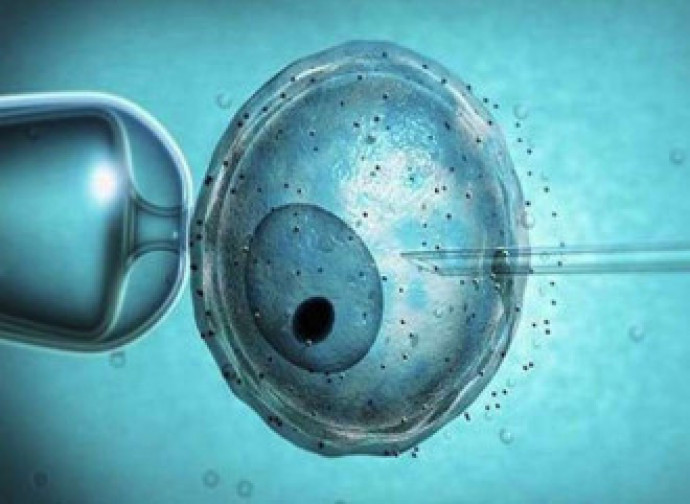
Not everyone at Vatican News holds the Catechism in high regard. The latest example concerns artificial fertilisation, which is implicitly yet clearly endorsed as normal in an article published two days ago (21 July 2026). The very title (which was later changed) reveals the underlying agenda: Assisted reproduction: the role of AI divides bioethics. The article was prompted by the launch of Aura, ‘the first fully automated in vitro fertilisation laboratory’, which is set to become operational in the United States next year and will likely spread to other parts of the world.
The article highlights issues relating to artificial intelligence and what is euphemistically termed 'medically assisted reproduction' (MAR), raising concerns that the technology could replace doctors specialising in reproductive medicine. To support this argument, the author of the article, Davide Dionisi, quotes the bioethicist Laura Palazzani, who is a member of the Pontifical Academy for Life (PAV).
Unfortunately, AI distracts from the underlying problem here. Vatican News does not make it clear that artificial fertilisation is – as the Church's teaching authority teaches – morally unacceptable. Instead, the article suggests that in vitro fertilisation is inherently good. Consider Palazzani's argument, for example: 'The bioethical shift consists in the transition from technology as a tool to technology as an operational, physical and decision-making agent.' Human reproduction thus risks being interpreted as a sequence of procedures to be optimised.’ However, procreation encompasses the suffering caused by infertility, the female body, the relationship between the couple, parental responsibility, the condition of the embryo, and the well-being of the unborn child. Technology can support the clinical process, but it cannot replace the relationship, discernment and responsibility of the doctor.’ Information, counselling and human support therefore remain indispensable at every stage”. According to Palazzani, doctors are indispensable at every stage of assisted reproductive technology (ART). This includes, to cite some of the steps mentioned by the bioethicist herself, 'the retrieval and processing of gametes, in vitro fertilisation, and the culture and transfer of embryos'.
Clearly, all this reduces human procreation to the very 'technical process of production and selection' criticised by Vatican News in relation to AI. This is tantamount to saying that if this process of producing and selecting embryos is carried out by doctors, then it is acceptable. Indeed, amidst Palazzani’s statements, we read the following comment: 'There is therefore a specific bioethical risk when it is an algorithm, and not just the embryologist, that assesses and selects the embryos to be transferred.' However, the problem is not that algorithms are taking work away from embryologists involved in ART; rather, it is the practice of ART itself, and the embryologists who promote it, that is problematic.
It is not until the final paragraph of the article that this Catholic principle is explicitly stated in response to a question: 'The personalist perspective,' explains Palazzani, 'recognises the dignity of human life from its very beginning. The embryo is neither a laboratory product nor a mere object of classification, but a fragile human life entrusted to the care of others and deserving of protection'. Immediately afterwards, still on the subject of the automation of artificial fertilisation, the bioethicist adds that the risk is that ‘the child may be perceived as the expected result of a production process, subject to criteria of efficiency, selection and control’. A genuinely human view of procreation, on the other hand, recognises the child as a gift [...]'. While these words are undoubtedly true, the crux of the matter remains: the problem for Vatican News is the absolute automation through AI and the exclusion of doctors, while in vitro fertilisation itself is normalised.
However, the normalisation of ART contradicts the Church's teachings. From the instruction Donum Vitae (1987) to Dignitas Personae (2008) and the Catechism (numbers 2376–2378), the Church's condemnation of in vitro fertilisation techniques is clear, whether they are heterologous (using gametes from outside the couple) or homologous. While heterologous artificial fertilisation entails the infringement of the child's rights, the deprivation of a filial relationship with their biological parents, and the hindrance of the child's personal identity development (Donum Vitae, Part II, A, answer to question 2), it must also be noted that homologous artificial fertilisation is not morally permissible either, as it creates a child who is effectively an orphan of at least one parent.
In this case, too, the unitive and procreative acts are separated, thereby demeaning the dignity of marriage and of the child as the fruit of the spouses' mutual self-giving. 'Homologous IVF,' Donum Vitae further clarifies (Part II, B, answer to question 5), 'is carried out outside the spouses' bodies through the actions of third parties [...]; it entrusts the life and identity of the embryo to the power of doctors and biologists, establishing the dominance of technology over the origin and destiny of the human person'. Furthermore, both types of artificial fertilisation involve freezing and destroying countless embryos – people with immortal souls – reducing them to mere means. This is in direct opposition to the idea of a child as a gift from God.
In short, it is not possible to speak of the dignity of human life while normalising artificial fertilisation. Laura Palazzani has previously caused controversy in interviews with Vatican News. In 2019, for example, she justified the use of triptorelin to block or delay puberty, albeit 'in very limited cases'. The problem here is not so much the personal opinion itself, but the fact that it is presented in a media outlet reporting for the Holy See’s Dicastery for Communication, and through the voice of a PAV member such as Palazzani herself. The result is, of course, to confuse people about the Church's actual teaching. Someone ought to explain where such actions lead.
