
The charism of Saint Camillus: caring for the sick with a mother’s tenderness
St Camillus de Lellis “called for the sick to be cared for with the same affection and tenderness that a mother has for her only sick child”. To mark the liturgical commemoration of the founder of the Ministers of the Sick, La Bussola interviews the Camillian Ange Désiré Ouedraogo.


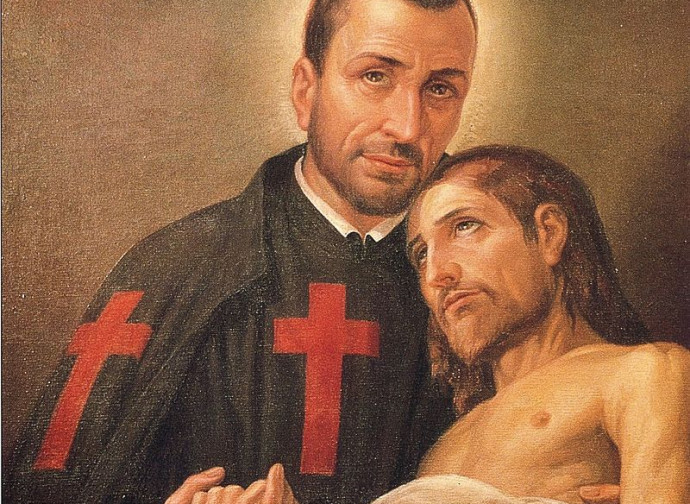
San Giovanni-Addolorata Hospital, Rome: the wail of ambulance sirens provides the backdrop to our conversation with Father Ange Désiré Ouedraogo, a Camillian friar who serves as chaplain at the Roman hospital. Today, on the feast day of Saint Camillus de Lellis (1550–1614), let us reflect with him on what it means, in our present time, to embody the spirit that animated the holy founder of the Ministers of the Sick.
Father Ange, what does it mean to be a Camillian today?
Answering this question is not straightforward, because it does not so much concern our ‘doing’ (for which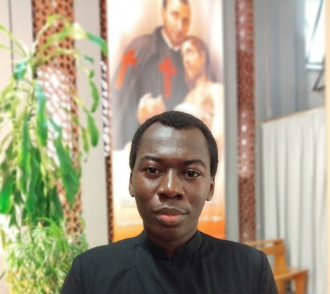 we would already have many ready answers) but touches directly on our ‘being’. It goes to the heart of the profound identity of those who have consecrated their entire lives to the service of the sick. Being a Camillian today means, first and foremost, safeguarding and bringing to life a gift we have received—the charism that God entrusted to Saint Camillus de Lellis: the gift of being Christ for the sick and, at the same time, of recognising the face of Christ in them. Furthermore, it means embodying the spirit and mission that God wished to bestow upon the Church through the witness of Camillus, who, in order to live out this calling, founded a veritable ‘new school of charity’: the Order of Ministers to the Sick, known as the Camillians. Finally, we must remember our fourth vow: to serve the sick even at the risk of our own lives. In a wounded world, being a Camillian today means being a prophetic presence and a tangible sign of Christ’s mercy and tenderness towards all human suffering.
What does it mean to be at the service of the suffering in a hospital?
For a Camillian, the hospital is not simply a place of work, but the ‘mystical vineyard of the Lord’, that is, a sacred space comparable to a place of worship. In this context, being of service means, first and foremost, simply being there: being present, drawing close and becoming a ‘neighbour’ to the other, just as the parable of the Good Samaritan—so dear to us—teaches us. It means being a historical (that is, physical, concrete) and prophetic presence, becoming a tangible sign of Christ’s mercy for those who suffer. Serving in a hospital involves certain fundamental attitudes. The centrality and wholeness of the person: this means placing the patient at the centre in their physical, social and psychological entirety, recognising them as the very person of the Lord. Presence at the foot of the cross: this means standing spiritually and physically at the foot of the countless crosses in the world that we encounter, bearing witness to a God who is not distant, but who suffers with humanity. Serving with maternal love: preserving and putting into practice the original inspiration of Saint Camillus, who called for the sick to be cared for with the same affection and tenderness that a mother has for her only sick child. Spiritual accompaniment: offering a presence that soothes the pain of the soul, especially through pastoral care in healthcare and hospital chaplaincy.
What are the most important words of St Camillus de Lellis that come to mind in your service?
‘More heart in those hands, brothers, more heart!’, perhaps the best-known phrase: an urgent call for devoted, passionate care, rich in humanity. It is a call to put love into every single gesture.
Then, ‘God is everything, the rest is nothing’: this expression often comes to mind on the wards, especially at the end of an intense conversation with someone who is suffering, when, after sharing in their pain, we come to rediscover together what really matters in life. ‘Carry on, you of little faith; the work is not yours but mine’: these are the encouraging words that Camillo reported hearing directly from the crucified Christ at a time of deep crisis. They come to mind in moments of weariness or when faced with institutional and personal difficulties, to remind us that we are merely instruments of a greater work.
How is it possible to speak of hope and eternal life to those who, at that very moment, are experiencing the ordeal of illness or even bereavement?
In the presence of someone who is suffering, the word must first and foremost ‘become incarnate’ and make itself felt. Saint Camillus de Lellis taught us to communicate hope through attentive and discreet closeness, suggesting that we should always use few and compassionate words. We speak of hope when we ourselves become ‘icons of mercy’: just like a sacred icon, our presence must offer a glimpse of, and help us enter into, something greater. Alongside the legitimate hope for physical healing, we have the task of bearing witness that true hope does not lie solely in the health of the body, but is that which opens us up to God. For this reason, in the Camillian tradition, hope is communicated far less through words and far more through concrete gestures, in three fundamental ways: charity as a language; secondly, through a consoling presence, God’s mercy becomes visible and tangible by wiping away the tears of those mourning the death of a loved one or of those battling illness and loneliness; seeing the Eternal One in the present: speaking of eternal life means knowing how to contemplate ‘the Creator in the creature’, bringing trust and healing to evil that is not only physical but also spiritual.
What lesson from St Camillus de Lellis do you consider most relevant today?
I believe that the most vital lesson St Camillus offers to our time can be summarised in three pillars: the courage of tenderness, the essential nature of the heart, and the rediscovery of human dignity in every circumstance. In an increasingly technical modern healthcare system, Camillo’s example reminds us that without compassion and without humanity, any medical care remains incomplete. St Camillo’s reform was so radical for its time that it even led to him being expelled from some hospitals. That same radicalism remains highly relevant today: we have a profound need to create healthcare systems that value the individual, aligning technical and scientific expertise with administrative management towards the patient’s holistic well-being. Saint Camillus fought hard against purely mercenary and half-hearted care, promoting care based on love, selflessness and absolute dedication. In every age, the ultimate goal of the Camillian remains to safeguard, protect and uphold the sacred gift of human life. To think of Saint Camillus de Lellis today is to bring to mind the figure of the Good Samaritan. He reminds us that God’s grace can radically transform a life, turning it into a tireless and enduring gift in the service of those who suffer most.
