
Pakistan: where justice protects those who burn Christians
The murderers of a young Pakistani Christian couple, who were wrongly accused of blasphemy and burned alive in a kiln where they worked in Lahore, have been acquitted. Zarish Neno explains the reality of daily persecution.


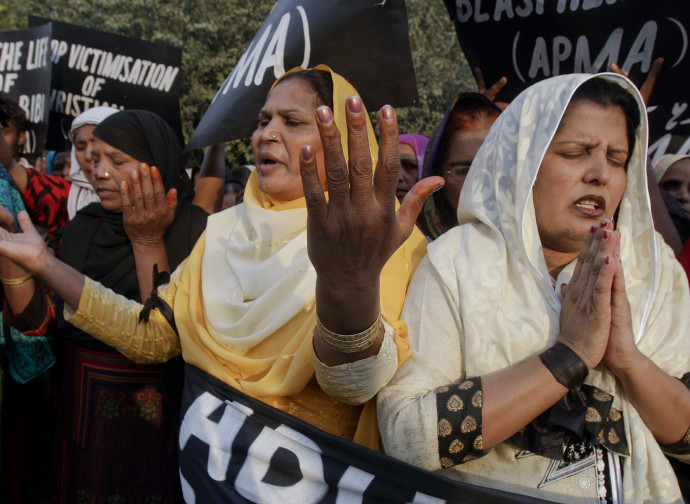
It has recently been reported that the murderers of a young Pakistani Christian couple, who were wrongly accused of blasphemy and burned alive in a kiln where they worked in Lahore, Pakistan, have been acquitted. This is all the more worrying given that Pakistan is seeking to emerge as a leading player on the international stage, as evidenced by the Pakistani Prime Minister’s role as a mediator in the conflict between the United States and Iran.
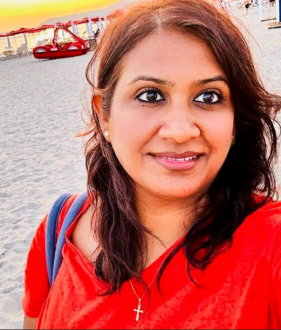 The Daily Compass discussed this serious episode of religious intolerance with Zarish Imelda Neno, a Pakistani Catholic writer and educator born in Karachi who now lives in Italy. For years, Ms Neno has given a voice to persecuted Christians in Pakistan through lectures, articles, and grassroots work. She founded the Jeremiah Education Centre in Faisalabad to support children from the most vulnerable families and is the author of the book A Little Pencil: The Life of a Christian Woman in Pakistan.
Ms Neno, please tell us what happened?
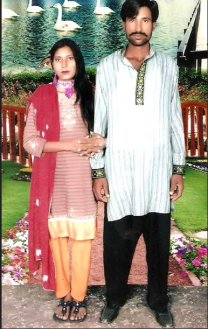
Shama Bibi and Shahzad Masih were a young Christian couple who worked at a brick kiln in Kot Radha Kishan in the Punjab region. They were debt slaves, a reality that continues to exist in Pakistan in the 21st century. They had incurred a debt with the kiln owner, and as is the case for thousands of poor families, this debt was passed down from day to day with no real chance of escape. They were parents to four children. Shama was pregnant with their fifth child. On 4 November 2014, the couple were accused of burning pages of the Qur'an. An accusation that was never proven. Yet this rumour was enough to incite the population via the mosque loudspeakers. An enraged mob captured the couple. They were beaten and tortured, then dragged before thousands of people. Then, they were thrown alive into the brick kiln where they had worked for years. Shahzad died, Shama died, as did the baby she was carrying. Four children lost both their parents on the same day. When I think of this incident, I don't just see two victims. I see four orphaned children. I see a child who was never born. I see the crowd that witnessed that horror. Today, I also see a judicial system that, even after so many years, has failed to deliver justice. This acquittal is about more than just a verdict. It sends a message to the whole country that even a crime of this magnitude can go unpunished.
Did you expect those responsible to be acquitted?
Unfortunately, yes. The fact that this does not surprise me is perhaps the most tragic aspect of this whole affair. It's not just the acquittal of Shama and Shahzad's murderers that causes me pain. It's the fact that this seems to be the fate of almost all cases involving religious minorities in Pakistan. Time and again, the world is outraged. Every time, investigations, arrests and justice are promised. Then time passes. International attention fades. Those responsible go back to living their lives while the victims remain buried and their families continue to live with a grief that has never been acknowledged by a court. Let us think of Jaranwala. In August 2023, over twenty churches were set alight, hundreds of Christian homes were destroyed, and thousands of people were forced to flee. The world talked about Jaranwala for a few days. Then silence. I ask myself today: where is that promised justice? How many of those who devastated an entire community are actually serving a sentence? This question applies to countless other cases too. To the abduction of Christian girls. To forced conversions. To false accusations of blasphemy. And to the murders. My anger stems from the fact that these crimes take place in Pakistan. The problem is that those who commit them have learned that they will most likely never face the consequences. Until a country demonstrates that killing, persecuting, or setting fire to a Christian's home has real consequences, these crimes will continue. Not because they are inevitable, but because they are tolerated with impunity.
 This serious incident is part of a growing climate of persecution against Christians in Pakistan. What, in your view, is the reason for this escalation?
I believe the answer is simple, albeit painful: Criminals are not being punished. The protection of religious minorities in Pakistan remains inadequate. Those who persecute Christians know they are highly likely to go unpunished. And because the international community exerts very little pressure on Pakistan to guarantee the fundamental rights of its minorities. It angers me to think that it is now 2026 and, instead of seeing a decline in persecution, we are still talking about new victims, new blasphemy charges, girls being abducted, forced conversions and churches under attack. Every time, we say, 'Let's hope this is the last case.' And yet another one comes along. Then another. Then another. We Pakistani Christians continue to hope. We continue to pray. We believe that our country can change. However, it would be dishonest to say that our hope is not being severely tested when we read a new story of persecution almost every day. Persecution does not continue because it is inevitable. It continues because those who should be stopping it are not doing enough.
Recently, Islamabad has been trying to establish a significant presence on the international stage. Do the states with which Pakistan engages ignore the human rights violations taking place in the country, or pretend they know nothing about them?
I don’t believe the problem is a lack of information. It's impossible not to know. International organisations receive reports. Governments receive reports. Embassies receive reports. Cases are documented every year. Yet the persecution continues. This leads me to believe that, all too often, it is more convenient to turn a blind eye. It pains me to say it, but sometimes it seems as though the life of a persecuted Christian in Pakistan is not considered to be as important as the lives of other victims around the world. I would like to see the same level of outrage and diplomatic pressure in response to this issue as the international community demonstrates in the face of other human rights violations. Because religious freedom is not a second-class right. The suffering of Pakistani Christians should not be a tragedy only remembered when it hits the headlines.
Finally, as a Pakistani and a Catholic Christian, do you believe that coexistence between different religions — between Christians and Muslims — is impossible in Pakistan?
Absolutely not. If Christians and Muslims could not live together, there would be no Christians in Pakistan today. Our very presence proves that millions of Muslims and Christians live, work and study together every day, respecting one another. I grew up surrounded by Muslim friends who are like family to me. It would be deeply unfair to blame an entire community for the actions of extremists.
However, precisely because I believe in coexistence, I also believe that merely talking about dialogue is not enough. We must have the courage to stop those who use religion to justify violence. We must protect those belonging to minority groups. We must have the courage to punish those who set fire to a church, kidnap a little girl or kill in the name of religion. Because tolerance is not measured by words. It is measured by the extent to which a state is prepared to defend its most vulnerable citizens. The day will come when Pakistani Christians know they are protected by the law just like any other citizen. On that day, we will finally be able to say that coexistence is not merely possible — it is a reality.
