One consistory ends, another begins, scheduled for June
The Pope's two days with the cardinals have come to an end. The discussions focused largely on synodality, including working methods. Leo XIV restored the advisory function of the Sacred College, convening it once again on the eve of Saints Peter and Paul.


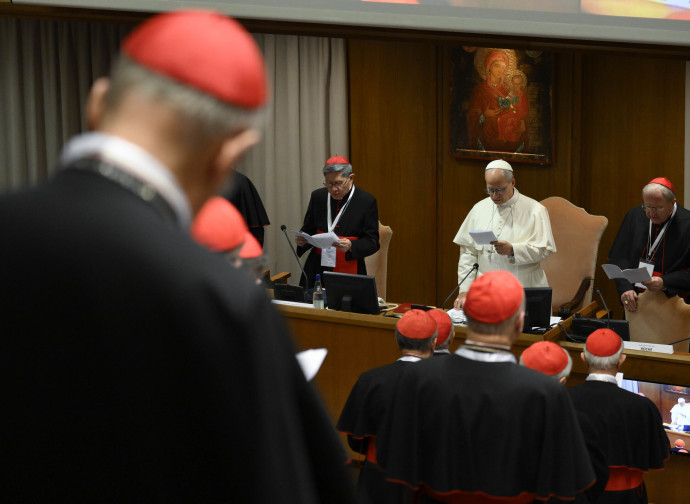
It was a very short but important time. The Pope's impromptu remarks at the end of the first session aptly describe the extraordinary consistory that ended yesterday. Of the four initial themes, most of the twenty-one working groups ultimately chose to address 'Synod and synodality as an expression of seeking to be a missionary Church in today's world and Evangelii Gaudium, proclaiming the kerygma with Christ at its centre'. The liturgy and the reform of the Curia were left out. Leo XIV also took on board the observation made at the tables that 'one theme should not be separated from another'.
Following the extensive Synod on Synodality, the majority of cardinals opted to continue discussing this topic. However, the 'excluded' topics are unlikely to disappear from Pope Leo's agenda, since he himself included them in the convocation on the eve of the Synod. It is no coincidence that he also mentioned them in his concluding speech.
This extraordinary consistory seems to confirm the Pope's intention to characterise his pontificate without causing trauma among those nostalgic for the previous one. On the one hand, Leo has reinstated the advisory role of the entire Sacred College, a role that Pope Francis had rejected following the 2014 disagreement over the family. However, he has done so using a very 'synodal' working method, even in terms of aesthetics, as evidenced by his choice of the now famous tables in the New Synod Hall.
In any case, the extraordinary consistory is set to become a governance method for Prevost, given that he has decided to convene another one on 27 and 28 June. After years of Bergoglian hiatus, the meeting of cardinals will resume on an annual basis, with three to four days being considered each year. Yesterday evening at the conference, even the director of the Press Office, Matteo Bruni, repeatedly emphasised that this is 'a new element'.
In his concluding remarks, the Pope said that these two days are in continuity with those before and after the conclave, as well as with the Second Vatican Council. Pope Leo XIV must have been informed of the concerns raised by the decision to divide the cardinals into twenty working groups, with only nine (comprising nuncios and serving bishops) permitted to present their reports in person, while the remaining eleven groups (comprising non-voting cardinals and those residing in Rome) were instructed to submit theirs by email. During his speech, the Pope emphasised that the chosen methodology would help the cardinals to meet and get to know each other better.
Yesterday's two sessions, which were moderated by Cardinals José Tolentino de Mendonça and Luis Antonio Tagle respectively, addressed the two topics that were chosen on Wednesday by the majority of the Sacred College. In the morning, synodality was discussed, beginning with an initial reflection by Cardinal Mario Grech, Secretary General of the Synod of Bishops. After working in small groups and hearing the reports of the nine groups, there were ten free interventions, each lasting three minutes. Topics raised included the relationship between synodality and liturgy, and the involvement of the laity.
During the final session, Cardinal Tagle gave the floor to Cardinal Víctor Manuel Fernández, Prefect of the Congregation for the Doctrine of the Faith, who reflected on Evangelii Gaudium. 'Tucho' quoted Benedict XVI and said that the text of the apostolic exhortation was not invalidated by the end of the previous pontificate. However, the Argentine prefect also spoke of 'changes' with respect to the Bergoglian pontificate. During the free interventions, the situation in countries where Christians are in the minority and evangelisation is difficult was mentioned. Some participants emphasised the importance of maintaining a balance between doctrine and pastoral care.
Reference was made to the 2028 ecclesial assembly that extended the Synod during Francis' illness in both sessions. In his concluding remarks, the Pope said that these two days would continue in 2028. He also made a point of thanking the older cardinals who had come to Rome from other parts of the world, praising their ‘truly valuable witness’.
In Bruni's report last night, as well as in the statements by Cardinals Stephen Brislin, Luis José Rueda Aparicio, and Pablo Virgilio David — who were chosen as speakers at the briefing — it seems that 'synodality' was the key word of the final day of proceedings, used predominantly in a positive sense. The Pope requested the utmost confidentiality from his colleagues regarding the group work, but more information is likely to emerge in the coming hours. This includes any dissenting voices on the Synod and synodality.
One of the most interesting elements to emerge in the official report was the Pope's thoughts on the cardinals who 'were unable to come', including Venezuelan Cardinal Baltazar Porras, whose passport had been withdrawn by the Maduro regime.
