

Gates and the Epstein Case: A Blackmail Scheme at the Highest Levels
Bill Gates' testimony before the U.S. House of Representatives offers a new perspective on the Epstein case. The financier, who died in prison in 2019, had set up a blackmail scheme and even had the world's most influential man in his grip.


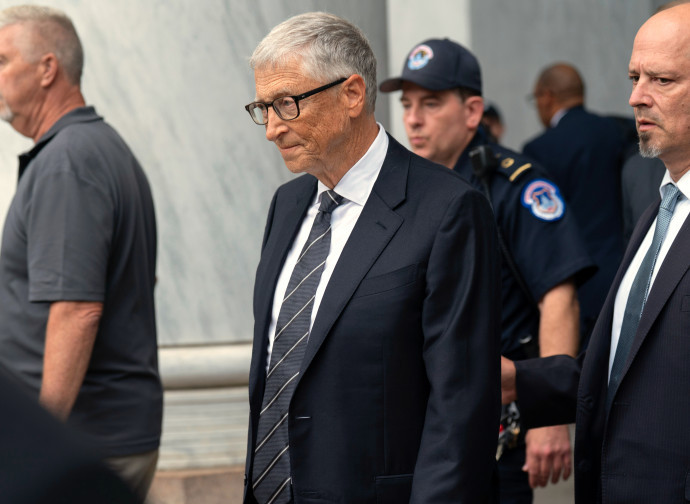
On Wednesday, June 10, Microsoft founder and philanthropist Bill Gates voluntarily appeared for testimony before the U.S. House Oversight Committee. And he reopened the wound of the Epstein case
In February, the billionaire had confessed to employees of his Gates Foundation that he had had two extramarital affairs with Russian women, at least one of whom, a bridge player named Mila Antonova, appears to have been used by Epstein to try to keep the tech entrepreneur and philanthropist within his business circle.
Representative Robert Garcia (D-CA), the leading member of the opposition on the Committee, told reporters during a break in the hearing that Gates’ comments on Epstein revealed a web of blackmail and that Epstein used the power of his secret information to hold even the world’s most powerful men in his grip.
Among the “Epstein Files”—that is, the documents declassified in 2025 by the Trump administration—an email has become famous in which the financier and sexual predator (who died in prison in 2019) claimed that Gates had asked him for help “to deal with the consequences of sexual relations with Russian girls,” a claim that a representative of the philanthropist called “absolutely absurd and completely false.” On Wednesday, Gates stated that he had not contracted any sexually transmitted diseases as a result of his romantic escapades. “The richest man in the world is so stingy,” Epstein complained in a 2017 message to Boris Nikolic, one of Gates’s advisors at his Foundation, adding that: “his ex-bridge player is living on a friend’s couch.”
The point is that Bill Gates and Jeffrey Epstein knew each other and met numerous times between 2011 and 2014. Photos released by the Department of Justice show Gates in the company of Epstein and other VIPs, including a January 2011 dinner with banker Jes Staley and former Harvard University president Larry Summers at Epstein’s New York residence.
“I now understand that [Epstein] tried to build an image of legitimacy, using his ties to influential and respectable people to deflect suspicion and attempt to rehabilitate his reputation,” Gates told U.S. lawmakers. “I was so focused on the possibility of raising funds for global health that I let that goal override my common sense.” On Wednesday, Gates confirmed that he first met Epstein in 2011 and was promised “billions of dollars for global health” from the financier’s clients involved in “tax and wealth management services.” But after a total of five in-person meetings, Gates stated that the talks had reached an impasse, as no “significant support for philanthropic activities” had been provided, leading him to cut off contact in December 2014.
First issue: in 2011, when Gates asked Epstein for help, Epstein had already been convicted three years earlier (in 2008) of exploiting underage prostitution in Florida and was registered as a “sex offender.” “I recall being aware that Epstein had had previous run-ins with the law,” Gates explained to the House, “but I did not fully understand the extent of the crimes he had committed.” Second: according to the Epstein Files, the relationship between the two was much more than “five meetings.” For journalist Emily Glazer, one of the leading experts on Gates: “Apparently, Epstein traveled with Gates and introduced him to the head of the Nobel Peace Prize Committee. Epstein was involved in negotiations between Gates’s staff and Gates himself, and Gates posed for photos—later published—alongside Epstein and several women surrounding him, whose faces were blurred.”
Bill Gates’s statement is the classic (and well-prepared) voluntary testimony of someone who had dealings with Epstein: presenting himself as a victim. But even assuming his good faith, three conclusions can be drawn: the philanthropist contacted a known criminal to seek help without giving it much thought, got caught up in some “honey trap,” and was blackmailed.
On a personal level, it is yet another demonstration of weakness by one of the most powerful men in the world, an IT innovator, an entrepreneur with his fingers in the pie of politics and science, the largest non-state funder of the WHO, and the most admired man on the planet according to a 2019 YouGov poll. His reputation had already been tarnished by his divorce proceedings with his wife (and co-founder of the Foundation), who in 2021 alleged as many as twenty extramarital affairs. Now, the Epstein case certainly does him no favors. However, compared to other VIPs involved, Bill Gates has not yet suffered serious consequences from the revelations about the scandal. He has not lost titles, status, roles, or relationships; he is still being interviewed, invited to participate in international conferences, and considered one of the most influential philanthropists. Evidently, far too many people still need his money.
Politically and for future historians, however, we understand even more clearly what Epstein’s network was. Not just an “island of perdition” to satisfy every whim of his wealthy business partners, celebrity friends, and allies, but also—and above all—a large-scale blackmail operation. What did Epstein want to get from them? Money, certainly. But also secret information and complicity. Complicity in what? It is difficult to identify a single plot that links Gates, Bannon, Clinton, Chomsky, and Prince Andrew, to name just a few of the many well-known figures who frequented him. From each of them, Epstein wanted different things. For each of them, the system was fine, as long as they could gain advantages for their power.
