
Following Christ to the Cross through the symbols of Lent
From the biblical reference to forty days to liturgical signs and ascetic practices, everything on the Lenten journey contributes to our immersion in the mystery of Redemption. A translation from Italian of an excerpt from the current issue of La Bussola Monthly magazine.


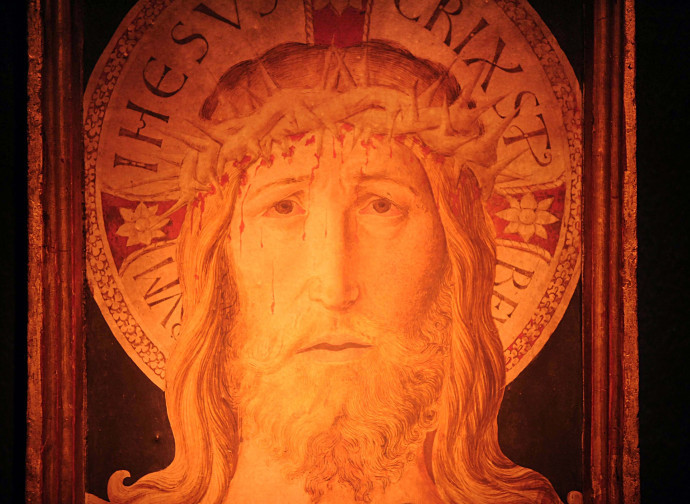
(...) Lent derives from the Latin Quadragesima, meaning forty days. The reference is biblical: Scripture uses this number to represent the time it takes for humanity to journey towards God. However, ancient tradition prescribed a longer period of purification: seventy days, or a Septuagesima of preparation. This is consistent with the Christian spirituality of the early Church, which is still evident in the customs of the Eastern Churches. The life of the Christian, threatened by evil, is a life strongly marked by penance. (…)
Although no imitation will ever be sufficient to fulfil the purpose, following Christ — essentially a matter of love — finds its measure of intentional effectiveness in this very fact: the great love that grows in me for Christ impels me to follow Him at every stage, even under the cross or at the tomb. This spiritual affection enables me to overcome the distance that the concrete reality of life would not allow. Indeed, the culmination of Lenten asceticism is achieved precisely when the faithful lovingly forget their own efforts and sacrifices because they are wholly focused on the suffering of Christ. (…)
Septuagesima introduces the first elements of liturgical and ascetic sobriety. The rite of Ashes solemnly sanctions this period, which is further emphasised during Passiontide. This endures for the last fifteen days before Easter and continues until the intensity of Holy Week, which includes the solemnity of the Holy Triduum (formerly accompanied by the Office of Tenebrae). Authentic liturgy progresses in stages through meditation because it is a wise teacher and recognises that nature and the psychological-spiritual nature of mankind do not make leaps. The closer we wish to approach the heart of the Christian mystery, the more we must accept the need to proceed step by step, crossing symbolic thresholds.
From the point of view of liturgical elements, we see the use of purple and red, which once culminated in the black colour of the tomb. We also see the disappearance of angelic singing in the Gloria and Alleluia (and once also in the minor doxology, Gloria Patri), and then of musical accompaniment in general. There is also the prohibition of decorating the altar with flowers and the veiling of statues of saints (from the First Sunday of Passion, which is no longer obligatory), as well as the veiling of the cross. This is followed by the stripping of the altar and tabernacle.
Entering Holy Week, ceremonies become imbued with Sacred Scripture. The entire account of the Passion and death of Jesus is read from the Gospels (once upon a time, all four were read on four different days, while the rite took on elements similar to funeral celebrations). On Good Friday, The sacrifice of the Mass is not celebrated, but Communion may be received. On Holy Saturday, no Communion is received.
Once again, the symbols reveal their anagogical property, or their ability to lift us up towards the fullness of the Mystery, when read in their increasing gradualness. In this case, they have the power to bring us down lower and lower, accompanying Christ in his dispossession. This also highlights the importance of the faithful participating regularly in these ceremonies and allowing themselves to be guided effectively in this gradual spiritual descent in the footsteps of their beloved Redeemer.
Finally, we must consider the ascetic dimension: the faithful are called to perform the duties of prayer, almsgiving and sacrifice. Prayer should reflect the liturgical rhythms and be incorporated into daily life. It is certainly fulfilled in typical sacramentals such as the Way of the Cross and processions depicting the dead Christ and Our Lady of Sorrows. Almsgiving benefits both the giver and the receiver. It helps the giver to experience detachment from earthly security and to lovingly associate with the loss that Christ himself experienced; it also benefits the receiver. However, it should always provide the beneficiary with an opportunity to be drawn back to the Paschal Mystery, where poverty is defeated. This detail ensures that almsgiving is a Christian act and is not confused with some insipid form of welfare.
Sacrifice is perhaps the least understood commitment today, perhaps because it is more difficult to misinterpret; prayer and almsgiving can be experienced in a generic or socially conventional way, but sacrifice and mortification cannot. Therefore, this becomes a good litmus test of our understanding of the Lenten journey. Why should we mortify ourselves? We said that Lent is about following Christ, imitating the Redeemer and achieving a loving union with Him. If the Lord suffered humiliation, flagellation and the Way of the Cross, we cannot avoid sharing at least some of those sufferings ourselves. (…)
Christ suffered passion and death on the cross to free us from sin and overcome our wounded nature. However, the effects of this original wound do not disappear, but remain in the form of concupiscence. The practice of mortification is a personal commitment to oppose this concupiscence. Thus, we can see the consistency between the practice of mortification and the Saviour's redemptive action on the Cross.
In this sense, mortification and fasting truly test our Lenten theological wisdom.
By misunderstanding these practices, we lose sight of the full mystery of Christ, the reality and drama of his sacrificial descent and his choice to redeem us with his blood rather than through some miraculous, painless command. In these lines, I have attempted to emphasise the importance of these practices so that we do not lose sight of the truth of the only mystery that can save us: his willingness to die on the cross.

Lent and fasting, a means of opening up to God
During Lent, the faithful are invited to eat simply, almost frugally. The self-control exercised during this period is a way of strengthening the soul, following the example of Jesus in the desert, in order to be filled with Him. Even during Lent, however, various countries present interesting recipes, based on vegetables, fish and inexpensive ingredients.
Lent, a joyous occasion to encounter Christ
With today's celebration we begin a journey which should make us aware that, every day, the truth of Christ is represented to us; that is, we are called to rediscover the beneficial strength of His presence on a daily basis and to understand that the path the Church invites us to walk is a secure path.