
The thousand and one EU expenses that finance Islam and inclusion
One project after another costing thousands or millions of euros, ranging from Muslim and Roma culture to hairstyles according to the precepts of the Koran, not to mention the ever-present Islamophobia. All funded by Brussels, while Member States cry out for help.

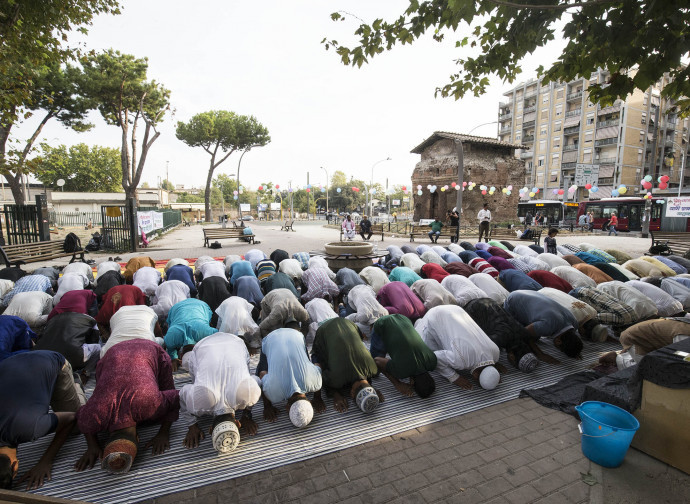
While the European Union is experiencing a period of ongoing tension involving geopolitical crises, incomplete and detrimental industrial transitions, inflationary pressure, and budgetary constraints, a substantial portion of the EU's resources continues to be allocated to a diverse range of projects dedicated to Islamic integration and the promotion of the identities of specific religious and ethnic minorities. Around €32 million has been allocated to initiatives related to Islam and Islamic culture, as well as the prevention of Islamophobia. The range of projects is as bizarre as it is worrying.
One of the most controversial projects to receive funding is a research project coordinated by the University of Ghent in Belgium which has received €2 million entitled: Hair. Identity, beauty and the self in Muslim Contexts. Emotional landscapes and changing femininities beyond the veil. The project's stated aim is to analyse the role of hairstyle and hair management in the daily lives of Muslim women. What could the cultural significance of such research be? Many feel that the line between research and ideological symbolism has been crossed, with initiatives perceived as self-referential and disconnected from the urgent issues facing European society.
Alongside this project, the European Union has allocated over €3 million to initiatives aimed at combatting anti-Muslim hatred. The titles of the programmes clearly outline their scope: 'Sustainable alliances against anti-Muslim hatred', 'A model towards a non-discriminatory culture', and 'Reporting and documenting anti-Muslim racism'.
In Italy, some of these funds have gone towards projects aimed at tackling the underestimation of hate speech directed at Muslim women through awareness campaigns, data collection and training activities.
Much more substantial funding is also being provided in this context: approximately €10 million for the ‘European Koran’ project and a further €17 million for initiatives related to Islam, Sharia law, Islamic culture and traditions. This funding is distributed across multiple lines within the framework of European research and inclusion programmes.
This flow of resources is taking place in an economic and political context marked by mounting difficulties for national budgets, to the extent that it seems almost paradoxical. While the excessive deficit procedure (EDP) looms over Member States as an instrument of fiscal surveillance and discipline, limiting public spending capacity and imposing selective choices, there are increasing reports of European funding being perceived as distant from the daily concerns of families and businesses, such as the cost of living, industrial competitiveness and territorial security.
This is partly because, while Brussels is busy tackling alleged widespread Islamophobia, the latest data on global religious freedom paint a dramatic picture that is far removed from the EU's priorities. The latest Open Doors report indicates that there will be 388 million persecuted Christians worldwide in 2025, eight million more than the previous year. Furthermore, 4,849 people were killed for their faith in 2023. Despite their gravity, these figures struggle to find a proportionate place in European public debate.
And that's not all. Within the scope of the 2022–2027 European programmes, a further chapter concerns the integration of Roma communities. The European Commission has allocated €2.2 million to nine strategic projects aimed at social inclusion and combating discrimination. These funds have been distributed to a network of mostly Italian associations, which are responsible for translating the theoretical framework of integration into operational initiatives.
Of these, €200,000 has been allocated to a project dedicated to European Roma cultural heritage itineraries. €38,000 has gone to an association based in Lanciano with the aim of raising the profile of concerts, exhibitions, conferences and workshops related to Roma culture.
Another €60,000 has been given to a project that promotes inclusion through tennis. This project is presented as a tool for civic education that can transmit values such as respect for rules, competitive loyalty, and how to cope with defeat. According to the project documents, there are just over sixty participants and trainers, bringing the average cost to around €1,000 per person.
The largest amount of funding, €700,000, is for a programme aimed at improving access to psychological support services for Roma communities in Romania, Bulgaria and Hungary. The objectives include influencing national public policies and raising awareness within the communities.
Next there is a project worth over €320,000, which aims to combat anti-Gypsyism among young Roma and non-Roma people. According to European surveys, this phenomenon is one of the main causes of exclusion from civic and school life. Therefore, if Roma people in Italy do not attend school, it is due to racism.
Those who choose to move to Europe, often illegally, already have access to reception systems that entail significant costs for host communities. On top of this, we discover day after day that there is additional collective self-taxation to finance integration programmes that often seem more geared towards satisfying a political need for self-legitimisation than anything else.
One wonders, then, to what extent the European Union can continue to invest billions in symbolic projects pursuing various rights while resources for European citizens — those who finance the system with their work and taxes — are always insufficient, especially when it comes to tax cuts. Or is it simply because taxes are now being used to finance this and little else?
