
The Holy Face of Jesus and the call to saintliness
For Saint John Paul II, growth in holiness was inextricably linked to the mystery of the Holy Face of Jesus — a theme that the Polish Pope explored in depth in Novo Millennio Ineunte. For Wojtyla, this was not just one devotion among many, but a way of living the entirety of Christian life.

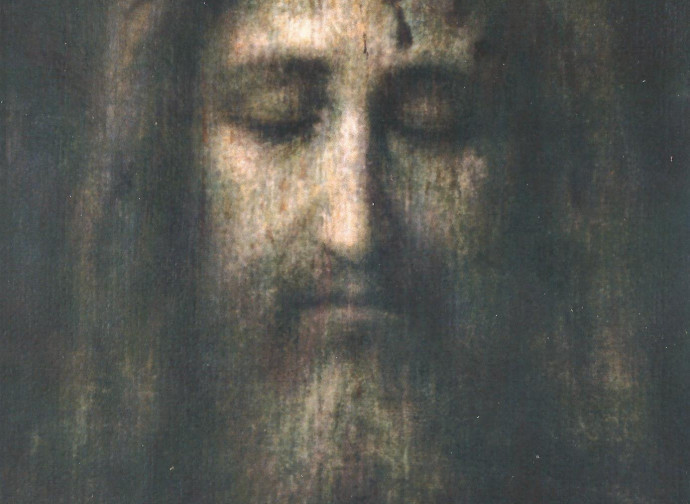
Today is the Feast of the Holy Face of Jesus, which falls today on Quinquagesima Tuesday. To mark the occasion, we are publishing a reflection by a Benedictine monk.
When future generations write the history of St John Paul II's pontificate, his constant and insistent attention to the Face of Christ will undoubtedly emerge as a supreme spiritual theme and a recurring motif, as well as a gift of grace to the Church. Throughout his long Petrine ministry, St John Paul II's personal fascination with the Holy Face of Jesus became a pastoral imperative. As early as 2001, he directed the attention of the Church towards the Face of Christ. At the closing of the Holy Door on 6 January that year, he proclaimed that 'Christianity is born and continually draws new life from this contemplation of the glory of God shining on the face of Christ'.
Growth in saintliness is linked to the mystery of the Face of Christ, and for St John Paul II it was inseparable from it: 'May the Lord grant that in the new millennium the Church may grow ever more in saintliness, so that she may become in history a true epiphany of the merciful and glorious face of Christ the Lord.'
In Novo Millennio Ineunte, St John Paul II further developed his teaching on the Holy Face of Jesus. It is clear that for the Holy Pontiff this was not just another devotion proposed to the piety of the faithful, but a way of presenting and living the entirety of Christian life, and of responding to the 'universal call to saintliness' presented by the Second Vatican Council in Lumen Gentium. As a bishop of the Council, Karol Wojtyła sought to deepen and develop the central insights and key teachings of that assembly as Peter's successor. His call to contemplate the Holy Face of Jesus can only be fully understood in this context. Saintliness is simply adherence to the designs and desires of the Heart of Christ for us: saying 'yes' to what the Heart of Christ has reserved for us and to what He desires to give us at every moment.
The designs and desires of the Sacred Heart of Jesus are revealed on His face. Those who love Christ learn to read the secrets of his heart on his countenance. It was only in the 17th century that the iconography of the Sacred Heart began to depict the physical organ of Jesus's heart exposed, surrounded by thorns and radiant with flames of love. Earlier depictions honoured the mystery of the Heart by concealing it: they showed only the wound caused by the soldier's spear, with the Heart itself enclosed within the crucified or glorious flesh of Christ.
This open wound was an invitation to go further and cross the threshold, entering the inner sanctuary of the Heart. However, the Heart itself remained hidden.
In ancient iconographic traditions, the secrets of the Heart of Christ were revealed on his face; the 'mystery' of the heart was discovered by contemplating his face. In 1930, Mother Marie des Douleurs Wrotnowska, a French founder, wrote: 'We must discover in this Face the revelation of the secrets of His Heart', and again, 'All the zeal of the Heart of Jesus, all His works and all His agony can be read on His Face'. St John Paul II's invitation to become contemplatives of the Holy Face of Jesus offers us the opportunity to rediscover this tradition: the Face as a revelation of the secrets of the hidden Heart.
In light of St John Paul II's constant focus on the Face of Christ, it is clear that he was offering a way of responding to the call to saintliness, which is suited to all states of life and is particularly important for monastic life. At the heart of every vocation lies the mystery of a personal relationship with Jesus Christ. This is masterfully described as a 'face-to-face' encounter, and as persevering in seeking the Face that first sought us. "My heart has said of you, 'Seek his face.' Your face, Lord, I seek; do not hide your face from me' (Psalm 26:8–9). The Holy Face is the countenance of the Incarnate Word. Jesus calls on souls to live with their eyes fixed on him and to discover the secrets of his heart in his face.
There is something distinctly Benedictine about the centrality of the Holy Face of Jesus. St Benedict wants to test the novice to see if he ‘truly seeks God’ (RB LVIII, 7). This search begins and is fulfilled in the mystery of the Holy Face of Jesus.
Let us make this our Lenten commitment: to seek and contemplate the Holy Face of Jesus. The face hidden and revealed in the Scriptures; the face hidden and revealed in the Most Holy Eucharist; the face hidden and revealed in others, especially those who suffer. If, in every event and circumstance, we instinctively and wholeheartedly say, 'Your face, Lord, I seek', our faces — and our hearts — will be transfigured.
