Pope Leo consistory has disappointing start
The decision to entrust the opening meditation to the controversial Cardinal Radcliffe has raised concerns, as have the tight schedule and organisation of the working groups. Today: Mass in St Peter's and the concluding speech by Leo XIV.

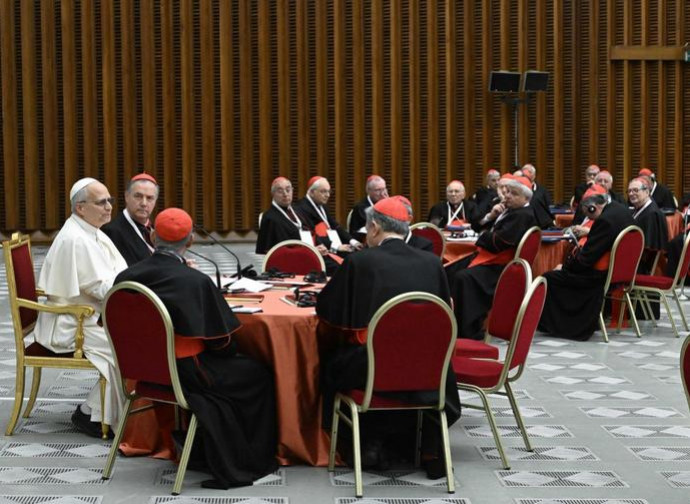
The first extraordinary consistory of Leo XIV has not got off to the best start. Even before it began, there was controversy surrounding the selection of working groups and the limited time allotted for impromptu speeches. Inside the new Synod Hall, matters did not improve.
Several cardinals were taken aback by the decision to entrust the opening meditation to the contentious Dominican, Timothy Radcliffe. Although clearly aware of this responsibility in advance, the British cardinal gave an interview to The Daily Telegraph on the eve of the event, repeating his support for the female diaconate and stating that 'no one can simply say "I am a woman"'. During the general congregations, his name had already been put forward for the opening meditation of the conclave. However, not all cardinals agreed, and Raniero Cantalamessa was ultimately chosen as he was not a voter.
However, it is the organisation in general that is causing debate. Some cardinals are wondering whether the powers of the office of dean have been exercised in this case by the Secretariat of State. Yesterday, in his speech, the Pope announced that only the nine groups from local churches would be able to report, out of the 21 formed. Provost cited the 'two assemblies of the Synod of Bishops in 2023 and 2024' to praise their 'synodal dynamic'. His intention to foster unity was evident in his juxtaposition of Paul VI and John Paul II, as well as Benedict XVI and Francis. The Pope presented this extraordinary consistory as a continuation of the path already undertaken during the conclave.
However, several cardinals were disappointed when Leo explained that not all four of the topics from the eve (Evangelii Gaudium, Praedicate Evangelium, the Synod and Synodality, and Liturgy) would be specifically addressed. Time constraints meant that a more in-depth discussion on liturgy would not be possible. ‘Looking ahead to the next year or two, what concerns and priorities could guide the Holy Father and the Curia in this matter?’ This is the guiding question for today's two sessions. Pope Francis said that this consistory does not necessarily have to produce a text; rather, he sees it as a conversation that will inform his service to the universal Church. ‘Unity attracts, division disperses,’ said the Pope in a manifesto-like statement.
In the front row, listening to him, was 93-year-old Cardinal Joseph Zen, who had arrived in Rome unexpectedly and had the opportunity to meet the Pope for a private audience that morning. The day will begin with Mass at the Altar of the Chair in St Peter's, followed by the second session, which will conclude with lunch with the Pope in the atrium of the Paul VI Hall. The third and final session will begin in the early afternoon and will feature a closing address by Pope Leo. Many cardinals already have their return tickets for tomorrow morning.
