

From Paglia to Pegoraro: PAV accommodates legalised suicide
Following his interview with the Italian bishops daily newspaper Avvenire, the president of the Pontifical Academy for Life (PAV) reiterated his support for a law on assisted suicide that would prevent a worse one, with even more clarity to the national newspaper Il Corriere. Former President of the PAV Monsignor Paglia took the same stance in an article in the daily La Repubblica. But, consenting to an unjust law is tantamount to betraying Catholic doctrine.

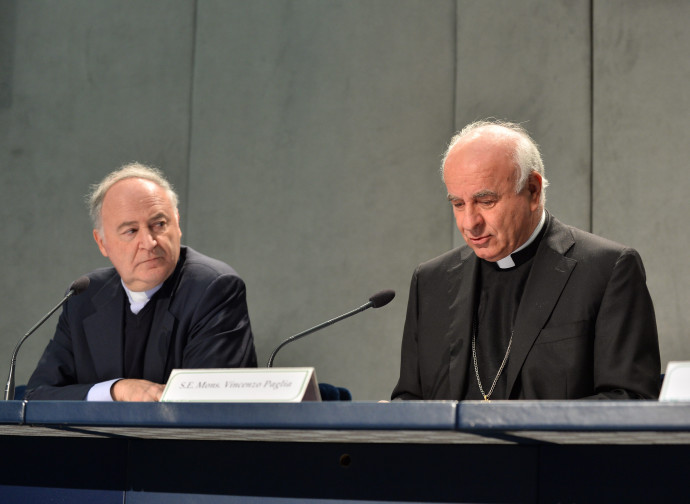
There is now reason to suspect that the Italian government has received significant backing from the Catholic Church in Italy to pass a law on assisted suicide. Monsignor Renzo Pegoraro, president of the Pontifical Academy for Life (PAV) in a recent interview, stated that it would be morally permissible to consent to a future assisted suicide law to prevent an even worse one becoming law.
Days later, the PAV president reiterated his support for such a law even more clearly in another interview published yesterday in the local paper Corriere del Veneto, stating: 'There is a third way between doing nothing and enacting a regional law: asking one’s political parties to press for a national law. Let us ask ourselves: what political message does a regional law send? It regulates a court ruling; we settle for the minimum, but we could aim for the maximum.’ However, given that Monsignor Pegoraro adheres to the principle of the lesser evil, we would like to point out that a regional law on assisted suicide, with the same content, is a lesser evil than a national law on the same subject. Therefore, Monsignor Pegoraro’s preference for a national law is, to use his own term, the greatest moral evil.
On the same day that Il Corriere published the interview with Pegoraro, another endorsement of a future parliamentary bill on assisted suicide arrived, coincidentally, from the former president of the PAV, Monsignor Vincenzo Paglia. He too advocates such legislation making use of a secular pulpit: the newspaper La Repubblica. In the article, Paglia addresses Corrado Augias, who has stated for many years that he wishes to end his life using a lethal substance. Mr Augias reiterated this on 5 September in an article in La Repubblica. Like his successor, the former president of the PAV is also very clear in his support for a potential law: ‘And finally, yes: let Parliament shoulder its responsibilities. On such a sensitive matter, we cannot allow the courts, individual cases or emergencies alone to dictate the rules. It is up to politicians to tackle the issue seriously, without ideological bias or shortcuts.'
These multiple, simultaneous statements in support of a law on assisted suicide, whilst motivated by the recent approval of the Veneto region’s law on the same subject, lend credence to the suspicion that there is a plan aimed at reassuring the government of the Church’s support. Furthermore, it is hard to imagine that Pegoraro and Paglia expressed these views without consulting the President of the Italian Bishops' Conference, Monsignor Matteo Zuppi, first. Regarding the possibility of a law on assisted suicide, he has previously been deliberately ambiguous, sometimes condemning and sometimes praising it. This could now lead him to change his stance once again in favour of a law on assisted suicide.
To give assent to an unjust law is to betray Catholic doctrine. 'Betrayal' is the right word when we consider what paragraph 73 of Evangelium Vitae states on this matter: 'In the case of an intrinsically unjust law, such as one that permits abortion or euthanasia, it is never lawful to comply with it. Nor can he take part in a propaganda campaign in favour of such a law, or vote for it.' (Congregation for the Doctrine of the Faith, Declaration on Induced Abortion, 22). So why the betrayal? Firstly, because the principle of the lesser evil has been embraced, leading to a failure to understand evil, whether small or great (for more on the lesser evil in relation to voting for an unjust law, see this article). An evil act contradicts the dignity of the person and can therefore never be committed. 'Death, but not sin,' wrote Saint Dominic Savio at the age of seven.
Secondly, many men in the Church, from grassroots level to the highest echelons, are still influenced by a revolutionary mindset that views Catholic morality — and indeed the faith itself — as an expression of private belief that is not applicable in the public sphere. While both would be valid in the private sphere and among like-minded individuals, they lack the legitimacy required to guide political action towards the common good. In short, they are believers in private life but neutral in public life (if anything, the bravest might bear witness to their faith without succumbing to the 'blasphemy' of a social kingship of Christ). This is why, in their written contributions, Monsignor Pegoraro and Monsignor Paglia condemn assisted suicide, albeit in a nuanced manner, yet then contradict themselves by calling for legislation to decriminalise or legitimise it. This is because they are internally divided. On the one hand, they speak as Catholics; on the other, as citizens. With one hand, they swear by the Gospel — a text that applies only to believers — and with the other, by the Constitution — a text that applies to everyone. This schizophrenia is a pathology of faith.
In any case, it’s a familiar story. Support within Catholic circles for a law on assisted suicide mirrors that offered by Catholics for Law 40 of 2004, which legalised artificial insemination in Italy. Support was given to put an end to the 'Wild West' of procreation, it was claimed. On 14 February 2004, Angel Rodríguez Luño, a former lecturer in Fundamental Moral Theology at the University of the Holy Cross, wrote the following in L’Osservatore Romano: 'The real significance of the actions of those who promoted and voted for this law [...] seems to be that of partially suppressing an unjust practice and situation whose total suppression was not possible' (italics in the original). However, it is a pity that the vote not only concerned the abolition of certain unjust practices, but also the legitimisation of others.
On the same day, the Association of Italian Catholic Doctors published a press release in L’Osservatore Romano echoing this view. ‘The Association of Italian Catholic Doctors expresses its satisfaction at the final approval of the law on medically assisted fertilisation. At last, the “Wild West” and absolute laissez-faire in such a sensitive field have been done away with.' At the time, it was the 'Wild West' of procreation that needed to be eliminated; today, it is the 'Wild West' of judges and regional authorities regulating the matter as they see fit. In both cases, parliamentary intervention to regulate the matter is welcome.
We will conclude by quoting Saint Augustine, who is currently popular for papal reasons. We will quote him from a passage in Evangelium Vitae: ‘To concur with the intention of another person to commit suicide and to help in carrying it out through so-called “assisted suicide” means to cooperate in, and at times to be the actual perpetrator, of an injustice which can never be excused, even if it is requested. It is never licit to kill another: even if he wish it, indeed if he request it, because hanging between life and death, he begs for help in freeing the soul struggling against the bonds of the body and longing to be released; nor is it licit even when a sick person is no longer able to live' (Epistle 204, 5) (66). If it is not permissible to help another person take their own life, then it is all the more impermissible to pass a law that permits it.
