
'Do not reduce churches to museums,' says Pope closing Holy Door
A total of 33 million pilgrims from 185 different countries passed through the Holy Door during the Jubilee of Hope, which concluded yesterday. Pope Leo XIV invites us to become pilgrims of hope, spreading 'the fragrance of life, the indelible impression that another world has begun'.

This Jubilee will be remembered in the history of the Church for being initiated by one Pope and concluded by his successor. This is not the first time this has happened; there are precedents, such as in 1550 when Paul III proclaimed the Jubilee but then died, leaving Julius III to open the Holy Door immediately after his election. In 1700, the ailing Innocent XII opened the Holy Door, appearing only at Easter to give a blessing, and it was concluded by Clement XI. Finally, in 1774, Clement XIV proclaimed the Jubilee, but it was his successor, Pius VI, who celebrated it in 1775.
The difference between then and now is mainly due to the conclave, which in the past was destined to be lengthy and turbulent.
The Jubilee of Hope has closed on a higher note than the Jubilee of Mercy, with 22 million people attending the latter and over 33 million people from 185 different countries attending the former.
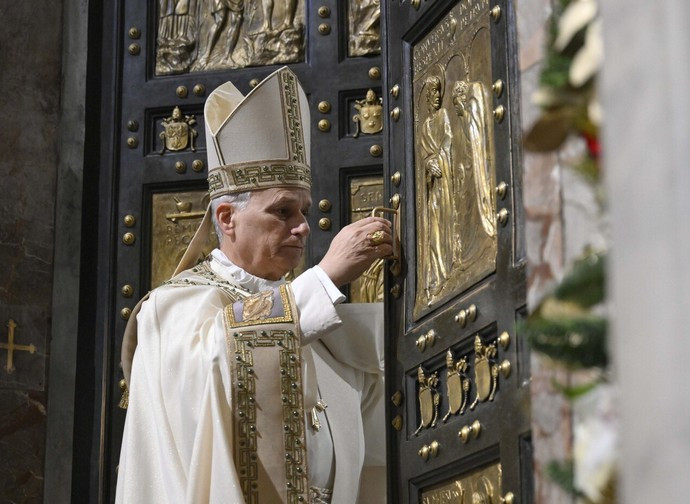
The final act took place yesterday in St Peter's Basilica with the closing of the Holy Door. First, Leo XIV knelt on the threshold and paused in prayer before closing the two bronze doors. For this occasion, the Pope had a new crosier made, bearing his episcopal motto, the Augustinian 'In Illo Uno Unum', on the pommel. The door will be walled up in about ten days.
During Mass, in his homily, the Pope praised the pilgrims, describing them as 'people who accept the challenge of risking their own journey; people who, in a troubled world like ours — a world that is, in many ways, repulsive and dangerous — feel the need to go and seek'. He invited the Church to treasure this dynamism as the Gospel requires and to direct it towards the God who inspires it. 'It is a God who can disturb us because he does not remain still in our hands like silver and gold idols,' said the preacher, 'but is alive and life-giving, like the Child that Mary found in her arms and the Magi adored.'
He then invited cathedrals, basilicas and shrines, which have become pilgrimage destinations, to spread 'the fragrance of life, the indelible impression that another world has begun'. It was an optimistic and enthusiastic homily about the possibility of becoming pilgrims of hope. 'God's faithfulness will amaze us again,' said the Pope. 'If we do not reduce our churches to monuments, if our communities are homes and if we resist the temptations of the powerful together, then we will be the generation of the dawn.' The end of the Jubilee of Hope somehow 'lightens' Leo XIV's burden of his predecessor's legacy. Perhaps it is no coincidence that he chose to hold his first extraordinary consistory the day after the Holy Year ended.
