
Prince Albert’s resounding 'no' does not cancel abortion in Monaco
The Prince blocked a bill that aimed to broaden the scope of abortion, recalling 'the role that the Catholic religion plays in our country'. While this is a good example, the same sovereign should not have approved the liberalisation in 2009 and 2019.

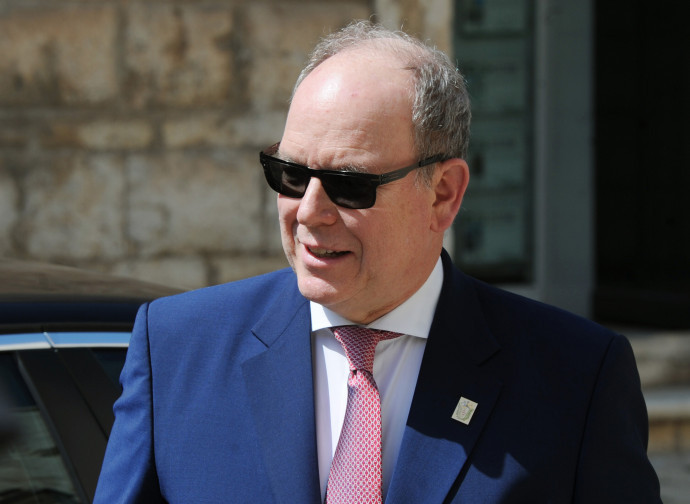
In an interview with the daily newspaper Monaco-Matin on 19 November, on the sidelines of the National Day celebrations, Prince Albert II — who has ruled the Principality of Monaco since 2005 — confirmed the government's refusal to follow up on the bill aimed at expanding abortion rights. "I understand the sensitivity of the issue and the emotions it can arouse," said the sovereign, adding that he must respect his faith and "the role that the Catholic religion plays in our country." This is an example of a 'Caesar' who puts 'God' first for the good of the kingdom, although it should be remembered that the Prince himself had previously agreed to decriminalise abortion, first in 2009 and then again in 2019.
He therefore decided not to enact the bill approved by the National Council (the parliament of the Principality of Monaco) in May by 19 votes to 2. The bill aimed to legalise voluntary abortion up to 12 weeks, extend the limit to 16 weeks in cases of rape, and lower the age of consent for abortion from 18 to 15. In rejecting the legislative proposal, the sovereign stated that ‘the current framework respects who we are, in light of the role that the Catholic religion plays in our country, while still guaranteeing secure and more humane support’. Amending a law that permits the termination of innocent lives in the womb is not in keeping with the Catholic faith, its moral teachings or scientific evidence.
The rejection by the Prince of Monaco blocked the legislative process, thus keeping the current rules in force. Abortion in Monaco remains formally illegal, although it is permitted in cases introduced by the law of 8 April 2009, namely rape, risk to the mother's life and severe foetal malformation. Prior to decriminalisation, abortion was prohibited under all circumstances, with women undergoing the procedure facing up to three years in prison, and doctors facing up to five years in prison and the loss of their licence to practise. Since 2019, the Principality has not prosecuted women who have had an abortion abroad, except in the three aforementioned cases.
As the Constitution recognises Catholicism as the state religion, the Prince's veto can only be understood in the context of the Church's belief that unborn life is a non-negotiable good, beyond any utilitarian or functional logic. The Church teaches that direct abortion is always morally illicit. Evangelium Vitae explicitly judges any law authorising abortion to be radically unjust, stating that such laws "have no authentic juridical validity" and therefore "do not create any obligation" (EV, 72–73). Saint John Paul II speaks of a 'tragic semblance of legality' and warns that a democracy that allows the elimination of the weakest 'is moving towards a form of substantial totalitarianism' (EV, 20). Therefore, abortion can never be enshrined as a right because it denies the most fundamental human right of all: the right to life.
Amidst the cultural, business, and legislative pressures in Europe pushing for the liberalisation of abortion, the Principality of Monaco and Prince Albert are raising an uncomfortable question and attempting to limit the widespread genocide of unborn children, a value that has even been enshrined in the French constitution and will soon be adopted in Spain. However, Prince Albert's recent stance should have led to an equally firm refusal in 2009 and 2019, rather than the inhumane concessions made in favour of abortion. Albert's commendable recent gesture should have included initiating the process of repealing the two previous permissive regulations, in accordance with the Constitution.
Nevertheless, the Prince's refusal to further liberalise abortion is a positive initial step towards reaffirming a state's responsibility to protect the most vulnerable members of society, and the fundamental duty of the law to defend and protect the weak. This is a fundamental requirement of civilisation that admits no exceptions if the nation's prosperity and well-being are to be pursued. It is not possible to fight the drift imposed by abortion multinationals with good intentions and fine gestures alone; a consistent defence of human life from conception onwards is required.